Get a Free Estimate Today!
When Should You Move? Peak vs. Non-Peak Moving Seasons Explained
Planning a move is not only about choosing the right house or office space. Timing also plays a crucial role in determining how smooth, affordable, and stress-free your relocation will be. Many people don’t realize that the moving industry has peak seasons and non-peak seasons, and the timing of your move can significantly affect availability, pricing, and convenience.
Understanding the difference between peak and non-peak moving periods helps you make better decisions. Whether you’re relocating locally or planning a long-distance move, knowing when to move can save you money, reduce stress, and give you more control over the process.
This comparison guide will help you understand the advantages and disadvantages of each moving season so you can decide what timing works best for your situation.
What Is Peak Moving Season?
Peak moving season generally occurs between late spring and early fall, with the busiest months being May, June, July, and August. During this period, moving companies experience the highest demand.
There are several reasons why many people prefer moving during these months:
- Children are on summer vacation, making school transitions easier
- Warmer weather makes transportation and packing easier
- Real estate transactions tend to peak during summer
- Longer daylight hours allow more time for moving tasks
Because of these factors, schedules fill up quickly, and moving services are often booked weeks in advance.
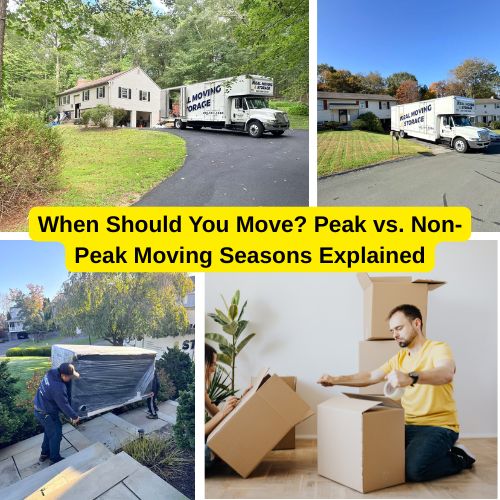
Advantages of Moving During Peak Season
Better Weather Conditions
One of the biggest benefits of peak moving season is the weather. Warm temperatures and longer days make loading, transporting, and unloading belongings more manageable.
You are less likely to face weather-related disruptions compared to winter moves, which can involve snow, ice, or freezing temperatures.
Easier Family Transitions
Families with children often prefer summer moves because it avoids disrupting the academic year. Kids can settle into a new home before school starts.
Higher Availability of Housing
The housing market is typically more active in the summer. Buyers and renters often have more options available, making it easier to find a suitable property.
Challenges of Moving During Peak Season
Higher Moving Costs
Due to high demand, moving rates usually increase during peak months. Movers often charge premium prices because schedules are tight and trucks are constantly booked.
Limited Scheduling Flexibility
You may need to book your moving company several weeks or even months in advance to secure your preferred date.
Busier Moving Companies
During peak season, moving teams handle multiple jobs daily. While reputable companies maintain high standards, the overall industry workload is significantly heavier.
What Is Non-Peak Moving Season?
Non-peak season usually runs from late fall through early spring, roughly from October to April. During these months, fewer people move, which creates opportunities for more flexible scheduling and potentially lower costs.
Many professional movers recommend this period for clients who want a more relaxed and budget-friendly relocation experience.
Benefits of Moving During Non-Peak Season
Lower Moving Costs
One of the most attractive benefits of non-peak moving is cost savings. Since demand is lower, many moving companies offer competitive pricing and promotional discounts.
Greater Scheduling Flexibility
You are more likely to get your preferred moving date and time because movers have fewer bookings.
More Personalized Attention
With fewer moves scheduled each day, moving crews may have more time to focus on your specific requirements. Services such as Packing and Unpacking Services in Norwalk CT can be scheduled with greater convenience and flexibility.
Downsides of Moving During Non-Peak Season
Weather Risks
Winter moves may involve rain, snow, or icy conditions. These factors can slow down the moving process or require additional precautions to protect your belongings.
Shorter Daylight Hours
Shorter days may limit the time available for loading and unloading, especially for large moves.
Holiday Scheduling
Late November through early January can be complicated due to holidays when many people travel or take time off.
Peak vs. Non-Peak: Which Is Better?
The answer depends largely on your priorities.
| Factor | Peak Season | Non-Peak Season |
| Cost | Higher | Lower |
| Scheduling | Limited availability | Flexible |
| Weather | Usually favorable | Can be unpredictable |
| Housing availability | More options | Fewer listings |
| Moving company workload | Very busy | More relaxed |
If budget and flexibility are your priorities, non-peak season may be ideal. However, if you need to coordinate with school schedules or housing availability, peak season might make more sense.
Timing Matters for Long-Distance Moves
For long-distance relocations, timing becomes even more important. Travel logistics, interstate regulations, and scheduling coordination all affect the overall experience.
For example, people planning Long distance moving from Connecticut to south Carolina often benefit from scheduling their relocation slightly outside the busiest summer weeks. This allows better route planning and smoother delivery timelines.
Timing Tips That Professional Movers Recommend
Experienced movers often suggest a few practical strategies when deciding when to move:
Avoid Month-End Dates
The last week of each month is busy because many leases end during that time.
Mid-Week Moves Are Easier
Moving between Tuesday and Thursday often provides better availability and sometimes lower rates.
Book Early
Even in non-peak months, booking early ensures you secure the best time slot and services.
Plan Business Moves Strategically
Companies relocating offices often choose non-peak periods to minimize disruptions. Professional Commercial Moving Services in Westport CT can help coordinate office transitions smoothly while avoiding operational downtime.
A Practical Way to Decide Your Moving Date
If you’re unsure about timing, consider these questions:
- Are you trying to minimize costs?
- Do you have flexibility in scheduling?
- Are children’s school schedules involved?
- Is weather a major concern for your move?
Your answers will help determine whether peak or non-peak season works best for your situation.
A Moving Partner That Prioritizes Your Experience
Choosing the right moving company is just as important as choosing the right time to move. Real Moving & Storage has built a reputation in Connecticut for offering dependable, organized, and customer-focused relocation services.
Instead of treating every move the same, the team focuses on customized planning, careful handling of belongings, and clear communication throughout the process.
Clients often appreciate the balance between professionalism and personal care. From planning and packing to transportation and unloading, every step is handled with attention to detail.
Locations
Our Address: 13 Francis J Clarke Cir, Bethel, CT https://share.google/hz7AqSiKDBcMLhgeL
Also Find Us Here: 808 Post Road, Fairfield, CT https://share.google/I8rOyzQeXylFlTBYm
Contact Details
Phone: (203) 300-3530 Toll Free: (866) 296-4009
Whether you’re moving across town or planning a long-distance relocation, having a reliable team ensures the entire experience is organized and stress-free.
Frequently Asked Questions
Is it cheaper to move during the winter?
Yes, moving during winter or other non-peak months is usually cheaper because demand for moving services is lower.
What is the busiest month for moving?
June is typically the busiest month in the moving industry, followed by July and May.
How far in advance should I book a mover?
During peak season, it’s best to book at least 4–8 weeks in advance. In non-peak months, 2–3 weeks may be sufficient.
What day of the week is best for moving?
Mid-week days like Tuesday or Wednesday are often the most affordable and easiest to schedule.
Final Thoughts
Choosing when to move is an important decision that affects your budget, schedule, and overall experience. Peak season offers convenience and better weather, while non-peak season provides cost savings and flexibility.
By understanding the differences and planning ahead, you can select the timing that aligns best with your priorities and ensure a smooth transition to your new home or office.