Get a Free Estimate Today!
How Movers Handle Restricted Access Buildings Efficiently?
Restricted access moving requires planning, timing, and the right equipment. Many apartment towers, office buildings, and gated properties have strict entry rules. Therefore, professional movers prepare carefully before moving day starts.
Elevator bookings, loading dock schedules, parking limits, and narrow hallways can slow down a move. However, experienced movers know how to manage these problems efficiently. Good planning helps them complete restricted access moving with less stress and fewer delays.
Why Restricted Access Buildings Create Moving Challenges?
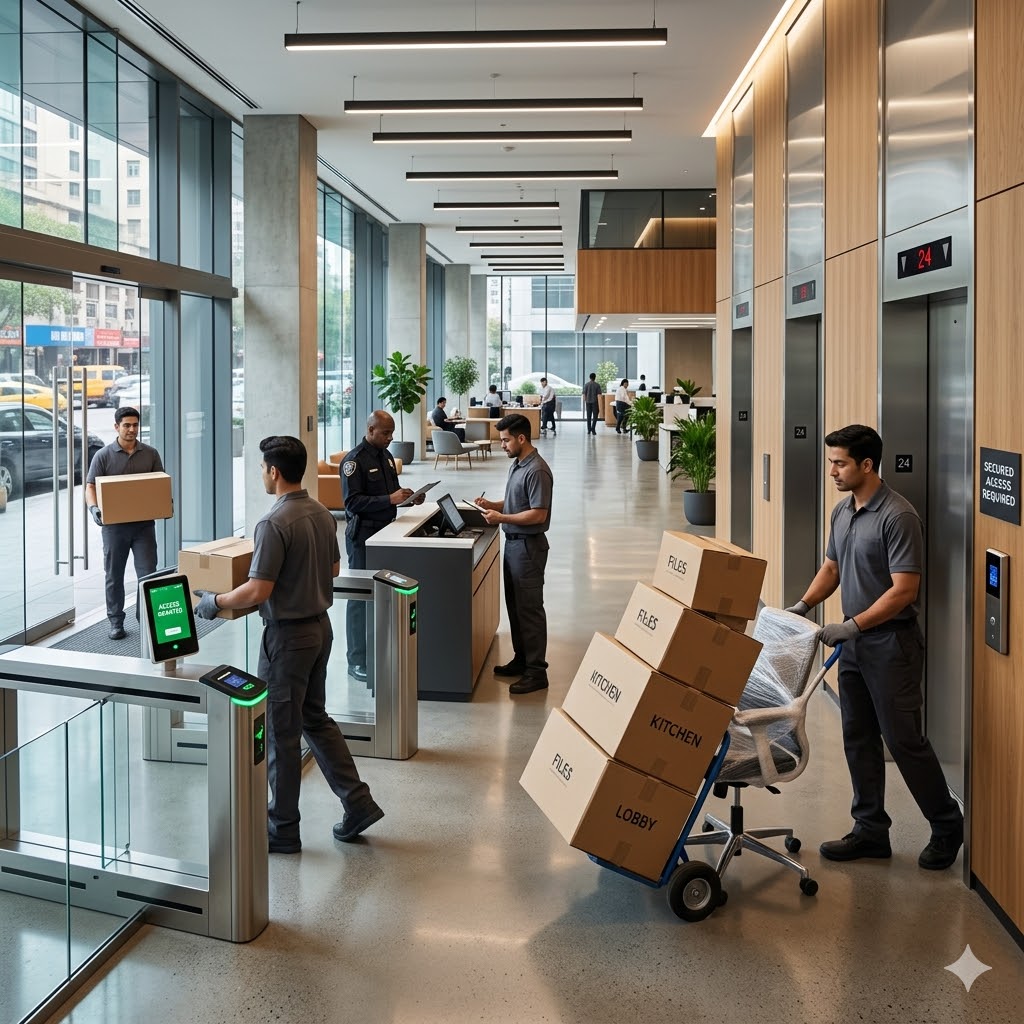
Many modern buildings have security systems and limited entry points. As a result, movers cannot simply walk in and start loading items.
Some buildings require advance booking for elevators. Others limit moving hours during busy times. Therefore, restricted access moving needs proper coordination with building management.
High-rise apartments also create space problems. Tight corners, narrow staircases, and small elevators make large furniture difficult to move safely.
Professional Movers Start With Pre-Move Planning
Professional movers inspect the building before moving day. This step is important for smooth restricted access moving.
They measure hallways, elevators, and doorways carefully. They also identify loading zones and parking areas.
This planning reduces surprises during the move. In addition, movers create backup solutions if elevators become unavailable.
Some companies also coordinate directly with property managers. This saves time and improves communication.
Elevator Reservations Help Movers Save Time
Elevator booking is one of the biggest parts of restricted access moving. Many buildings allow moves only during fixed hours.
Professional movers reserve service elevators in advance. As a result, movers can transport furniture faster and avoid delays.
Movers also protect elevator walls and floors with padding materials. This prevents damage during loading and unloading.
Large residential towers often require proof of insurance before elevator access approval. Experienced movers usually prepare these documents early.
Special Equipment Improves Restricted Access Moving
Professional movers use compact tools during restricted access moving. These tools help them work safely in small spaces.
Dollies with rubber wheels protect floors and reduce noise. Furniture sliders help movers move heavy items through tight hallways.
Shoulder straps also improve lifting control in staircases. Meanwhile, moving blankets protect walls and corners from scratches.
Some movers use smaller trucks for properties with limited parking access. This improves loading speed in crowded areas.
Loading Dock Coordination Keeps Moves Organized
Large apartment buildings and office towers usually have shared loading docks. Therefore, scheduling becomes important during restricted access moving.
Professional movers book loading docks before arrival. This reduces waiting time and improves efficiency.
Movers also organize boxes carefully inside trucks. Proper stacking prevents shifting during transportation.
Businesses using Commercial Moving Services in Westport CT often depend on organized loading strategies to reduce office downtime.
Building Rules Must Be Followed Carefully
Each building has different moving policies. Therefore, movers review rules before starting restricted access moving.
Some buildings ban weekend moves. Others restrict large truck parking near entrances.
Professional movers follow these rules carefully. This helps avoid fines, delays, or complaints from property managers.
Experienced teams also communicate clearly with residents and security staff during the process.
How Movers Handle Tight Hallways and Corners
Tight spaces are common in apartment buildings. However, skilled movers use smart techniques during restricted access moving.
They disassemble furniture before carrying it through narrow areas. This makes transportation easier and safer.
Movers also use lifting angles carefully to avoid wall damage. In addition, they wrap furniture with protective blankets for extra safety.
Large sofas, beds, and dining tables often require partial disassembly before elevator transport.
Parking Restrictions Can Affect Moving Speed
Parking rules are another challenge in restricted access moving. Some buildings do not allow large trucks near entrances.
Professional movers secure temporary permits when needed. They also identify nearby parking spaces before moving day.
Quick parking access reduces walking distance between trucks and elevators. As a result, the move becomes more efficient.
Long-distance movers especially benefit from organized parking logistics during urban relocations.
Packing Methods Matter in Restricted Buildings
Secure packing plays a major role in successful restricted access moving. Fragile items need extra protection inside elevators and stairways.
Professional movers use strong boxes and protective wraps for safer transportation. Clearly labeled boxes also improve unloading speed.
Many homeowners choose Packing and Unpacking Services in Norwalk CT because organized packing reduces confusion inside busy apartment buildings.
Communication Helps Avoid Last-Minute Problems
Good communication improves every stage of restricted access moving. Professional movers stay in contact with customers, building managers, and security teams.
They confirm schedules before arrival. They also update customers if delays happen.
Clear communication reduces stress on moving day. In addition, it helps movers respond quickly to unexpected problems.
Long-Distance Moves Need Extra Coordination
Interstate relocations require additional planning during restricted access moving. Movers must coordinate arrival times carefully with both buildings.
Delays at one location can affect the full moving schedule. Therefore, experienced movers build extra time into long-distance plans.
Customers planning Long distance moving from Connecticut to south Carolina often look for movers experienced in apartment logistics and restricted building access.
How Professional Movers Reduce Damage Risks
Professional movers focus heavily on safety during restricted access moving. They use protective floor runners, wall padding, and careful lifting techniques.
Heavy furniture moves slowly through narrow spaces. This lowers the chances of impact damage.
Movers also inspect furniture before and after transportation. As a result, customers receive better protection for valuable belongings.
Final Thoughts
Restricted access moving requires skill, planning, and experience. Professional movers handle elevator scheduling, tight hallways, loading docks, and parking limits efficiently.
They also use specialized equipment and organized packing methods to improve safety. Proper communication with building management helps avoid delays and confusion.
Hiring experienced movers for restricted buildings can save time, reduce stress, and protect your belongings during relocation.