Get a Free Estimate Today!
Industrial Relocation Safety Procedures
Industrial relocations are among the most complex and high-risk moving projects. Unlike residential or standard commercial moves, industrial relocations often involve heavy machinery, manufacturing equipment, hazardous materials, specialized tools, production lines, and critical infrastructure.
Without proper safety procedures, industrial relocations can lead to equipment damage, workplace injuries, operational downtime, regulatory violations, and significant financial losses.
This is why safety planning is not just one part of an industrial move—it is the foundation of the entire project.
Whether relocating a manufacturing plant, warehouse, distribution center, production facility, or industrial equipment, following proven industrial relocation safety procedures helps protect people, assets, and business continuity.
At Real Moving & Storage, we understand that successful industrial relocations require careful planning, experienced coordination, and strict adherence to safety protocols from start to finish.
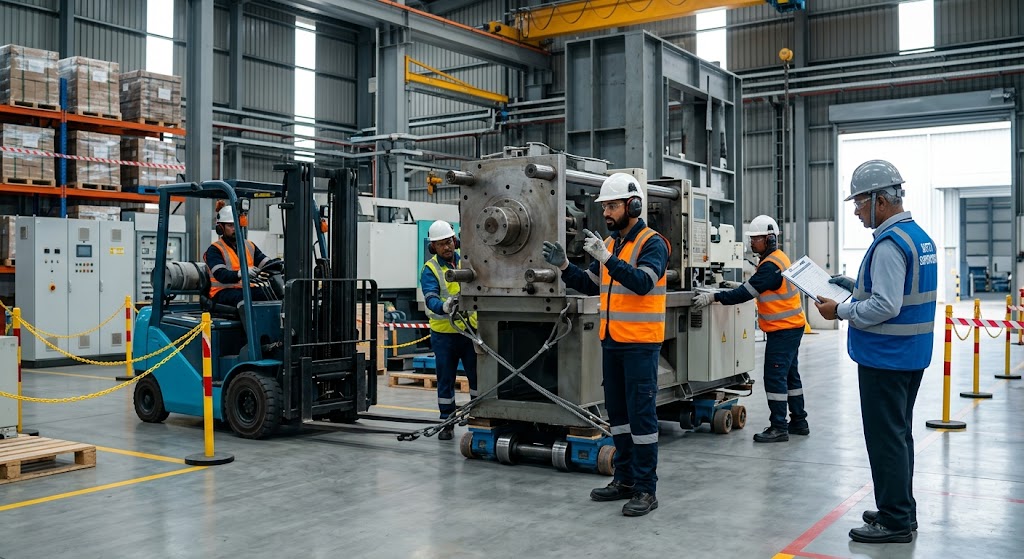
Why Safety Is Critical During Industrial Relocation?
Industrial environments contain risks that are not present in traditional moves.
These risks may include:
- Heavy machinery
- High-voltage systems
- Compressed air equipment
- Hazardous materials
- Forklift operations
- Rigging activities
- Large-scale transportation logistics
Even a minor safety failure can result in injuries, equipment damage, production delays, and costly operational disruptions.
This is why professional industrial movers prioritize risk assessment before any equipment is disconnected or transported.
Step 1: Conduct a Comprehensive Safety Risk Assessment
Every industrial relocation should begin with a detailed safety evaluation.
Before moving day, relocation teams assess:
- Equipment size and weight
- Facility access points
- Potential hazards
- Transportation routes
- Structural limitations
- Utility systems
- Regulatory requirements
This assessment helps identify safety risks before they become costly problems.
Many successful projects incorporate the same planning principles used during Commercial Moving Services in Westport CT, where detailed site evaluations help reduce relocation risks.
Step 2: Develop a Relocation Safety Plan
After identifying potential hazards, relocation managers create a formal safety plan.
This document outlines:
- Safety procedures
- Emergency response protocols
- Equipment handling guidelines
- Employee responsibilities
- Communication procedures
- Incident reporting processes
A written safety plan ensures everyone involved understands their role and responsibilities throughout the relocation.
Step 3: Inventory and Asset Documentation
Industrial facilities often contain hundreds or thousands of assets.
Before relocation begins, businesses should document:
- Machinery
- Tools
- Production equipment
- Electrical systems
- Inventory
- Replacement parts
Accurate documentation supports both safety and operational recovery after the move.
Asset tracking also reduces the likelihood of misplaced equipment and installation errors.
Step 4: Lockout/Tagout (LOTO) Procedures
One of the most important industrial relocation safety procedures is Lockout/Tagout (LOTO).
Before equipment is disconnected, all energy sources must be isolated and secured.
This includes:
- Electrical systems
- Hydraulic systems
- Pneumatic systems
- Mechanical energy sources
- Stored energy systems
LOTO procedures prevent accidental equipment activation during dismantling, transportation, and installation.
Failure to follow proper lockout procedures remains one of the leading causes of industrial workplace injuries.
Step 5: Equipment Disassembly and Labeling
Many industrial machines cannot be transported as complete units.
Professional relocation teams carefully disassemble equipment while documenting:
- Connection points
- Cable routing
- Control systems
- Component locations
- Installation requirements
Every component should be labeled clearly to support safe reassembly at the destination facility.
Detailed labeling also reduces installation errors and startup delays.
Step 6: Employee Safety Training
Even the best relocation plan can fail if workers are not properly trained.
Before relocation begins, employees should receive instruction on:
- Hazard recognition
- Equipment handling procedures
- Emergency protocols
- Personal protective equipment (PPE)
- Restricted access zones
- Communication procedures
Safety training improves awareness and helps reduce workplace accidents during relocation activities.
Step 7: Personal Protective Equipment Requirements
Industrial relocation projects often require specialized PPE.
Depending on the work environment, personnel may need:
- Hard hats
- Safety glasses
- Steel-toe boots
- Cut-resistant gloves
- High-visibility clothing
- Hearing protection
- Respiratory protection
PPE requirements should be clearly communicated and enforced throughout the project.
Step 8: Safe Rigging and Heavy Equipment Handling
Moving industrial equipment often requires cranes, forklifts, hoists, and rigging systems.
Improper rigging can result in:
- Equipment damage
- Structural damage
- Employee injuries
- Project delays
Professional movers use certified rigging equipment and trained operators to ensure safe lifting and transportation procedures.
Weight calculations, load balancing, and equipment inspections are critical components of this process.
Step 9: Transportation Safety Procedures
Transportation introduces additional safety considerations.
Industrial relocation transportation plans should address:
- Load securement
- Route planning
- Oversized load permits
- Escort vehicle requirements
- Weather conditions
- Vehicle inspections
Equipment must be properly secured to prevent movement during transit.
Businesses relocating facilities over long distances often work with a trusted Long Distance Moving Company in Fairfield CT to ensure transportation logistics are planned safely and efficiently.
Step 10: Hazardous Material Compliance
Some industrial facilities contain hazardous substances that require special handling.
Examples include:
- Chemicals
- Compressed gases
- Industrial solvents
- Lubricants
- Fuel systems
Relocation teams must comply with applicable local, state, and federal regulations when transporting these materials.
Proper documentation and containment procedures are essential for regulatory compliance and workplace safety.
Step 11: Packing and Protection of Sensitive Components
Industrial equipment often contains delicate components that require specialized protection.
Examples include:
- Control panels
- Sensors
- Circuit boards
- Precision instruments
- Monitoring devices
Professional packing reduces the risk of damage during transportation.
Businesses utilizing Packing and Unpacking Services in Norwalk CT often benefit from professional packing methods that protect valuable and sensitive equipment throughout relocation.
Step 12: Safety During Reinstallation and Startup
The relocation process does not end when equipment arrives at the new facility.
Reinstallation presents its own safety challenges.
Before restarting operations, businesses should verify:
- Equipment alignment
- Electrical connections
- Mechanical integrity
- Safety controls
- Emergency systems
- Operational testing procedures
A controlled startup process helps identify issues before production resumes.
Common Industrial Relocation Safety Mistakes
Many industrial relocation accidents occur because organizations:
- Skip risk assessments
- Ignore lockout/tagout procedures
- Fail to train employees
- Use inadequate rigging equipment
- Overlook transportation risks
- Rush installation schedules
Most of these problems can be prevented through proper planning and professional project management.
Industrial Relocation Safety Checklist
Before beginning an industrial move, verify that you have:
- Completed a risk assessment
- Created a written safety plan
- Documented all equipment
- Implemented lockout/tagout procedures
- Conducted employee training
- Inspected rigging equipment
- Prepared transportation logistics
- Reviewed regulatory requirements
- Scheduled post-installation testing
This checklist provides a strong foundation for a safer relocation project.
How Real Moving & Storage Supports Safe Industrial Relocations
At Real Moving & Storage, we understand that industrial relocations demand more than transportation. They require planning, safety management, equipment protection, and operational coordination.
Since 2006, our family-owned company has helped businesses execute complex relocations while prioritizing safety and minimizing operational disruptions. Founded by Lucas Pinto, who brings more than 25 years of moving industry experience, we remain committed to delivering reliable moving solutions tailored to each client’s needs.
For businesses relocating operations across state lines, projects such as Long Distance Moving from Connecticut to South Carolina often require even greater attention to transportation safety, compliance, and logistical planning.
Frequently Asked Questions
What is the most important industrial relocation safety procedure?
Risk assessment is typically the most important step because it identifies hazards and helps create appropriate safety controls before relocation begins.
Why is lockout/tagout important during industrial relocation?
Lockout/tagout prevents accidental equipment activation and protects workers during disassembly, transportation, and installation.
What PPE is required during industrial relocation?
Requirements vary by project but often include hard hats, safety glasses, gloves, steel-toe boots, and high-visibility clothing.
How can businesses reduce industrial relocation risks?
Risk assessments, employee training, proper equipment handling, transportation planning, and professional project management all help reduce relocation risks.
Should industrial equipment be tested after relocation?
Yes. Equipment should be inspected, tested, and verified before production operations resume to ensure safety and functionality.