Get a Free Estimate Today!
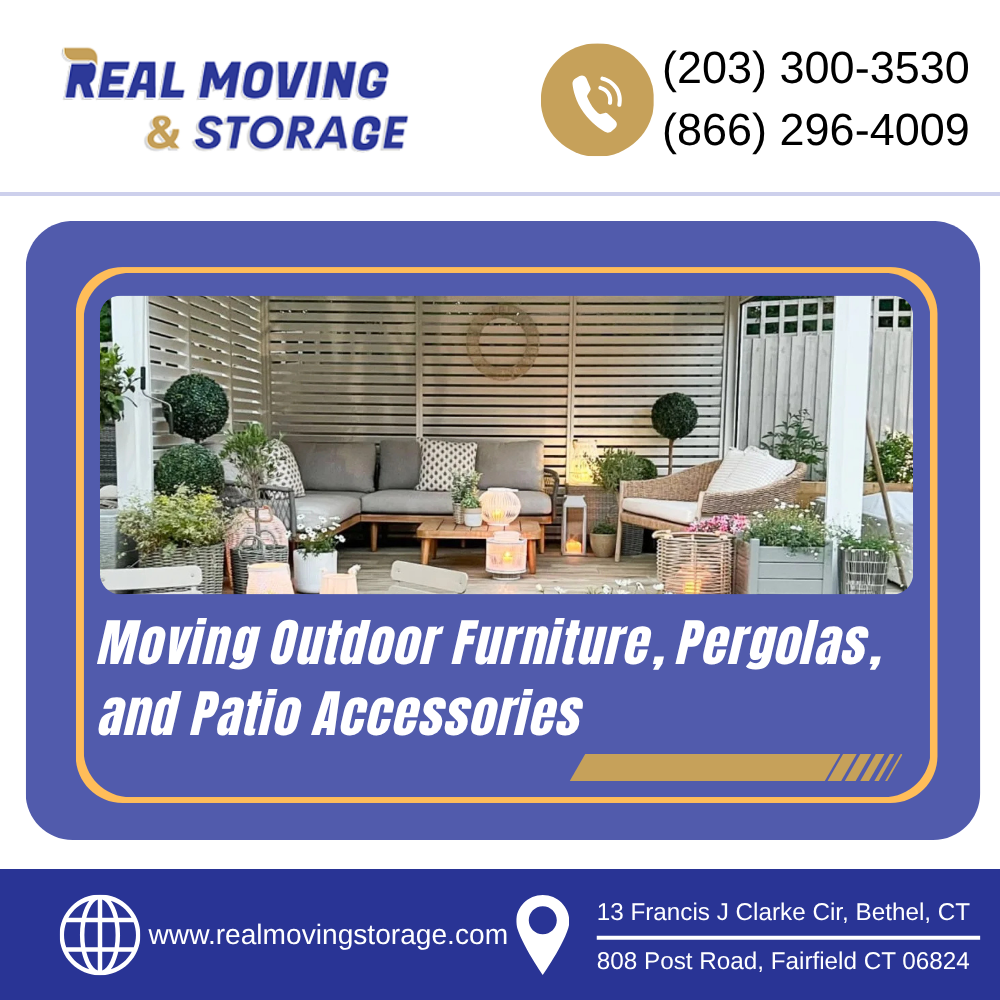
Moving Outdoor Furniture, Pergolas, and Patio Accessories
Moving outdoor furniture takes more than loading tables and chairs onto a moving truck. Patio sets, pergolas, umbrellas, cushions, and garden accessories need different preparation methods. Some items are bulky, while others can crack, bend, or suffer moisture damage during transport.
A well-planned move helps protect these belongings and makes unpacking easier. Start by sorting your outdoor items, checking their condition, and gathering suitable packing materials. Then prepare each piece according to its size, material, and construction.
1. Create an Outdoor Furniture Moving Checklist
Before moving day, make a list of everything in your outdoor space. Include dining tables, chairs, benches, loungers, umbrellas, planters, pergolas, and decorative accessories. This inventory helps you estimate the packing materials and transport space you need.
Next, measure bulky furniture and check the access routes at both properties. Consider gates, doorways, stairs, and narrow pathways. Also, confirm that your new patio has enough space for larger items.
Inspect each piece for loose joints, scratches, and existing damage. Photograph valuable items before packing. Finally, decide which belongings you want to move and which ones you can sell, donate, or discard.
Planning a local relocation? Review the details of moving in Fairfield to explore the company’s local moving service information.
2. Clean and Protect Outdoor Furniture Before Packing
Outdoor furniture collects dust, pollen, leaves, and moisture. Clean each item before wrapping it. Otherwise, dirt trapped under packing materials can scratch surfaces during transport.
Choose a cleaning method that suits the material. Use mild soap and water for suitable plastic and metal furniture. Follow the manufacturer’s care instructions for wooden and wicker pieces. Allow everything to dry completely before packing.
Remove detachable legs, glass tops, and other loose components when the furniture design allows it. Place screws and bolts in labeled bags. Keep the hardware with its matching furniture to simplify reassembly.
Use moving blankets to protect frames and delicate finishes. Add suitable padding around glass edges and other fragile components. Avoid wrapping damp furniture tightly because trapped moisture can damage certain materials.
3. Prepare Pergolas for Safe Transport
Pergolas require additional planning because their size, weight, and attachment methods vary. A freestanding wooden pergola may need a different approach from a metal structure attached to a building.
First, check the manufacturer’s instructions and identify how the structure is secured. Attached or permanently anchored pergolas may require professional assessment before any components are removed.
Before disassembly, photograph the beams, brackets, roof panels, and connections. Label each component clearly. Store screws, bolts, and other fittings in separate, marked containers so you can identify them during reassembly.
Protect wooden beams against scratches and moisture. Wrap metal components with suitable padding to reduce surface damage. Keep long sections supported during handling to prevent bending or unnecessary stress.
Do not dismantle a heavy or anchored pergola without suitable equipment and expertise. Electrical fittings and structural connections may require qualified professionals. Also, check the dimensions and installation requirements at your new property before arranging transport.
4. Pack Patio Accessories by Category
Small patio accessories can easily become misplaced during a move. Grouping similar items makes packing, loading, and unpacking more organized.
Cushions, Pillows, and Outdoor Rugs
Clean and dry cushions before packing them in suitable bags or boxes. Keep fabrics away from rain, dirt, and damp furniture. Fold outdoor rugs neatly and pack their accessories separately.
Patio Umbrellas and Bases
Close the umbrella securely before transport. Remove the base if the design allows it. Keep detachable poles, fasteners, and other components together. Protect the canopy from dirt and moisture.
Planters and Garden Pots
Empty heavy planters before lifting them whenever practical. Wrap ceramic and terracotta pots individually because they can crack under pressure. Use sturdy boxes and suitable cushioning for smaller pots.
Lighting and Decorative Accessories
Remove detachable solar lights, lanterns, and fragile ornaments. Wrap delicate pieces individually. Keep small fittings and mounting hardware in labeled bags so you can locate them later.
5. Load and Secure Outdoor Furniture Properly
Correct loading helps reduce scratches, broken components, and movement during transport. Use suitable moving blankets, padding, and restraints to protect your belongings.
Place heavy furniture on a stable surface and secure it against sliding or tipping. Avoid stacking heavy objects on cushions, lightweight chairs, or fragile decorations.
Glass tabletops need particular care. Keep them properly supported and secured. Do not place them loosely between other furniture pieces. Follow appropriate handling guidance for large glass panels.
Check the weather forecast before moving day. Rain can affect wooden furniture, metal components, cushions, and cardboard packaging. Use appropriate weather protection while avoiding materials that trap moisture against surfaces.
For moves involving several bulky items, plan the loading order in advance. Keep smaller accessories grouped together and make sure essential hardware remains accessible. Customers planning a relocation in the area can also review moving in Norwalk, CT for relevant local moving information.
6. Avoid Common Outdoor Furniture Moving Mistakes
A few simple precautions can prevent unnecessary problems during a move. Avoid packing damp cushions, leaving hardware unlabeled, or forgetting to measure large furniture pieces. Never assume an anchored pergola can be dismantled safely without checking its construction.
Also, avoid placing fragile accessories under heavy items. Protect furniture from rain during loading and inspect the destination before moving large structures. These steps help reduce damage and make setup at your new home easier.
7. Arrange Moving Assistance With Real Moving & Storage
Moving outdoor furniture alongside household belongings can require extra planning. Large tables, heavy seating, and complex structures may need special handling arrangements.
Real Moving & Storage helps customers plan local and long-distance relocations. When requesting an estimate, explain the number of items, their approximate dimensions, access conditions, and any special handling requirements. This information helps the team understand the scope of your move.
If you are relocating to Florida, explore the company’s long-distance moving services from Connecticut to Florida for route-specific information.
Contact Real Moving & Storage at (203) 300-3530 or (866) 296-4009 to discuss your moving requirements.
Frequently Asked Questions
Can outdoor furniture be moved without disassembling it?
Yes, some furniture can be moved intact if it fits through access points and can be handled safely. However, removing detachable legs or other components may make packing and transport easier.
How should a pergola be prepared for relocation?
Check the manufacturer’s instructions, photograph the structure, label its components, and organize the hardware. Have heavy, anchored, or attached structures assessed before disassembly.
How can I keep patio cushions clean during a move?
Clean and dry cushions completely before packing them in suitable protective bags or boxes. Keep them away from moisture, dirt, and heavy objects throughout the move.