Get a Free Estimate Today!
Color Coding Unpacking System Moving: A Practical Setup for Faster Settling
Unpacking creates more stress than packing. Boxes arrive together. Items get mixed. Time slips fast.
A clear color coding unpacking system moving plan reduces this chaos. Each box gets a visual signal. Each room gets a defined color. Movers follow colors, not guesses.
This approach works best when planned before packing begins. It connects packing, loading, unloading, and unpacking into one flow.
What is a Color Coding Unpacking System Moving Setup?
This system assigns one color to each room. Every box carries that color. The same color appears at the destination room.
Movers match colors during unloading. Boxes land directly in the correct space. Sorting time drops without extra coordination.
Text labels still matter. Colors just speed decisions during movement.
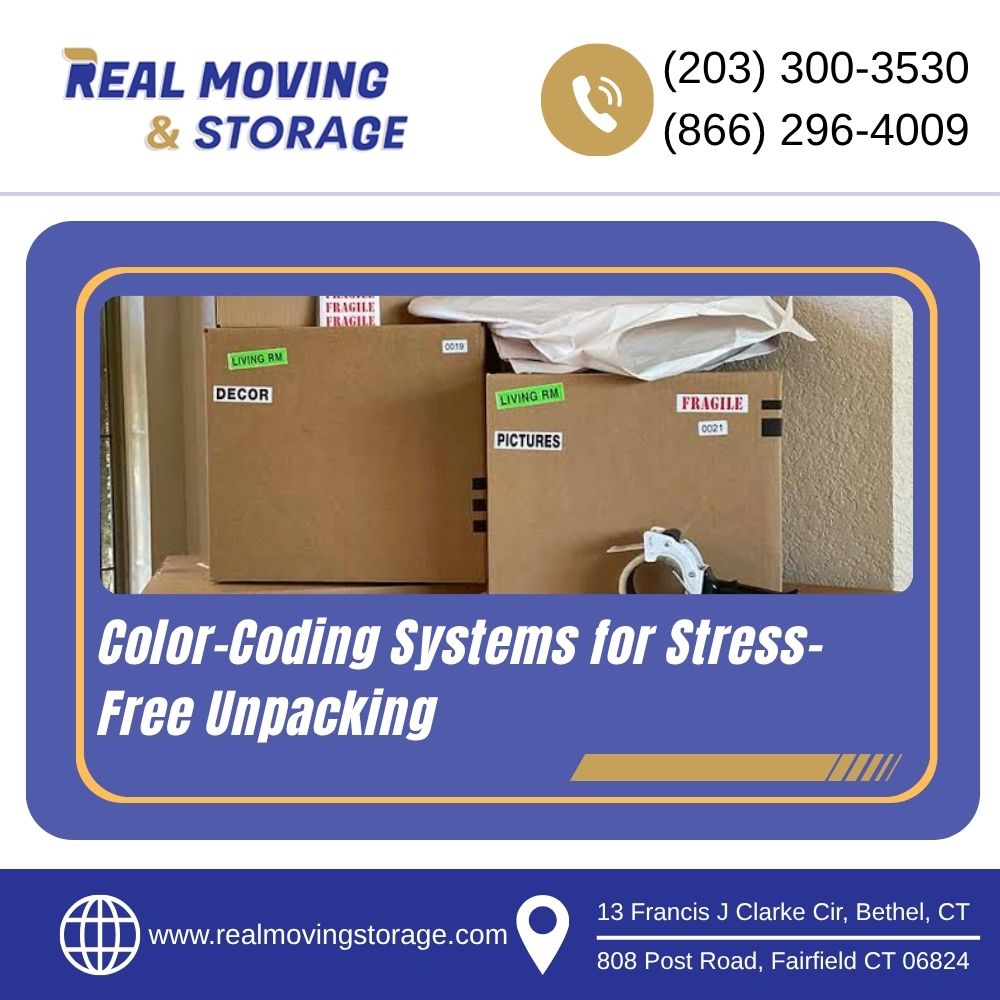
Why This System Works During Unpacking?
Words require attention. Colors need only a glance. That difference matters when dozens of boxes arrive together.
Unpacking becomes structured. Kitchen items reach the kitchen first. Bedroom boxes stay grouped.
Time saved at this stage improves overall moving flow. Placement errors reduce early.
The 5-Step Color Coding Unpacking System Moving Framework
1. Assign Fixed Colors to Rooms
Pick strong, distinct colors. Avoid similar shades. Keep the list short.
Example setup:
- Kitchen – Green
- Bedroom – Yellow
- Living Room – Blue
- Bathroom – Red
Keep this mapping consistent across all boxes.
2. Use Dual Labeling on Every Box
Apply colored tape. Add a written label beside it.
Place labels on at least two sides. Visibility improves during stacking.
Short descriptions help later. Avoid long sentences.
3. Create a Master Color Key Sheet
This sheet links colors to rooms. Keep it simple.
Print multiple copies. Carry one copy during transit.
Place another at the new home entrance. Movers check it quickly.
4. Mark Destination Rooms Before Arrival
Stick color signs on doors. Match them with your system.
Do this before the truck arrives. Delay creates confusion.
Each room becomes a clear drop zone.
5. Add Priority-Based Color Tags
Some boxes need faster access. Mark them with an extra symbol.
Use a stripe or sticker. Keep it consistent.
This layer improves first-day unpacking speed.
Where This System Fits in Real Moves?
This method works across different locations and property types. It scales well for small apartments and large homes.
For example, moves handled in Fairfield moving services often involve multi-room setups where quick unloading matters.
Similar efficiency is required in Stamford relocations, where time windows can be tight.
In areas like Westport home moves, larger properties benefit from structured box placement.
Materials You Actually Need
Keep the setup simple. Avoid overcomplicating tools.
- Colored packing tape
- Permanent markers
- Large adhesive labels
- Printed color key sheets
Optional tools include QR labels. Use them only if you plan to track inventory digitally.
Execution Flow on Moving Day
Arrive early at the new location. Place color signs first.
Share the color key with movers. Explain briefly. Keep instructions short.
Stand near the entry point. Guide if needed. Avoid micromanaging.
Boxes start landing in correct rooms immediately. Sorting phase reduces later.
This is where the color coding unpacking system moving setup shows its real value.
Unpacking Strategy That Works With Color Coding
Unpacking should not start randomly. Sequence matters. Color coding only works fully when paired with a clear order.
Start With Essential Zones
Begin with boxes marked as priority. These should already carry a visible extra mark.
Focus on kitchen basics first. Then move to bedrooms. Bathroom items follow quickly.
This approach avoids unnecessary searching on day one.
Open One Room at a Time
Do not open boxes from different rooms together. This creates overlap.
Complete one space. Then shift to the next.
Color grouping makes this easier to control.
Keep Empty Boxes Controlled
Flatten boxes immediately after unpacking. Stack them in one area.
This keeps pathways clear. Movement inside the house becomes easier.
Common Mistakes That Break the System
Most issues come from small oversights. These reduce the impact of the system.
Using Similar Colors
Light blue and dark blue confuse quickly. Choose bold differences.
Clarity beats aesthetics in this case.
Small or Hidden Labels
Labels must be visible from distance. Tiny stickers fail during unloading.
Use larger strips or tape sections.
Skipping the Color Key
Without a reference sheet, colors lose meaning. Movers rely on quick cues.
Always keep one copy at the entry point.
Labeling Only One Side
Boxes get rotated during movement. One-side labeling reduces visibility.
At least two sides should carry the color mark.
Practical Pro Tips From Real Moves
Small adjustments improve execution quality. These come from actual moving scenarios.
Use Tape Instead of Only Stickers
Tape stays visible even if boxes rub together. Stickers can peel off.
Combine both for better results.
Mark Fragile Items Within Color Zones
Color shows destination. Fragile marking shows handling care.
Keep both signals separate but visible.
Prepare for Low-Light Conditions
Evening moves reduce visibility. Bright or reflective tape helps.
This keeps the system effective at any time.
Real-World Application Across Different Moves
This system adapts to different property sizes. It also fits different moving distances.
In Norwalk moving projects, apartments benefit from tight color grouping due to limited space.
For larger homes in New Canaan relocations, room-level sorting saves hours during unloading.
Moves handled under Fairfield County moving services often involve multiple rooms and storage areas, where color mapping keeps flow controlled.
Adding a Simple Inventory Layer
Color coding handles placement. Inventory handles tracking.
Use a basic sheet. Match box number with its color and contents.
Keep descriptions short. Avoid over-detailing.
This helps when something is needed later. Search becomes faster.
When to Use Digital Tools?
Digital tracking helps in larger moves. It is not required for small setups.
QR labels can link to item lists. Scan to view contents.
Only use this if you plan to maintain it properly. Partial use creates confusion.
Maintaining Consistency From Start to End
The system depends on consistency. One change breaks alignment.
Do not switch colors midway. Do not rename rooms after packing.
Keep the same mapping from first box to final unpacking.
This is what makes a color coding unpacking system moving setup reliable.
How to Scale This System for Complex Moves?
Not every move is simple. Some involve multiple floors. Others include storage units or office setups.
The color coding unpacking system moving approach still works. It just needs slight expansion.
Handling Multi-Floor Homes
Add floor-level indicators. Keep color for rooms. Add a small number or symbol for floor.
Example: Green + “2” for second-floor kitchen storage.
This avoids misplacement during unloading.
Combining Storage and Moving
Some boxes go into storage. Do not mix them with home delivery items.
Use one separate color for storage. Keep it distinct from all room colors.
This prevents confusion during partial unloading.
Office or Workspace Moves
Work setups need tighter grouping. Equipment, cables, and documents must stay linked.
Assign one color for workstations. Use sub-labels for specific desks or teams.
This reduces setup time after arrival.
Adapting the System for Partial Unpacking
Not all items are unpacked immediately. Some stay packed for days.
Color coding helps manage this delay without losing track.
Create a “Later Use” Category
Assign a neutral color like grey. Use it for non-essential items.
Keep these boxes in one area. Avoid mixing with daily-use items.
Group Seasonal or Rare Items
Items like decor or extra bedding do not need early access.
Color grouping keeps them out of the main workflow.
Maintaining Control After Unpacking Starts
Systems often break after the first few boxes. Stay consistent.
Track progress room by room. Do not jump randomly.
Keep labels visible until the room is fully set.
Location-Specific Efficiency in Real Moves
Different regions bring different challenges. Tight schedules. Parking limits. Building rules.
In Westport relocations, timing control matters due to property layouts.
Moves in Ridgefield moving services often involve larger homes where room-level accuracy saves time.
For dense areas like Stamford moving, fast unloading reduces disruption.
Final Setup Checklist Before Moving Day
Run through a quick check. Fix gaps early.
- All rooms have assigned colors
- Labels placed on multiple sides
- Color key printed and ready
- Door markings prepared
- Priority boxes clearly marked
Each step supports the next. Skipping one creates friction later.
Contact and Location Details
Real Moving & Storage
Phone: (203) 300-3530
Toll-Free: (866) 296-4009
Primary Location:
13 Francis J Clarke Cir, Bethel, CT
Additional Location:
808 Post Road, Fairfield, CT
Service coverage includes multiple areas such as Newtown, Wilton, and Southbury.
This completes a structured color coding unpacking system moving setup. Each step connects directly to execution. No extra layers. No confusion during unpacking.