Get a Free Estimate Today!
How Packing Density Impacts Transportation Safety
Packing density plays a major role in transportation safety. It affects cargo stability, fuel efficiency, loading balance, and product protection. Many businesses ignore this factor. However, poor packing density can increase damage risks during transit. It can also raise transportation costs.
For example, companies offering Commercial Moving Services in Westport CT often focus on balanced loading because unsafe cargo placement may lead to accidents and damaged items.
Today, transportation companies use smart loading methods to improve packing density. This helps protect goods during short and long trips. It also improves overall delivery performance.
What Is Packing Density?
Packing density refers to how tightly items are packed inside a truck, container, or storage unit. It measures the use of available space.
High packing density means goods are packed closely together. Low packing density means extra empty space remains inside the load area.
Both situations affect transportation safety differently. Therefore, movers and logistics teams must find the right balance.
Why Packing Density Matters in Transportation?
Transportation safety depends heavily on load stability. If cargo shifts during movement, the vehicle may become unstable.
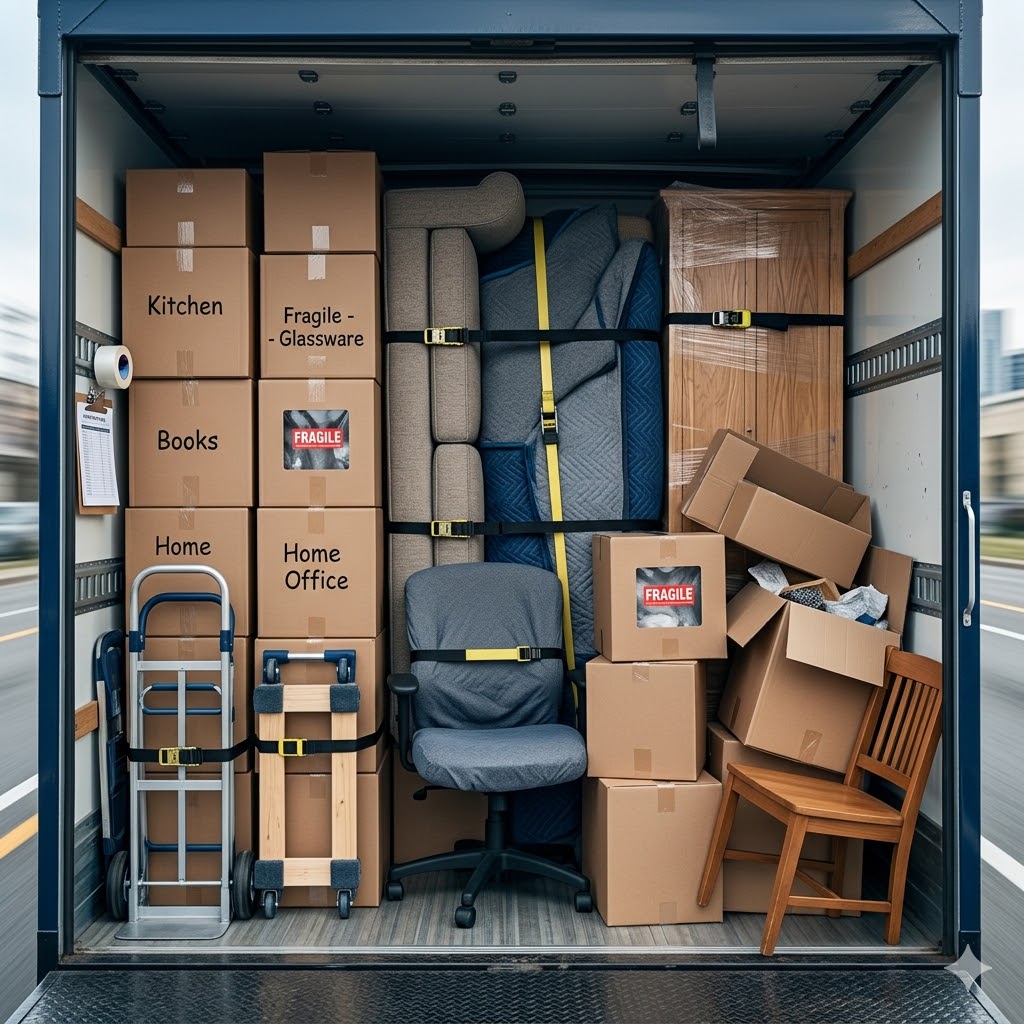
Proper packing density reduces movement inside the truck. As a result, goods stay secure during braking, turning, or sudden stops.
It also helps drivers maintain better control on highways and uneven roads.
Moreover, balanced cargo placement lowers pressure on vehicle suspension systems.
How Poor Packing Density Creates Safety Risks?
1. Cargo Movement During Transit
Loose items can slide inside the truck. This creates imbalance.
Sudden cargo movement may increase rollover risks. It may also damage nearby products.
Therefore, transportation companies carefully monitor packing density before dispatching vehicles.
2. Product Damage
Low packing density allows fragile items to collide during transport.
This often causes broken furniture, cracked electronics, and damaged equipment.
Good packing methods reduce impact between items. As a result, products reach customers safely.
3. Uneven Weight Distribution
Improper packing density may place too much weight on one side of the vehicle.
This affects steering and braking performance.
Additionally, uneven loads increase tire wear and fuel usage.
4. Increased Driver Risk
Unsafe cargo arrangements make driving difficult.
Drivers may struggle during sharp turns or emergency braking.
Because of this, transportation safety rules often include loading standards.
Benefits of Proper Packing Density
Better Load Stability
Correct packing density keeps goods stable during transportation.
Stable cargo improves vehicle balance. Consequently, accident risks become lower.
Lower Transportation Costs
Efficient space usage allows companies to move more items in one trip.
This reduces fuel costs and delivery expenses.
Businesses also save money on damaged goods claims.
Improved Fuel Efficiency
Balanced loads help trucks operate smoothly.
As a result, engines work more efficiently.
Fuel consumption often decreases with optimized packing density.
Faster Loading and Unloading
Well-organized cargo is easier to handle.
Workers can unload items safely and quickly.
This improves overall logistics efficiency.
How Professionals Optimize Packing Density?
Using Strong Packaging Materials
Professional movers use durable boxes and protective materials.
Strong packaging prevents compression damage during stacking.
It also improves overall packing density.
Strategic Weight Placement
Heavy items are placed at the bottom.
Lighter products stay on top.
This creates better balance inside the truck.
Additionally, movers distribute weight evenly across the vehicle.
Reducing Empty Spaces
Experts use padding materials to fill open gaps.
This prevents item movement during transit.
At the same time, it improves cargo stability.
Using Skilled Packing Teams
Experienced movers understand safe loading techniques.
They know how to maximize packing density without damaging items.
Professional packing also reduces transportation delays.
How Packing Density Affects Long-Distance Moving?
Long-distance transportation requires extra planning. Cargo stays on the road for many hours or even days.
Because of this, proper packing density becomes even more important.
For example, companies handling Long distance moving from Connecticut to south Carolina must protect furniture and fragile items from constant road vibrations.
Well-packed cargo reduces shifting during extended travel.
It also lowers the chance of damage caused by sudden braking or rough roads.
The Role of Packing Density in Commercial Transportation
Commercial transportation often involves heavy equipment and bulk inventory.
Therefore, businesses cannot ignore packing density.
Poor cargo arrangement may damage expensive products.
It can also delay deliveries and increase operational costs.
Warehouses and logistics companies now use advanced planning systems to improve loading efficiency.
Many companies even train employees specifically for safe cargo placement.
Packing Density and Fragile Item Protection
Fragile items require careful handling.
Too much pressure can break delicate products.
However, too much empty space can also create problems.
That is why movers balance cushioning and load tightness carefully.
Professional teams offering Packing and Unpacking Services in Norwalk CT often use layered protection methods for glass, electronics, and artwork.
These methods improve packing density while keeping fragile items safe.
Common Mistakes That Reduce Transportation Safety
- Overloading the truck
- Leaving large empty spaces
- Ignoring weight balance
- Using weak boxes
- Stacking heavy items incorrectly
- Skipping protective padding
These mistakes can reduce transportation safety significantly.
Therefore, proper loading inspections are necessary before every trip.
How Technology Helps Improve Packing Density?
Modern logistics companies now use software tools for load planning.
These systems calculate the best cargo arrangement automatically.
As a result, companies improve packing density more efficiently.
Some transportation firms also use sensors to monitor cargo movement during transit.
This helps identify safety risks early.
Final Thoughts
Packing density directly impacts transportation safety. It affects cargo stability, fuel efficiency, product protection, and driver control.
Proper loading methods reduce accidents and lower damage risks. They also improve transportation performance.
Today, professional movers and logistics companies focus heavily on safe packing strategies. Smart cargo planning helps protect both products and people.
Therefore, businesses and homeowners should always choose experienced packing professionals for safer transportation.