Get a Free Estimate Today!
How to Move During Extreme Heat Safely
Moving in hot weather can quickly turn from a simple relocation into a physically exhausting and risky experience. High temperatures, direct sun exposure, and heavy lifting create the perfect conditions for dehydration, fatigue, and even heatstroke. Whether you’re planning a local move or a long-distance relocation, having a clear strategy is essential.
At Real Moving & Storage, we have handled countless summer relocations where temperatures rise above 90°F. Based on real on-ground experience, this guide will help you stay safe, organized, and efficient while moving in hot weather.
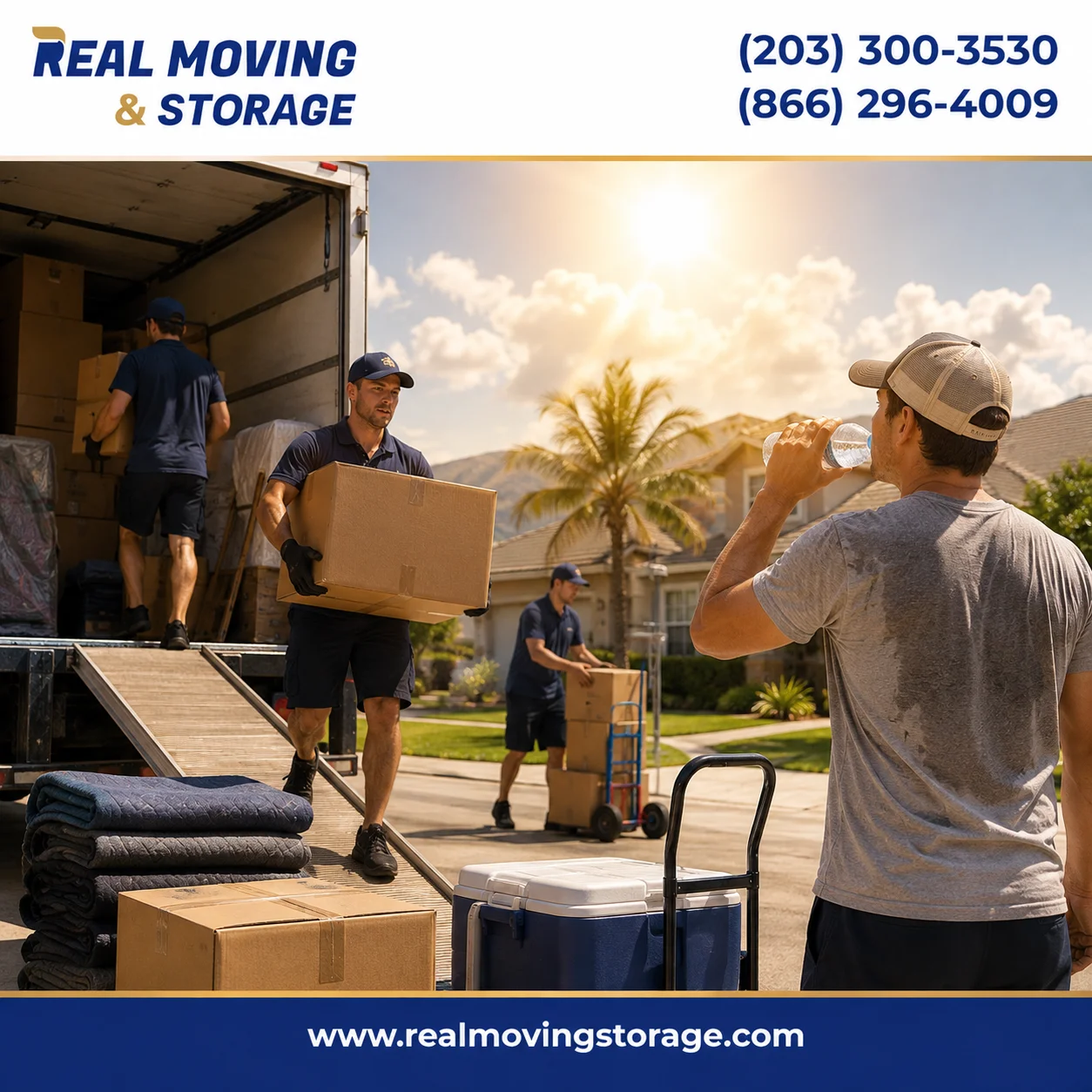
Why Moving in Hot Weather is Risky?
Moving in hot weather is not just uncomfortable — it can be dangerous. Your body loses fluids faster, your energy drains quickly, and your ability to focus reduces.
- Higher risk of dehydration and dizziness
- Increased chances of muscle fatigue and injury
- Heat exhaustion and heatstroke risks
- Damage to heat-sensitive belongings
Understanding these risks helps you prepare better and avoid serious health issues during your move.
Moving Day Heat Survival Timeline (Expert Strategy)
One of the biggest mistakes people make while moving in hot weather is not planning their day properly. Instead of random work, follow a structured timeline to reduce heat exposure.
- 5:30 AM – Wake up, hydrate, and eat a light breakfast
- 6:30 AM – Start loading boxes and furniture
- 9:30 AM – Take first major hydration break
- 11:00 AM – Switch to indoor tasks (cleaning, organizing)
- 2:00 PM – Rest, hydrate, and avoid heavy lifting
- 6:00 PM – Resume unloading when temperature drops
This structured approach minimizes direct exposure to peak heat hours and improves efficiency.
Essential Safety Tips for Moving in Hot Weather
1. Start Early or Late in the Day
The safest way to handle moving in hot weather is to avoid peak heat hours (11 AM to 4 PM). Early morning and evening hours are cooler and safer for heavy lifting.
2. Stay Hydrated Throughout the Move
Hydration is critical when moving in hot weather. Drink water every 20–30 minutes, even if you don’t feel thirsty. Add electrolyte drinks to maintain energy levels.
3. Wear Heat-Appropriate Clothing
- Light-colored, loose-fitting clothes
- Moisture-wicking fabric instead of heavy cotton
- Cap or hat for sun protection
- Sunscreen (SPF 30+)
4. Use Cooling Tools
Cooling equipment can significantly reduce body temperature during moving in hot weather:
- Cooling towels
- Portable fans
- Ice packs or cooling vests
5. Take Regular Breaks
Do not push your limits. Take short breaks every 20–30 minutes to cool down, hydrate, and regain energy.
Most Dangerous Moments During Moving in Hot Weather
Some parts of the moving process are more dangerous than others when temperatures are high. Being aware of these can help you stay cautious.
- Loading the truck: Limited airflow makes it extremely hot inside
- Attic packing: Heat gets trapped, creating extreme temperatures
- Midday unloading: Direct sunlight increases exhaustion
- Handling metal items: Surfaces can become dangerously hot
Always plan extra precautions during these high-risk phases.
What NOT to Do When Moving in Hot Weather?
Avoiding common mistakes is just as important as following safety tips.
- Do not skip meals — low energy increases risk
- Do not rely only on cold drinks — balance with water
- Do not overpack boxes — heavier lifting increases fatigue
- Do not rush — speed increases mistakes and injuries
- Do not ignore early signs of heat exhaustion
Smart decisions during moving in hot weather can prevent serious health issues.
Smart Packing Strategy for Extreme Heat
Packing plays a crucial role in reducing stress and exposure during moving in hot weather. A well-organized packing system saves time and effort.
- Pack heat-sensitive items separately
- Use insulated boxes for electronics and candles
- Keep essential items easily accessible
- Label boxes clearly by priority
- Avoid packing items that can melt or leak
Efficient packing ensures faster loading and unloading, reducing your exposure to heat.
How to Protect Kids, Pets & Heat-Sensitive Items?
Moving in hot weather becomes even more challenging when children, pets, and delicate items are involved. They are more vulnerable to heat and require extra care.
For Kids & Pets
- Keep them in an air-conditioned room or with a friend/relative
- Ensure regular hydration and light meals
- Never leave them inside a parked vehicle
- Provide comfort items to reduce stress during the move
For Heat-Sensitive Items
- Carry electronics in your personal vehicle with AC
- Use insulated boxes for candles, cosmetics, and liquids
- Avoid leaving items in a closed truck for long durations
Proper handling helps you avoid damage and ensures safety while moving in hot weather.
DIY Moving vs Hiring Professionals in Extreme Heat
One of the biggest decisions during moving in hot weather is whether to do it yourself or hire professionals.
FactorDIY MovingProfessional MoversPhysical EffortVery HighLowHeat ExposureLong DurationMinimizedSafetyRiskyTrained HandlingEfficiencySlowerFaster & Organized
At Real Moving & Storage, our trained team follows heat-safe protocols, ensuring efficient relocation even during extreme temperatures. If your move falls in peak summer, hiring professionals can significantly reduce risks.
Signs of Heat Exhaustion & Heatstroke (Must Know)
Understanding early warning signs can prevent serious health emergencies while moving in hot weather.
Heat Exhaustion Symptoms
- Heavy sweating
- Dizziness or weakness
- Nausea or headache
- Muscle cramps
Heatstroke Symptoms (Emergency)
- Body temperature above 103°F
- Hot, dry skin (no sweating)
- Confusion or unconsciousness
- Rapid heartbeat
If any of these symptoms appear, stop immediately, move to a cool place, hydrate, and seek medical help if needed.
How Heat Affects Your Mind During a Move?
Moving in hot weather doesn’t just impact your body — it affects your mental performance too.
- Reduced focus and decision-making ability
- Increased irritability and stress
- Higher chances of mistakes and accidents
Taking breaks and staying cool helps maintain both physical and mental efficiency.
Pro Tips to Stay Efficient While Moving in Hot Weather
- Keep a cooler with water and snacks nearby
- Use moving equipment like dollies to reduce effort
- Pre-plan box placement to save time
- Cool your new home before arrival
- Keep an essentials bag with quick-access items
These small optimizations can make a big difference in your overall moving experience.
Final Thoughts: Stay Safe & Move Smart
Moving in hot weather requires more than just planning — it requires smart execution. By following a structured approach, staying hydrated, and avoiding peak heat hours, you can make your move safer and more manageable.
If you want a stress-free experience, consider working with Real Moving & Storage. Our experienced team ensures safe handling, efficient moving, and minimal exposure to extreme heat conditions.
Call Now: (203) 300-3530 | (866) 296-9989
Frequently Asked Questions (FAQs)
What is the best time for moving in hot weather?
Early morning (6 AM – 9 AM) or late evening is the safest time to avoid peak temperatures.
How often should I drink water while moving?
Drink water every 20–30 minutes to stay hydrated and maintain energy levels.
Can heat damage furniture and electronics?
Yes, extreme heat can warp wood, melt materials, and damage electronics if not protected properly.
Is hiring movers better in summer?
Yes, professional movers are trained to handle heavy lifting safely in extreme heat, reducing risk and effort.
What should I do if I feel dizzy during the move?
Stop immediately, move to a cool place, hydrate, and rest. Seek medical help if symptoms worsen.