Get a Free Estimate Today!
How To Move Sensitive Equipment: Lab, Medical, and Tech Moves Explained
Moving standard office furniture or household items is one thing—but relocating sensitive equipment used in laboratories, medical facilities, or technology environments is a completely different challenge. These items often include fragile instruments, high-value machines, calibration-dependent devices, and temperature-sensitive tools.
From an expert perspective, moving such equipment requires precision planning, specialized packing techniques, regulatory awareness, and experienced handling. Any mistake during transportation can damage expensive equipment, interrupt operations, or compromise critical data.
In this expert opinion guide, we will explain how professionals handle sensitive equipment relocation, what risks are involved, and the best practices businesses should follow when planning these complex moves.
Understanding What Counts as Sensitive Equipment
Sensitive equipment generally refers to devices that are delicate, high-value, or highly calibrated. These machines require special handling because even minor vibrations, pressure changes, or environmental exposure can affect their performance.
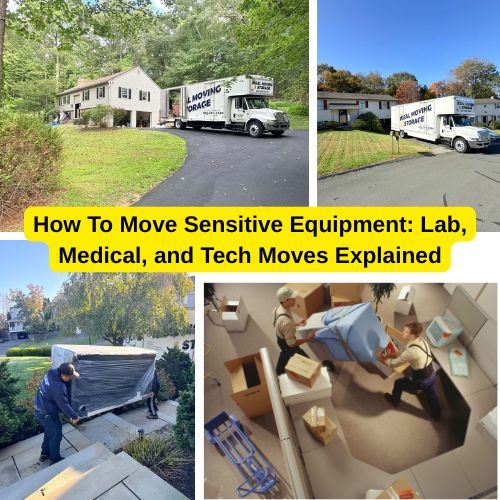
Examples include:
- Laboratory microscopes and analyzers
- Medical imaging equipment
- Diagnostic machines
- Servers and networking infrastructure
- Semiconductor manufacturing tools
- Biotech research instruments
- Data center hardware
- Pharmaceutical testing equipment
Unlike standard office equipment, these devices often require controlled packing, specialized transport, and technical supervision during relocation.
Why Moving Lab, Medical, and Tech Equipment Is Complex?
Sensitive equipment relocation involves much more than simply loading items onto a truck. Experts must consider multiple risk factors before the move begins.
1. Calibration Sensitivity
Many lab and medical instruments are calibrated to precise measurements. Even small movements or vibrations during transportation can disrupt their accuracy.
After relocation, these machines often require recalibration and testing before being used again.
2. Environmental Sensitivity
Some equipment must be protected from:
- Temperature fluctuations
- Humidity changes
- Dust and contamination
- Static electricity
This is especially important when moving biotech, pharmaceutical, or semiconductor equipment.
3. High Replacement Costs
Many scientific or medical devices cost tens or even hundreds of thousands of dollars. Proper insurance coverage and professional handling are essential to protect these valuable assets.
4. Regulatory Compliance
Certain equipment used in healthcare and research environments must follow strict regulatory guidelines during transportation and relocation.
Failure to meet compliance standards could lead to operational delays or legal issues.
Expert Steps for Moving Sensitive Equipment Safely
Professionals typically follow a structured process to ensure the safe relocation of specialized equipment.
Step 1: Pre-Move Assessment and Planning
Before any equipment is moved, experts conduct a detailed site assessment.
This includes:
- Inspecting the equipment
- Documenting current condition
- Reviewing disassembly requirements
- Identifying transportation risks
- Creating a relocation strategy
For businesses relocating offices or specialized workspaces, working with experienced providers of Commercial Moving Services in Westport CT can help ensure that both standard office assets and delicate technical equipment are handled with professional care.
Proper planning significantly reduces the risk of damage during transportation.
Step 2: Professional Equipment Disassembly
Many scientific and technical devices must be partially or fully disassembled before relocation.
This may involve:
- Removing delicate components
- Securing internal parts
- Disconnecting power systems
- Labeling cables and connectors
Each component is documented carefully so the equipment can be reassembled correctly at the destination.
In many cases, technicians or manufacturer representatives supervise this stage.
Step 3: Specialized Packing Techniques
Sensitive equipment cannot be packed using standard boxes or moving blankets.
Professional movers use specialized materials such as:
- Anti-static wrapping
- Shock-absorbing foam
- Custom-built crates
- Climate-controlled containers
- Moisture protection barriers
Experienced teams offering Packing and Unpacking Services in Norwalk CT understand how to protect delicate electronics, laboratory devices, and medical tools during transportation.
Proper packing prevents vibration damage and ensures equipment arrives safely.
Step 4: Safe Transportation and Handling
Transporting sensitive equipment requires careful coordination.
Professional movers often use:
- Air-ride suspension trucks
- Climate-controlled vehicles
- Liftgate loading systems
- Vibration-resistant transport racks
Drivers must also follow carefully planned routes to minimize road impact and transportation risks.
For long-distance relocations, additional logistics planning is required. Businesses planning Long distance moving from Connecticut to south Carolina must consider travel time, climate conditions, and regulatory requirements during transport.
Step 5: Installation and Recalibration
Once the equipment reaches the destination, the work is not finished.
Experts must:
- Reassemble equipment components
- Inspect for transportation damage
- Reconnect power and systems
- Perform calibration testing
This final stage ensures that the equipment functions properly before it returns to operational use.
Common Mistakes Businesses Should Avoid
From an expert perspective, several mistakes can increase the risk of equipment damage during relocation.
1. Attempting DIY Equipment Moves
Businesses sometimes try to move expensive machines internally without specialized movers. This often leads to damage, calibration loss, or safety risks.
2. Improper Packing Materials
Standard packing supplies are not designed to protect delicate scientific equipment.
3. Lack of Documentation
Failure to document equipment condition before moving can complicate insurance claims if damage occurs.
4. Ignoring Environmental Requirements
Temperature or humidity changes can damage lab instruments, pharmaceuticals, and electronics.
Why Professional Equipment Movers Matter?
Relocating sensitive equipment requires a combination of technical knowledge, specialized packing skills, and logistical expertise.
Professional movers understand:
- Equipment protection requirements
- Transportation risks
- regulatory considerations
- proper documentation procedures
Hiring experts reduces downtime, protects valuable equipment, and ensures business operations resume quickly after the move.
Real Moving & Storage: Supporting Complex Relocations
When it comes to moving specialized equipment, experience and attention to detail matter. Real Moving & Storage focuses on providing reliable relocation solutions designed to handle both standard and complex moves.
Their team understands the importance of protecting valuable assets, maintaining organization during relocation, and ensuring safe transportation of delicate items.
By combining structured planning, professional packing, and efficient transportation logistics, the company helps businesses and organizations relocate without unnecessary disruptions.
Every move is approached with the goal of minimizing risk, protecting equipment, and ensuring a smooth transition to the new location.
Visit or Contact Real Moving & Storage
Our Address
13 Francis J Clarke Cir, Bethel, CT https://share.google/hz7AqSiKDBcMLhgeL
Also Find Us Here
808 Post Road, Fairfield, CT https://share.google/I8rOyzQeXylFlTBYm
Contact Details
(203) 300-3530 (866) 296-4009
Expert Conclusion
Moving sensitive equipment such as laboratory instruments, medical devices, and technology infrastructure requires a highly structured and professional approach. From pre-move planning and specialized packing to controlled transportation and equipment recalibration, every stage of the relocation process must be handled carefully.
Organizations that rely on precision equipment should never treat these relocations like standard moves. With expert planning, specialized handling, and experienced movers, even the most delicate equipment can be transported safely and efficiently.
Investing in professional support ensures that valuable equipment remains protected, operational downtime is minimized, and business continuity is maintained.