Get a Free Estimate Today!
How to Pack a Kitchen Efficiently for Moving?
Packing a kitchen is not simple. It has fragile items. It has heavy items. It has daily-use essentials. To pack kitchen for moving the right way, you need a clear system. This guide focuses on practical steps used by professionals.
Start Early and Plan Smart
Do not leave kitchen packing for the last day. Start 5–7 days before your move. Begin with items you rarely use. Keep only daily essentials outside.
Create three groups:
- Daily use items
- Occasional items
- Unused or extra items
This step makes it easier to pack kitchen for moving without confusion.
Declutter Before Packing
Do not pack everything. Remove expired food. Donate duplicate utensils. Discard broken items.
Less items means less packing time. It also reduces moving cost and risk of damage.
If you want a structured approach, read how to declutter before moving.
Gather the Right Packing Materials
Using the right materials is critical. Weak packing leads to breakage.
- Sturdy small and medium boxes
- Packing paper
- Bubble wrap (limited use)
- Dish pack boxes
- Strong packing tape
- Markers for labeling
Line each box with paper or a towel. This creates a cushion base.
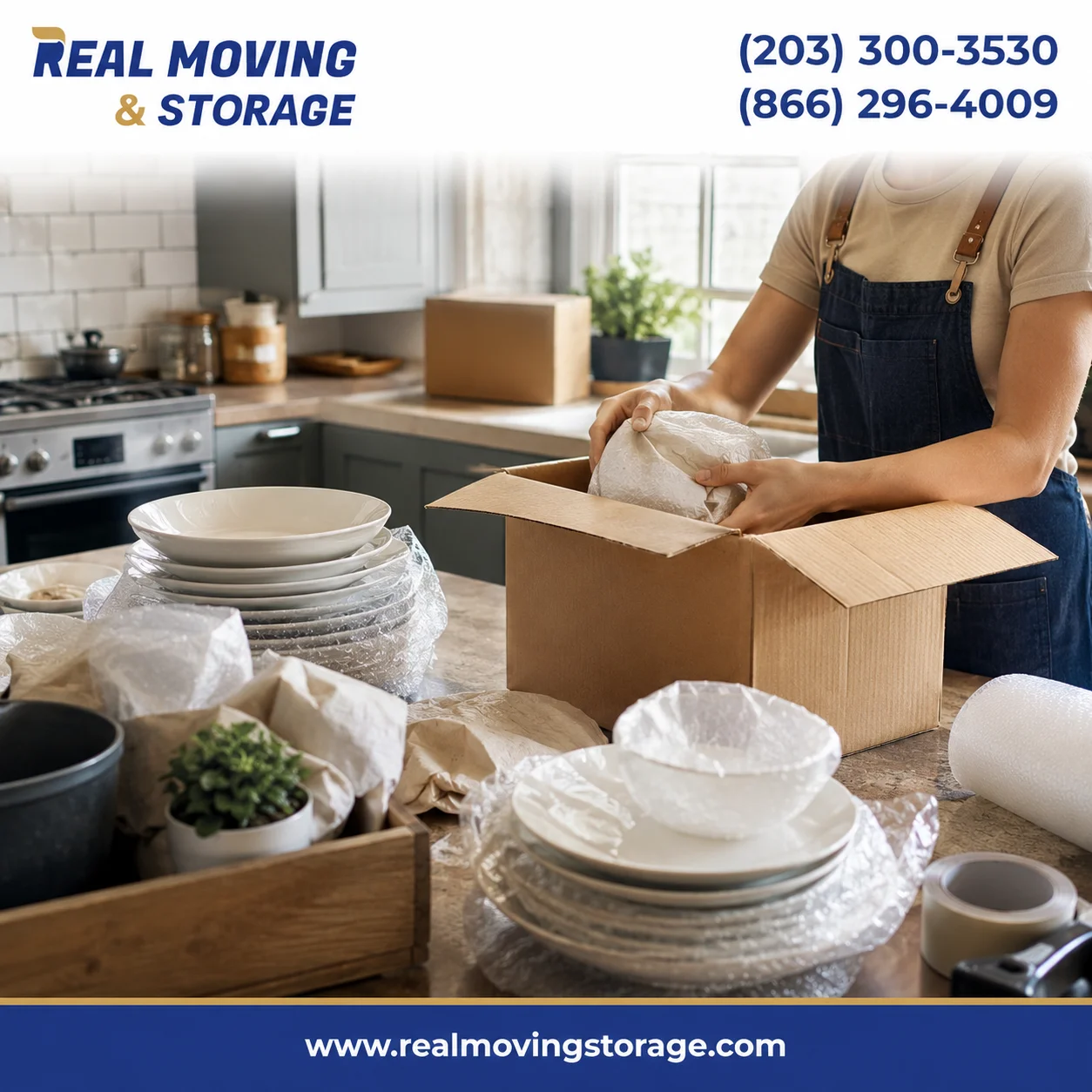
Pack Kitchen for Moving: Step-by-Step Process
1. Pack Rarely Used Items First
Start with bakeware, extra dishes, and seasonal items. These are easy to pack early.
2. Use Small Boxes for Heavy Items
Kitchen items get heavy quickly. Use small boxes for dishes and pantry items. This prevents lifting injuries.
3. Place Heavy Items at the Bottom
Always place heavy items first. Add lighter items on top. Fill empty spaces with paper.
4. Wrap Every Fragile Item
Wrap plates, bowls, and glassware individually. Use packing paper instead of newspaper to avoid stains.
5. Fill Gaps Properly
Empty space causes movement. Movement causes damage. Fill all gaps with paper or cloth.
How to Pack Dishes and Glassware?
This is the most important part when you pack kitchen for moving.
- Wrap each plate separately
- Stack plates vertically, not flat
- Use dish pack boxes for better protection
- Wrap glasses and mugs individually
- Place heavier items at the bottom
For advanced protection techniques, check fragile packing tips.
How to Pack Pots, Pans, and Utensils?
These items are less fragile but need proper organization.
- Stack pots together
- Place paper between pans to avoid scratches
- Use original boxes for expensive cookware
- Bundle utensils together using rubber bands
Store small utensils inside larger pots to save space.
How to Pack Pantry Items?
Food packing requires care. Spills can damage everything.
- Seal open packets with tape
- Use plastic wrap for lids
- Pack spices in zip bags
- Avoid moving perishable items
Keep liquids upright. Use separate boxes if needed.
How to Pack Kitchen Appliances?
Small appliances need protection and proper handling.
- Clean and dry before packing
- Wrap cords separately
- Use original boxes if available
- Secure moving parts
For larger appliances, read appliance moving safety tips.
Label Everything Clearly
Labeling saves time during unpacking. It also prevents mishandling.
- Mark boxes as “Fragile”
- Write room name
- Use color coding if possible
Proper labeling improves efficiency. Learn more in labeling tips guide.
Keep an Essentials Box
This is a must when you pack kitchen for moving.
Include:
- Basic utensils
- Plates and cups
- Knife
- Snacks
- Cleaning supplies
This box should stay with you. Not in the moving truck.
Common Mistakes to Avoid
- Using large boxes for heavy items
- Not filling empty space
- Mixing fragile and heavy items
- Skipping labeling
- Packing wet items
Avoiding these mistakes helps you pack kitchen for moving safely.
Professional Insight That Makes a Difference
Professionals follow a simple rule. Small boxes. Tight packing. No empty space. This reduces movement inside boxes. That means less damage.
They also pack in layers. Each layer is cushioned. Each layer is stable.
When to Consider Professional Packing?
If your kitchen is large, packing can take time. Professionals handle it faster and safer.
You can explore packing and unpacking services for better efficiency.
About Real Moving & Storage
At Real Moving & Storage, we are a family-owned company serving Fairfield since 2006. Led by Lucas Pinto, we provide reliable packing, moving, and storage with a personal approach.
Serving areas like Fairfield and Westport, we focus on safe handling and stress-free moves.
Final Checklist Before Moving Day
- All fragile items double wrapped
- Boxes sealed and labeled
- Essentials box ready
- Appliances unplugged and cleaned
When done right, you can pack kitchen for moving without stress. The goal is simple. Protect items. Save time. Avoid damage.