Get a Free Estimate Today!
Industrial Equipment Relocation Planning
Industrial equipment relocation looks simple on paper. However, the actual process needs detailed coordination, technical planning, and safety control. Even a small mistake can stop production for days. Therefore, businesses now focus more on structured industrial equipment relocation strategies before shifting machinery or factory assets.
In this case study blog, we explain how a mid-sized manufacturing company completed a successful industrial equipment relocation project without major downtime. We will also cover planning methods, safety steps, common mistakes, timelines, and cost-saving ideas.
Many companies also combine relocation with storage, logistics, and specialized transportation support. In some situations, businesses even coordinate with providers offering Commercial Moving Services in Westport CT for organized business relocation assistance.
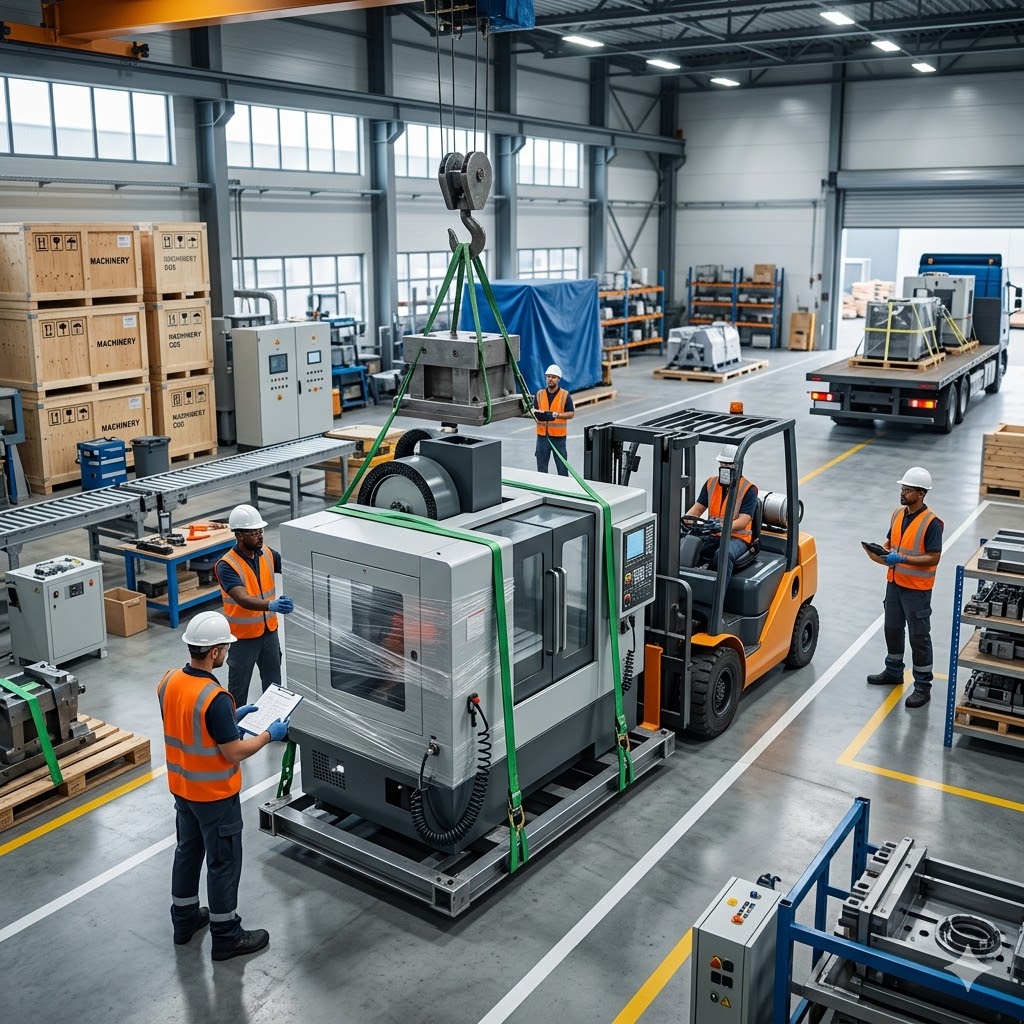
Proper Industrial Equipment Relocation Planning
Heavy machines are expensive. Some equipment also contains sensitive electrical systems, calibration settings, and production software. Because of this, random shifting can damage equipment or delay operations.
A proper industrial equipment relocation plan helps companies:
- Reduce production downtime
- Protect expensive machinery
- Improve worker safety
- Control transportation costs
- Avoid installation errors
- Maintain operational continuity
Most importantly, planning creates accountability. Every team member understands their role before the relocation begins.
The Company Background
A manufacturing company in Connecticut planned to move its production equipment to a larger facility. The business handled metal fabrication and operated several CNC machines, conveyor systems, hydraulic presses, and packaging units.
The old plant had limited space. In addition, the company wanted better workflow efficiency and future expansion opportunities.
However, the relocation challenge was serious.
The company needed to complete the industrial equipment relocation project within nine days. Otherwise, production losses would affect client deliveries.
Step 1: Initial Site Inspection and Equipment Audit
The relocation team first inspected both facilities carefully.
They documented:
- Machine dimensions
- Weight capacity requirements
- Electrical layouts
- Floor load limits
- Door access sizes
- Ventilation systems
- Utility connection points
After that, they created a complete equipment inventory.
This stage is critical during every industrial equipment relocation project because missing information often creates delays later.
Step 2: Creating a Relocation Timeline
The project manager divided the relocation into smaller phases.
The schedule included:
- Machine shutdown
- Electrical disconnection
- Equipment labeling
- Packing and protection
- Loading operations
- Transportation
- Machine installation
- Calibration and testing
- Final operational checks
Instead of moving everything together, the team relocated machines in stages. As a result, partial production continued during the transition.
This reduced revenue loss significantly.
How Labeling Improved the Relocation Process?
During the industrial equipment relocation, technicians used color-coded labels for cables, control panels, and hardware components.
This simple method saved many installation hours.
Without proper labeling, reconnecting industrial machinery becomes difficult. In many cases, businesses spend extra money on troubleshooting because cables are mixed incorrectly.
The relocation team also photographed each machine before dismantling. Therefore, reinstallation became faster and more accurate.
Step 3: Specialized Packing and Protection
Heavy equipment faces vibration risks during transport. Therefore, the company used industrial-grade wrapping materials, wooden crating, and shock-resistant supports.
Sensitive components received extra protection.
Control panels were moisture-sealed. Hydraulic sections were drained carefully. Fragile electronic systems were packed separately.
Many businesses underestimate this stage of industrial equipment relocation. However, improper packing often causes hidden damage that appears later during operation.
For smaller business assets and office equipment, some companies also rely on Packing and Unpacking Services in Norwalk CT to simplify relocation management.
Step 4: Transportation Logistics and Route Planning
Transportation planning required permits and route analysis.
Some machines exceeded standard transport dimensions. Therefore, the logistics team reviewed:
- Bridge height restrictions
- Road weight limits
- Traffic timing
- Weather conditions
- Loading dock accessibility
Every transport vehicle was scheduled in sequence. Consequently, unloading delays were minimized at the new facility.
Large-scale industrial equipment relocation projects often fail because transportation coordination is ignored.
Unexpected Challenge During the Move
On the fourth day, one hydraulic press showed internal oil leakage after loading.
The technicians immediately paused transportation.
Instead of forcing the process, they repaired the sealing issue onsite. Although this delayed one truck, it prevented much larger equipment damage later.
This situation highlights why contingency planning matters in every industrial equipment relocation project.
Step 5: Equipment Installation at the New Facility
After transportation, the installation phase began.
The engineering team followed pre-designed floor layouts. Machines were positioned according to workflow efficiency instead of random placement.
This improved production movement inside the facility.
Next, technicians completed:
- Electrical reconnections
- Safety testing
- Calibration checks
- Software integration
- Alignment inspections
Each machine underwent testing before production restarted.
Safety Measures During Industrial Equipment Relocation
Safety remained the highest priority throughout the project.
The company implemented:
- Restricted movement zones
- Protective gear requirements
- Forklift traffic control
- Emergency response procedures
- Daily safety briefings
Additionally, certified rigging professionals handled heavy lifting operations.
Industrial machinery accidents can create severe injuries. Therefore, experienced supervision is essential during any industrial equipment relocation process.
The Final Results of the Relocation Project
The relocation finished within the planned timeline.
Production resumed after nine days.
The company achieved several improvements:
- Better production efficiency
- Improved workflow organization
- Lower maintenance delays
- Safer operational space
- Faster product movement
Most importantly, the business avoided major equipment damage.
The management later stated that early planning was the biggest reason for success.
Common Mistakes Businesses Make During Industrial Equipment Relocation
Many businesses rush relocation planning. As a result, problems appear later.
Common mistakes include:
- Ignoring equipment measurements
- Poor communication between teams
- Underestimating downtime costs
- Skipping backup documentation
- Using untrained labor
- Improper machinery protection
- Weak transportation planning
A professional industrial equipment relocation strategy reduces these risks significantly.
When Should a Business Start Relocation Planning?
Experts recommend starting preparation at least three to six months before relocation.
Large facilities may need even more time.
Early planning allows businesses to:
- Compare transportation solutions
- Prepare utility infrastructure
- Schedule production adjustments
- Train employees
- Reduce emergency expenses
Some businesses handling interstate operational shifts also coordinate with providers experienced in Long distance moving from Connecticut to south Carolina for broader relocation logistics support.
Final Thoughts
Industrial relocation projects require more than transportation. They need engineering knowledge, safety planning, communication, and technical coordination.
A successful industrial equipment relocation process protects business continuity and reduces operational risks. Moreover, it helps companies restart production faster without unnecessary expenses.
Every relocation project is different. However, careful planning always creates better results.
Businesses that invest in preparation usually experience smoother transitions, safer equipment handling, and fewer costly disruptions.