Get a Free Estimate Today!
Moving With Aquarium Fish: Complete Safety Guide for a Stress-Free Relocation
Moving With Aquarium Fish: Complete Safety Guide for a Stress-Free Relocation
Moving to a new home is exciting, but relocating an aquarium requires far more planning than packing ordinary household belongings. Moving With Aquarium fish means transporting a living ecosystem where water quality, temperature, oxygen levels, and beneficial bacteria all play an important role in keeping your fish healthy. Even a small mistake can place unnecessary stress on your aquatic pets.
Whether you’re moving a small freshwater aquarium or a large saltwater tank, preparing in advance can make the entire process much smoother. From safely packing your fish to protecting delicate glass tanks and preserving your biological filter, every step contributes to a successful relocation.
Just like following a detailed moving timeline helps organize an entire household move, creating a dedicated aquarium relocation plan ensures nothing important gets overlooked.
This complete guide explains everything you need to know about Moving With Aquarium, including preparation, transportation, setting up your tank at the new home, common mistakes to avoid, and when professional movers may be the safest option.
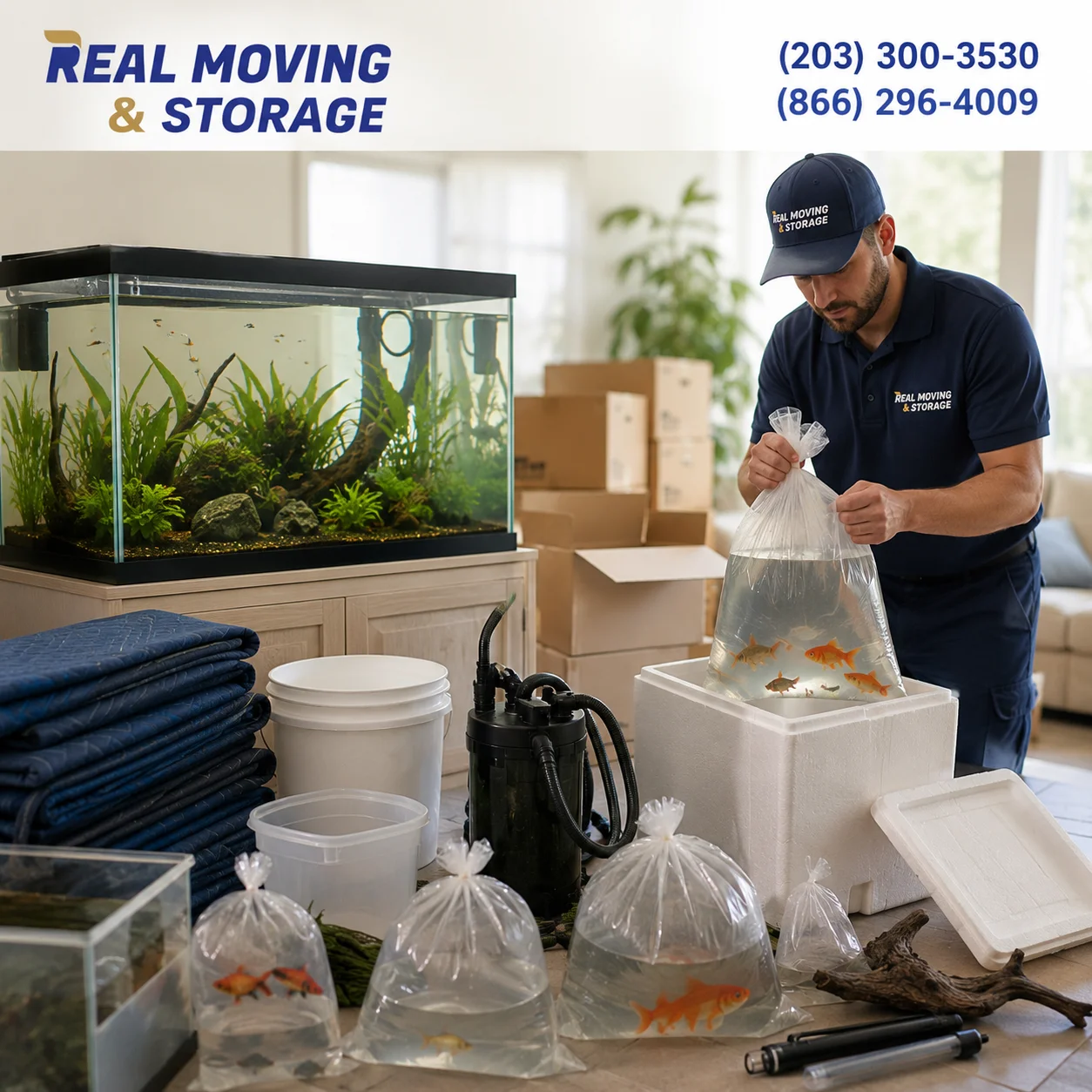
Why Moving an Aquarium Requires Extra Care?
An aquarium is much more than a glass box filled with water. Inside the tank exists a carefully balanced biological environment that supports the health of your fish. Water chemistry, filtration, beneficial bacteria, decorations, plants, substrate, and equipment all work together to maintain stability.
During Moving With Aquarium, this balance can easily be disrupted. Fish often experience stress from changing temperatures, reduced oxygen, excessive movement, unfamiliar surroundings, and temporary changes in water quality.
Some of the most common risks include:
- Temperature fluctuations
- Oxygen depletion
- Ammonia spikes
- Broken aquarium glass
- Loss of beneficial bacteria
- Fish injuries during transport
- Equipment damage
Fortunately, these risks can be minimized with proper preparation and careful handling.
Plan Your Aquarium Move Before Moving Day
The safest aquarium relocations begin several days before the moving truck arrives. Waiting until moving day often leads to rushed decisions that can negatively affect both your fish and your aquarium equipment.
Create a Moving Checklist
Preparing a written checklist helps ensure every task is completed in the correct order. If you’re already creating a household relocation schedule, include your aquarium as part of your overall household moving checklist.
Your checklist should include:
- Purchasing transport containers
- Preparing water storage buckets
- Cleaning equipment
- Packing aquarium supplies
- Planning transportation
- Setting up the destination location
Stop Feeding Fish Before the Move
Most aquarium professionals recommend stopping feeding approximately 24 to 48 hours before transportation. Fish can comfortably go without food for a short period, and reducing waste production helps maintain cleaner transport water.
Less waste means:
- Lower ammonia buildup
- Cleaner transport water
- Reduced stress
- Healthier fish during travel
Prepare the New Location Before Arrival
Before Moving With Aquarium, decide exactly where the aquarium will be placed in your new home.
Check that the location has:
- A strong, level floor
- Stable room temperature
- Electrical outlets nearby
- No direct sunlight
- Enough clearance for maintenance
- Easy access to a water source
Planning the setup beforehand reduces the amount of time your fish remain inside temporary containers after arriving.
Essential Supplies You’ll Need
Having every supply ready before moving day makes the relocation safer and much more organized.
Fish Transport Supplies
- Fish transport bags
- Food-grade buckets with lids
- Battery-operated air pumps
- Portable aerators
- Insulated coolers
- Styrofoam containers
Packing Supplies
- Bubble wrap
- Packing paper
- Moving blankets
- Microfiber towels
- Packing tape
- Stretch wrap
- Permanent markers
- Labels
Using the best packing materials for household items also helps protect fragile aquarium equipment, glass lids, lighting systems, and accessories during transport.
Protect Your Aquarium Equipment
Every electrical component should be disconnected carefully before packing.
This includes:
- Filters
- Heaters
- LED lighting
- Powerheads
- Air pumps
- Automatic feeders
- Thermometers
Allow heaters to cool completely before removing them from the aquarium. Wrap each item separately using soft protective material and label every cable to make installation easier later.
Many homeowners already use professional techniques for packing fragile household items. The same level of care should be applied to aquarium equipment because replacement costs can be significant.
Prepare Your Fish Before Packing
Healthy fish adapt much better to relocation than stressed or unhealthy fish. Spend several days observing your aquarium before moving.
Look for:
- Normal swimming behavior
- Healthy appetite
- No white spots
- No torn fins
- No rapid breathing
- No visible infections
Avoid introducing new fish, changing decorations, or performing major water changes during the week before Moving With Aquarium. Maintaining a stable environment reduces unnecessary stress before transportation begins.
Save Beneficial Bacteria — Not Just Water
One of the biggest misconceptions about Moving With Aquarium is that saving all the original water is the most important step.
In reality, the majority of beneficial bacteria live inside:
- Filter media
- Bio rings
- Sponges
- Gravel
- Decorations
- Tank surfaces
Keep the filter media damp using original aquarium water throughout transportation. This helps preserve the biological filtration system and shortens the recovery period after reassembly.
Saving approximately 25–50% of the original water can still help fish adjust more comfortably after arriving at the new location.
How to Safely Catch and Transport Aquarium Fish?
The health of your fish should always be your highest priority during Moving With Aquarium. Catching fish incorrectly or placing them in unsuitable containers can cause unnecessary stress and injuries. Plan to remove your fish only after most household belongings have been packed so they spend the least amount of time in temporary containers.
Step 1: Turn Off All Aquarium Equipment
Before handling your fish, disconnect every electrical device connected to the aquarium.
- Heater
- Filter
- Air pump
- Powerheads
- Lighting system
- Automatic feeders
Allow heaters to cool naturally before removing them. Placing a hot heater into cold air or water can crack the glass.
Step 2: Catch Fish Calmly
Fish become frightened when chased around the aquarium. Instead, dim the room lights and move slowly while using a soft aquarium net.
Follow these simple practices:
- Catch one fish at a time.
- Avoid sudden movements.
- Never squeeze fish inside the net.
- Transfer fish immediately into prepared containers.
- Keep handling time as short as possible.
Reducing stress during capture makes it easier for fish to recover once the aquarium has been reassembled.
Step 3: Choose the Right Transport Container
The best container depends on how far you’re moving.
For Local Moves
- Food-grade buckets with secure lids
- Battery-operated air pumps
- Insulated coolers
For Long-Distance Moves
- Professional fish transport bags
- Insulated shipping boxes
- Portable oxygen systems (for valuable species)
Never overcrowd containers. Fish need enough swimming space and sufficient oxygen throughout transportation.
If you’re planning an interstate relocation, reviewing these essential long-distance moving tips can help you better organize every stage of your move, including transporting delicate pets.
Maintaining Proper Water Temperature
Temperature changes are one of the biggest risks during Moving With Aquarium. Even healthy fish can become stressed if water temperatures change too quickly.
To help maintain stable conditions:
- Use insulated coolers.
- Keep containers out of direct sunlight.
- Avoid placing fish inside extremely hot moving trucks.
- Protect containers from freezing weather.
- Monitor temperatures whenever possible.
During winter or summer relocations, transporting fish inside your personal vehicle is usually much safer than placing them inside the moving truck.
How to Move the Aquarium Tank Safely?
Never attempt to move a glass aquarium while it still contains water. Water dramatically increases weight and places uneven pressure on the glass panels, increasing the likelihood of cracks.
Drain the Aquarium Properly
Before lifting the tank:
- Remove decorations.
- Drain the water.
- Remove substrate if necessary.
- Disconnect all equipment.
- Dry the outside surfaces.
Store reusable aquarium water separately in clean containers.
Wrap the Glass Tank Carefully
Glass aquariums should be protected from impacts throughout transportation.
Recommended materials include:
- Moving blankets
- Bubble wrap
- Foam sheets
- Corner protectors
- Stretch wrap
Many of the same techniques used when packing fragile household items safely are equally effective for protecting aquarium glass during relocation.
Lift the Tank Correctly
Always lift the aquarium from the bottom frame.
Never:
- Lift using the top frame.
- Carry the tank by the glass edges.
- Drag the aquarium across the floor.
- Place heavy items inside the empty tank.
Large aquariums often require three or four people for safe lifting.
Moving Live Aquarium Plants
Live aquatic plants require moisture throughout the move.
Wrap roots using damp paper towels before placing the plants inside plastic bags or waterproof containers.
Common aquarium plants that travel well include:
- Anubias
- Java Fern
- Amazon Sword
- Java Moss
- Cryptocoryne
Avoid exposing plants to direct sunlight or extreme temperatures for extended periods.
Transporting Aquarium Decorations
Decorations should be packed separately to prevent damage to both the aquarium and accessories.
Separate:
- Rocks
- Driftwood
- Artificial decorations
- Ceramic caves
- Air stones
- Thermometers
Wrap fragile ornaments individually before placing them inside sturdy moving boxes.
Using smart packing techniques helps organize aquarium accessories while reducing the risk of breakage.
Protecting Your Biological Filter
Beneficial bacteria are responsible for converting harmful ammonia into less toxic compounds. Losing these bacteria may cause your aquarium to recycle after the move.
To protect your biological filter:
- Keep filter media damp.
- Never rinse filter media with tap water.
- Transport media inside original aquarium water.
- Reconnect filtration as soon as possible after arrival.
Preserving your biological filter is often more important than preserving large amounts of aquarium water.
Preparing Saltwater Aquariums for Moving
Saltwater aquariums require additional preparation because corals, live rock, and marine fish are generally more sensitive than freshwater species.
Extra precautions include:
- Mix replacement saltwater before moving day.
- Protect live rock with damp towels.
- Keep corals submerged whenever possible.
- Monitor salinity after reassembly.
- Test ammonia, nitrite, nitrate, and pH before introducing livestock.
For larger reef systems, hiring experienced movers who understand delicate, high-value items can help reduce unnecessary risks during transportation.
Setting Up Your Aquarium After the Move
Once you’ve reached your new home, avoid rushing the setup process. Taking a little extra time now can prevent problems later and help your fish adjust more comfortably after Moving With Aquarium.
Step 1: Position the Aquarium
Place the aquarium on a sturdy, level stand before adding any water. Check that it’s away from direct sunlight, heating vents, air conditioners, and high-traffic areas.
If you’re still unpacking your home, consider following these packing and unpacking best practices to keep the setup area organized and avoid accidental damage.
Step 2: Reinstall Equipment
Reconnect each piece of equipment in the following order:
- Substrate
- Decorations
- Filter media
- Filter
- Heater
- Air pump
- Lighting
Double-check every electrical connection before turning the equipment back on.
Step 3: Add Water Carefully
Begin by adding the saved aquarium water, then slowly refill the remaining volume using conditioned water that closely matches the original temperature.
Avoid pouring water directly onto the substrate, as this can disturb beneficial bacteria and cloud the aquarium.
Step 4: Acclimate the Fish
Never release fish directly into the aquarium.
Instead:
- Float the transport bags for 15–20 minutes.
- Gradually mix small amounts of tank water into the bags.
- Allow fish to adjust slowly.
- Release fish gently using a net.
This gradual acclimation minimizes shock caused by changes in temperature and water chemistry.
Common Mistakes to Avoid When Moving With Aquarium
Many aquarium problems occur because of avoidable mistakes. Being aware of these issues can help protect both your fish and your investment.
- Moving the aquarium with water still inside.
- Feeding fish immediately before transport.
- Throwing away filter media.
- Using untreated tap water.
- Exposing fish to extreme temperatures.
- Rushing the setup after arrival.
- Adding fish back too quickly.
- Overcrowding transport containers.
Planning ahead is one of the easiest ways to avoid these problems. Following a complete moving timeline helps ensure every important task is completed before moving day.
Should You Hire Professional Movers?
Small aquariums can often be moved safely without professional assistance. However, larger aquariums, custom-built tanks, reef systems, and expensive aquatic collections usually require additional planning and careful handling.
Professional movers can help with:
- Heavy lifting
- Protective packing
- Safe transportation
- Loading and unloading
- Storage solutions if needed
If your relocation includes valuable furniture, delicate electronics, artwork, or other fragile belongings along with your aquarium, using professional packing and unpacking services can reduce the risk of accidental damage during transport.
Why Choose Real Moving & Storage?
Relocating an aquarium requires patience, careful handling, and a well-organized moving plan. Working with an experienced moving company can make transporting delicate household belongings much less stressful.
Real Moving & Storage is a trusted, family-owned moving company proudly serving Connecticut since 2006. Founded by Lucas Pinto, who brings more than 25 years of moving industry experience, the company specializes in local and long-distance residential and commercial moves. Their experienced team provides professional packing, careful transportation, private trucks, and secure storage solutions designed to protect valuable belongings throughout the relocation process.
Learn more About Real Moving & Storage, explore their complete moving services, or read verified customer reviews before planning your next move.
Frequently Asked Questions
How long can fish stay in transport bags?
Most aquarium fish can remain safely in properly prepared transport bags for several hours. For longer journeys, battery-operated aerators or oxygen-filled bags are recommended.
Can I move my aquarium with water inside?
No. Aquariums should always be emptied before transportation. Moving a tank filled with water significantly increases the risk of cracked glass and structural damage.
Should I keep the old aquarium water?
Saving around 25%–50% of the original water can help your fish adjust more comfortably, but preserving the filter media is even more important because it contains most of the beneficial bacteria.
How soon should I feed my fish after moving?
Allow your fish several hours to settle into their new environment before offering a small amount of food. Monitor their behavior before returning to a normal feeding schedule.
Is Moving With Aquarium fish safe during winter?
Yes, provided the fish are transported in insulated containers and protected from freezing temperatures. Maintaining stable water temperature is essential during cold-weather moves.
Final Thoughts
Moving With Aquarium fish requires more preparation than moving ordinary household items, but the process becomes much easier with proper planning. Protecting your fish, preserving beneficial bacteria, maintaining stable water conditions, and carefully packing your aquarium equipment all contribute to a successful relocation.
Whether you’re moving across town or to another state, taking the time to prepare each step carefully will help your aquatic pets settle into their new home safely and comfortably.
If you’re looking for experienced movers who understand the importance of handling delicate belongings with care, contact Real Moving & Storage today or request a free estimate through their pricing page to plan your upcoming move with confidence.