Get a Free Estimate Today!
Packing by Weight Distribution: Safety & Efficiency
Damage during relocation often starts with poor balance inside boxes and trucks. Many people focus on wrapping items. They ignore load placement. That creates pressure points, shifting loads, and unsafe lifting conditions.
Weight distribution packing moving is not just a packing method. It is a system. It controls how weight is spread across boxes, surfaces, and transport space. When done right, it reduces breakage, improves handling, and saves time during loading.
This guide explains practical methods used in real moving scenarios. The focus stays on safety, structure, and efficiency.
What Weight Distribution Means in Moving?
Every packed box has a center of gravity. If weight is uneven, that center shifts. The box becomes unstable. It tilts during lifting. It slides during transport.
In weight distribution packing moving, the goal is simple. Keep the center stable. Spread weight evenly. Avoid sudden shifts.
This applies at three levels:
- Inside each box
- Across multiple boxes
- Inside the moving truck
Ignoring any one level creates risk. Good packing connects all three.
Core Principles That Control Load Balance
1. Base Weight Must Stay Low
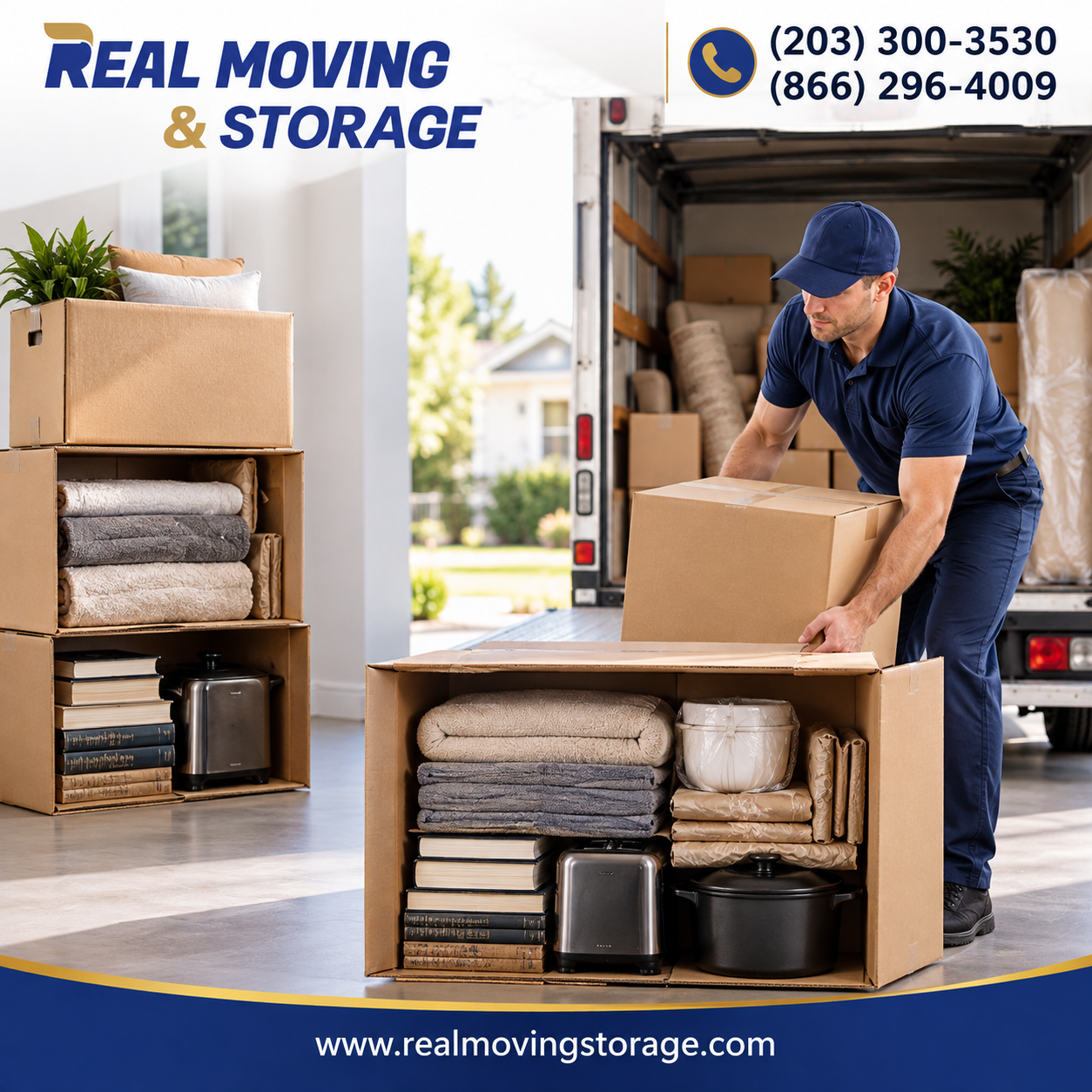
Heavy items always go at the bottom. This prevents collapse. It also keeps the box grounded during movement.
Books, tools, and kitchen appliances form a stable base. Light items should never sit under heavy ones.
2. Keep Box Weight Consistent
Do not overload one box and underfill another. That slows down handling. It increases injury risk.
Each box should feel manageable. Balanced weight improves grip and reduces strain.
3. Remove Internal Gaps
Empty space allows movement. Movement leads to damage. Fill gaps using towels, paper, or soft items.
This step locks items in place. It keeps weight stable during transit.
4. Use Layering Instead of Dumping
Packing is not random stacking. It follows a structure:
- Bottom: dense and heavy items
- Middle: medium weight items
- Top: fragile and light items
This layering supports proper weight distribution packing moving across all boxes.
Room-Based Packing Strategy
Each room has a different weight pattern. Treating all items the same creates imbalance.
Kitchen Packing
Kitchens contain dense items. Utensils, cookware, and small appliances add weight quickly.
Pack heavier items in small boxes. Use soft materials to fill gaps. Keep glassware at the top layer.
For fragile kitchen items, refer to practical fragile packing methods that reduce internal movement.
Bedroom Packing
Bedrooms provide useful padding materials. Clothes, blankets, and linens help balance weight.
Use them to wrap heavier items. This reduces the need for extra packing material.
Living Room Packing
Electronics require careful balance. Uneven packing can damage internal components.
Place heavier parts at the base. Secure cables separately. Avoid loose packing.
Appliance Handling
Large items need controlled movement. Improper lifting can cause injury or damage.
Follow safe handling steps explained in appliance moving safety guidelines to maintain proper weight control.
Choosing the Right Box Strength
Not all boxes can handle heavy loads. Weak boxes collapse under pressure. That disrupts the entire packing structure.
Use double-wall boxes for heavy items. Standard boxes work for lighter goods. Match box strength with item weight.
When in doubt, estimate load properly using a weight and volume calculator. This helps prevent overloading.
Strong boxes support better weight distribution packing moving across stacks.
Truck Loading Strategy for Balanced Transport
Packing boxes correctly is only half the job. Load placement inside the truck decides how safe the move will be. Poor loading creates shifting loads, sudden impacts, and uneven pressure on boxes.
Weight distribution packing moving must continue during loading. Each section of the truck should carry balanced weight.
Front Section: Anchor the Load
The heaviest items go near the front wall of the truck. This includes appliances, solid furniture, and dense boxes.
This placement keeps the truck stable during braking. It also prevents backward shifting.
Middle Section: Controlled Stacking
Medium-weight boxes fill the center. Stack them evenly. Avoid height imbalance on one side.
Keep stacks tight. Use straps if needed. Loose stacks collapse during turns.
Rear Section: Light and Fragile Items
The back area should hold lighter boxes. Fragile items must stay on top layers.
This reduces pressure damage. It also makes unloading easier.
Side-to-Side Balance
Weight must be equal on both sides of the truck. One heavy side creates tilt. That affects driving control.
Check distribution visually. Adjust before sealing the truck.
For complex moves, trained teams understand how to manage load flow across locations. See how professional moving coverage supports safer transport planning.
Handling and Lifting Safety
Improper lifting leads to injuries. Balanced packing reduces that risk, but technique still matters.
Use Stable Grip Points
Boxes should not bulge or collapse. A firm structure allows a proper grip.
Uneven weight inside a box makes it tilt during lifting. That strains wrists and back.
Lift with Controlled Motion
Do not jerk heavy boxes. Lift smoothly. Keep the load close to your body.
Balanced boxes respond better to controlled lifting.
Label Based on Weight, Not Just Fragility
Most people label fragile items. Few label heavy ones clearly.
Marking weight helps handlers prepare. It reduces sudden strain during lifting.
Understanding team roles also improves coordination. Learn how tasks are divided in moving and packing responsibilities.
Adjusting for Distance and Travel Conditions
Short moves and long-distance moves behave differently. Travel time affects how weight shifts.
Local Moves
Short trips involve frequent stops and turns. Load shifting happens more often.
Boxes must be tightly packed. Gaps increase movement.
Long-Distance Moves
Long routes expose items to vibration and pressure over time.
Weight must be evenly spread. Overloaded sections compress under continuous motion.
Planning becomes critical in such cases. A structured approach is explained in long-distance moving preparation strategies.
Environmental Factors
Moisture and temperature changes affect packing strength. Weak materials lose stability.
Using controlled storage can help maintain balance before or after a move. Learn how climate-controlled storage protects packed items.
Common Mistakes That Disrupt Weight Balance
Small errors create large problems during relocation. Most issues come from ignoring load structure.
Overloading Single Boxes
Heavy boxes are hard to lift and easy to drop. They also damage items at the bottom.
Mixing Heavy and Fragile Without Layers
Placing glass under books leads to breakage. Layering prevents direct pressure.
Ignoring Box Strength
Weak boxes collapse. That shifts weight suddenly and affects nearby stacks.
Uneven Truck Loading
One-sided loading creates imbalance during driving. It increases accident risk.
Many of these issues can be avoided with proper planning. See how experienced teams handle such situations in efficient moving execution methods.
Final Pre-Move Balance Check
Before sealing boxes and closing the truck, perform a quick check.
- Lift each box slightly to test balance
- Shake gently to detect internal movement
- Inspect stack alignment inside the truck
- Confirm side-to-side weight equality
This final step ensures your weight distribution packing moving plan holds during transit.
Proper distribution is not complicated. It requires attention to structure, not just packing speed. When weight stays balanced, every stage of moving becomes safer and more efficient.
Real Moving & Storage
(203) 300-3530
(866) 296-4009
Our Address – 13 Francis J Clarke Cir, Bethel, CT – https://share.google/hz7AqSiKDBcMLhgeL
Also Find Us Here – 808 Post Road, Fairfield, CT – https://share.google/I8rOyzQeXylFlTBYm