Get a Free Estimate Today!
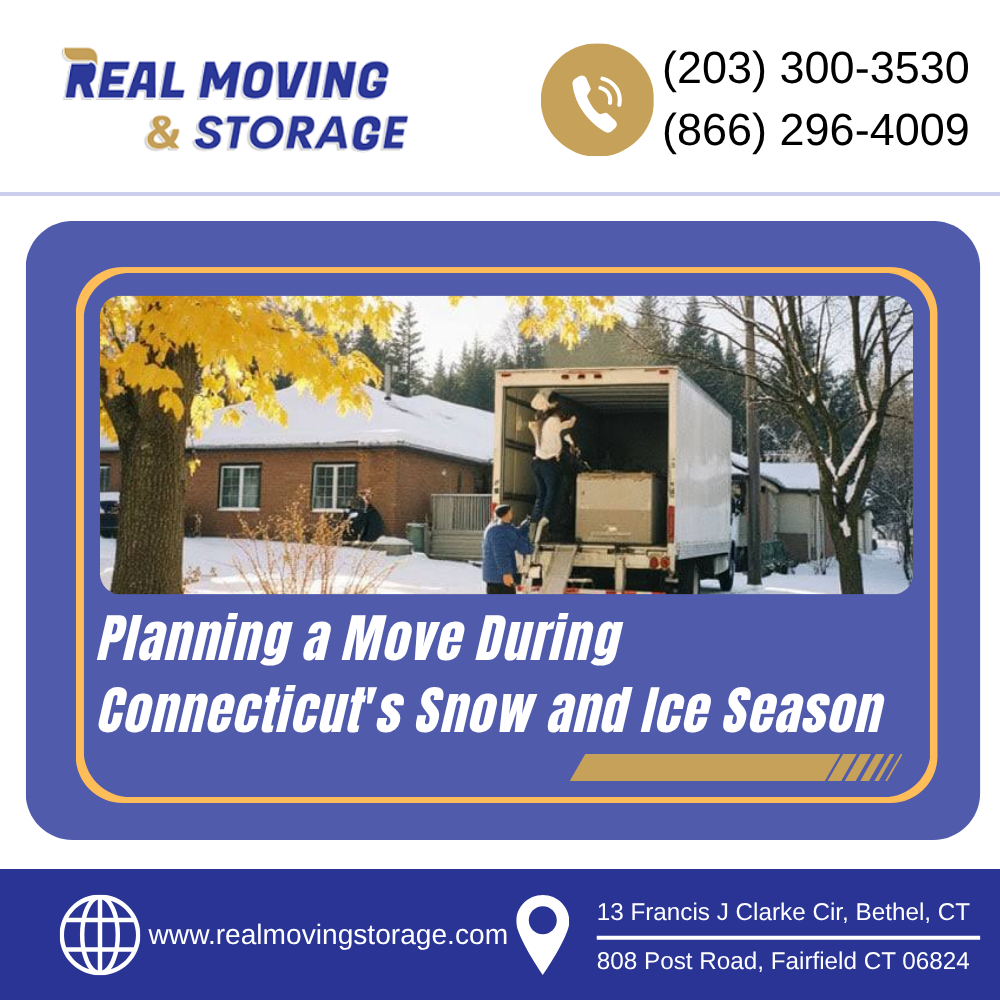
Planning a Move During Connecticut’s Snow and Ice Season
Winter moving in Connecticut requires careful planning. Snow, freezing rain, icy driveways, and shorter daylight hours can make moving day more challenging. However, a clear plan can help you protect your belongings and manage unexpected delays.
Start by checking the weather, preparing your property’s entrances, and confirming access for the moving truck. You should also keep in touch with your movers as conditions change. These steps can make a winter relocation more organized and safer for everyone involved.
If you are preparing for a local relocation, review our moving services in Fairfield, CT to learn more about local moving support.
1. Check Connecticut’s Winter Weather Before Moving
Connecticut weather can change quickly during winter. A forecast that initially predicts light snow may develop into heavier snowfall or freezing rain. Therefore, check the forecast several days before your move and review it again the evening before moving day.
Pay attention to winter storm warnings, road conditions, and expected temperatures. Freezing rain deserves particular attention because it can create slippery surfaces even when snow accumulation is limited.
Also, remember that weather conditions can vary between towns. Coastal areas and inland communities may experience different conditions during the same storm. Check local updates for both your current home and your destination.
Keep your moving company informed about significant changes. If severe weather threatens safe travel, discuss alternative arrangements before the situation becomes urgent.
2. Prepare Your Driveway, Walkways, and Entrance
Safe access is essential during a winter move. Snow and ice can make it difficult to carry boxes, move furniture, and operate moving equipment. Prepare your property before the moving team arrives.
- Clear snow from the driveway, front steps, and main walking paths.
- Check entrances, ramps, and outdoor stairs for ice.
- Use a suitable de-icing product according to its instructions.
- Keep a clear route between the house and the moving truck.
- Remove obstacles that could cause someone to trip.
- Confirm that the truck has enough safe space for parking and loading.
Do not overlook snowbanks near the driveway. They can restrict vehicle access and reduce the space available for loading. If you live in an apartment building, confirm parking permissions and entrance access with the property manager.
Keep pets and children away from loading areas. If surfaces remain dangerously slippery, stop moving items through that area until it is safe.
3. Protect Furniture and Boxes From Snow and Moisture
Winter weather can expose your belongings to moisture, dirt, and cold temperatures. Wet furniture covers and damp cardboard boxes may create additional problems during loading and unloading. Prepare suitable packing materials before moving day.
Use moving blankets to protect furniture from scratches and contact with wet surfaces. Waterproof outer coverings can provide additional protection during brief exposure to snow. However, make sure delicate surfaces remain dry and follow the manufacturer’s guidance for valuable or temperature-sensitive items.
Place entrance mats near frequently used doors. This helps reduce the amount of snow and water tracked indoors. Avoid placing boxes directly on wet floors or uncovered outdoor surfaces.
Electronics, liquids, plants, and other temperature-sensitive belongings may need special handling. Keep these items accessible and ask your movers about suitable transportation arrangements. Never assume that every item can safely remain in a cold moving truck for an extended period.
Finally, label fragile boxes clearly. Keep essential documents, medications, chargers, warm clothing, and other immediate necessities in a separate bag that stays with you.
4. Plan Your Moving Schedule Around Snow and Ice
Winter moving in Connecticut may require more time than a move during mild weather. Snow removal, slower road travel, and difficult loading conditions can affect your schedule. Plan for these possibilities rather than relying on an exact arrival time.
Start preparing early, but avoid rushing when visibility is poor or surfaces are slippery. Shorter daylight hours also matter. Confirm the expected arrival time with your moving company and ask how weather-related delays will be communicated.
Keep your phone charged and maintain access to important contact details. You should also confirm that your new property will be accessible when the truck arrives. Clear the destination’s driveway and entrance before unloading begins.
For local relocation planning, our guide to moving in Norwalk, CT can help you explore location-specific moving information.
If you are relocating to another state, allow additional flexibility for changing road conditions along the route. Share any fixed delivery deadlines with your moving company and confirm what happens if severe weather affects the journey.
5. Know When to Postpone a Winter Move
Not every winter weather condition requires postponing a move. Light snow may be manageable when roads remain safe and the property is accessible. However, heavy snowfall, freezing rain, dangerous wind conditions, or official travel advisories may make moving unsafe.
Review official weather alerts and road updates before making a decision. If access to your property becomes hazardous, do not pressure the moving team to continue carrying heavy items across unsafe surfaces.
Contact your moving company as soon as possible if conditions deteriorate. Ask about rescheduling, revised arrival times, and any applicable cancellation or weather policies. Early communication gives everyone more time to make practical arrangements.
Safety should take priority over maintaining the original schedule. A short delay is preferable to taking unnecessary risks on icy roads or slippery walkways.
6. Use a Winter Moving Day Checklist
Before the moving team arrives, review this checklist:
- Check the latest forecast and official weather alerts.
- Clear snow and ice from safe access routes.
- Confirm truck parking and building access.
- Protect furniture, boxes, and vulnerable belongings.
- Keep winter clothing and essential supplies accessible.
- Charge your phone and save important contact numbers.
- Confirm the moving schedule and communication plan.
- Check that your destination is ready for unloading.
Complete these tasks before moving day whenever possible. This reduces last-minute work and helps you focus on unexpected changes.
Frequently Asked Questions
Is winter a good time to move in Connecticut?
Winter can be suitable for moving when weather and road conditions are safe. However, snow, ice, and possible delays require extra preparation and flexible scheduling.
How can I prepare my driveway for a winter move?
Remove snow, check for ice, clear the walking route, and confirm safe truck access. Use appropriate de-icing products and address slippery areas before loading begins.
Should I postpone my move during an ice storm?
Consider postponing when official advisories, hazardous roads, or unsafe property access create a serious risk. Contact your moving company to discuss the safest option.
Make Your Connecticut Winter Move More Manageable
A successful winter move starts with preparation. Check the forecast, clear safe access routes, protect your belongings, and allow extra time for travel and loading. Most importantly, communicate early when weather conditions change.
Real Moving & Storage can help you discuss your moving requirements and plan the next steps. For a relocation involving a longer journey, explore our Connecticut to South Carolina long-distance moving service for relevant service information.
For assistance with your move, call (203) 300-3530 or (866) 296-4009. Plan ahead, stay informed, and put safety first throughout your winter relocation.