Get a Free Estimate Today!
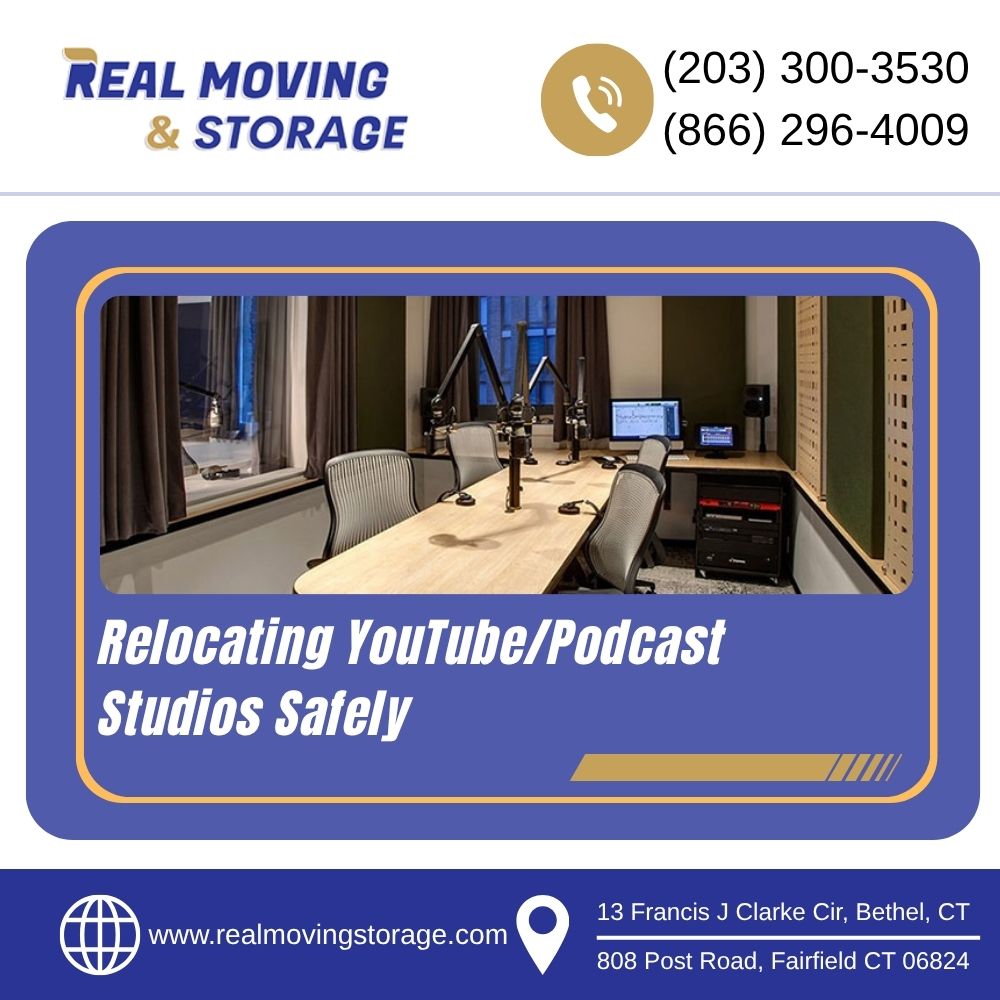
Relocating YouTube/Podcast Studios Safely
Studio relocation is not a regular move. Every item is connected. Every setup is calibrated. A small mistake can affect audio quality, video framing, or workflow.
Moving youtube podcast studio safely requires planning before packing starts. It is not just about protecting equipment. It is about preserving your entire recording environment.
This guide focuses on real studio conditions. It covers equipment handling, cable control, and setup recovery.
Pre-Move Studio Audit
Start with a full audit of your current setup. Do not rely on memory. Document everything.
Capture Setup References
Take clear photos of your studio from multiple angles. Include desk layout, mic position, and lighting direction.
These references help during reassembly. They reduce guesswork.
Map Equipment Placement
Note exact positions of key gear. This includes camera height, mic distance, and monitor alignment.
Even small changes can affect recording quality.
Track Cable Routing
Cables are often ignored. That creates confusion later.
Follow each cable path. Identify connections. Label both ends.
Understanding these roles becomes easier when you review how moving and packing responsibilities are structured.
Equipment Categorization Before Packing
Studio gear is not uniform. Each category needs a different packing method.
Recording Equipment
Cameras and lenses require shock protection. Use padded cases. Avoid stacking heavy items on them.
Audio Equipment
Microphones, mixers, and audio interfaces are sensitive. Internal components can shift.
Wrap each unit separately. Keep them in stable boxes.
Lighting Setup
Lights have fragile mounts and bulbs. Disassemble where possible.
Store parts in labeled sections.
Acoustic Materials
Foam panels and soundproofing materials lose shape under pressure.
Do not compress them. Keep them flat.
Desk and Mounting Gear
Monitor arms, mic stands, and brackets should be dismantled.
Pack screws and small parts in labeled bags.
For delicate items, follow structured methods explained in secure packing techniques.
Packing Strategy for Studio Safety
Packing defines how safe your gear will remain during transport. Random packing creates pressure points and movement inside boxes.
Use Layered Packing
Place heavier gear at the base. Keep lighter items above.
This structure supports moving youtube podcast studio safely without internal collapse.
Isolate Fragile Equipment
Never mix fragile gear with heavy tools. Use separate boxes.
This avoids direct pressure damage.
Secure Internal Movement
Fill empty space with soft materials. Towels and foam work well.
Items should not shift when the box moves.
Label with Purpose
Labels should indicate function, not just fragility.
Example: “Audio Interface – Desk Left” is better than “Fragile”.
If packing feels complex, structured help from packing and unpacking services can simplify the process.
Cable Management System
Cables are the most time-consuming part of studio relocation. Poor management leads to delays during setup.
Label Both Ends
Each cable should have two labels. One at each end.
This avoids confusion during reconnection.
Group by Function
Keep audio, power, and video cables separate.
Use small bags or ties for grouping.
Avoid Tight Bends
Do not fold cables sharply. It damages internal wiring.
Roll them gently in loops.
Weight Distribution for Studio Equipment
Studio gear varies in weight. Uneven packing creates imbalance.
Moving youtube podcast studio safely depends on how weight is distributed across boxes.
Balance Box Weight
Do not overload a single box with heavy equipment.
Split weight across multiple boxes.
Protect Rack Equipment
Audio racks should be packed with internal support.
Movement inside racks causes damage.
Maintain Box Stability
Each box should feel stable when lifted.
If it tilts, weight distribution is incorrect.
Use tools like a weight and volume calculator to estimate load before packing.
Transport Risk Control During Studio Relocation
Transport conditions affect sensitive equipment. Studio gear reacts to vibration, pressure, and temperature shifts.
Moving youtube podcast studio safely requires control over these risks.
Reduce Vibration Impact
Audio equipment is highly sensitive to vibration. Loose packing increases internal damage.
Use tight packing with cushioning layers. Avoid gaps inside boxes.
Protect Against Temperature Changes
Extreme temperatures affect electronic components. Sudden shifts create condensation risks.
Store sensitive gear in stable conditions. This is where climate-controlled storage solutions help maintain equipment integrity.
Control Moisture Exposure
Moisture damages circuits and connectors. Even short exposure can create long-term issues.
Seal boxes properly. Use protective wrapping for critical devices.
Safe Loading Inside the Moving Truck
Loading defines how equipment behaves during transit. Poor placement leads to shifting and collisions.
Place Heavy Equipment First
Heavy items should go near the front of the truck. This stabilizes the load.
Keep weight evenly distributed across both sides.
Stack with Purpose
Boxes should not lean. Keep stacks straight and tight.
Fragile equipment must stay on top layers.
Avoid Pressure Points
Do not place heavy items over delicate gear. Even slight pressure can damage sensitive equipment.
Following structured loading improves moving youtube podcast studio safely across long distances.
For larger relocations, planning support from long-distance moving strategies helps maintain load balance.
Re-Setup Strategy After Relocation
Rebuilding the studio correctly is as important as packing it.
Use Reference Images
Compare your new setup with pre-move photos. Match positions closely.
This ensures consistent output quality.
Reconnect Cables Systematically
Start with power connections. Then move to audio and video cables.
Follow labels created earlier. Avoid random connections.
Restore Audio and Lighting Accuracy
Mic distance and light angles should match previous settings.
Small changes affect recording results.
Minimizing Studio Downtime
Content creators cannot afford long breaks. Planning reduces downtime.
Pre-Record Content
Create backup content before the move. This keeps your publishing schedule stable.
Keep Essential Gear Accessible
Pack a separate box for immediate setup items. This includes mic, camera, and basic lighting.
Plan Fast Setup Workflow
Start with core recording equipment. Secondary elements can follow later.
Efficient execution becomes easier when you understand how structured moving workflows operate.
Common Studio Relocation Mistakes
Most issues happen due to rushed packing or missing structure.
Mixing Cables Without Labels
This leads to long setup delays. It also increases the risk of incorrect connections.
Packing Heavy and Fragile Together
This creates pressure damage. Always separate based on weight.
Skipping Setup Documentation
Without references, rebuilding takes more time and effort.
Ignoring Equipment Sensitivity
Audio and video gear need controlled handling. Treating them like regular items causes damage.
Understanding risks early helps avoid issues highlighted in common moving mistakes and warning signs.
Real Moving & Storage
(203) 300-3530
(866) 296-4009
Our Address – 13 Francis J Clarke Cir, Bethel, CT – https://share.google/hz7AqSiKDBcMLhgeL
Also Find Us Here – 808 Post Road, Fairfield, CT – https://share.google/I8rOyzQeXylFlTBYm
Final Studio Relocation Check
Before completing the move, perform a final inspection.
- Check all boxes for balance and stability
- Ensure no loose items remain inside
- Confirm labeling is clear and readable
- Verify truck load is evenly distributed
Moving youtube podcast studio safely depends on structure, not speed. When each step is controlled, your equipment stays protected and your workflow remains consistent.