Get a Free Estimate Today!
The Psychology of Packing: Why It Feels So Hard
Packing looks simple. Put items in boxes. Seal them. Move on. In reality, it feels heavy. Slow. Mentally draining. This is not poor planning. This is the psychology of packing moving stress at work.
Each object asks for a decision. Keep it. Toss it. Pack it later. Your brain keeps switching between past memories and future needs. That constant switching creates stress.
During a move, this pressure grows. Deadlines get closer. Boxes pile up. Small choices start feeling bigger than they should.
Understanding this mental load helps you handle it better. You stop fighting the process. You start working with it.
Why Packing Feels Mentally Exhausting?
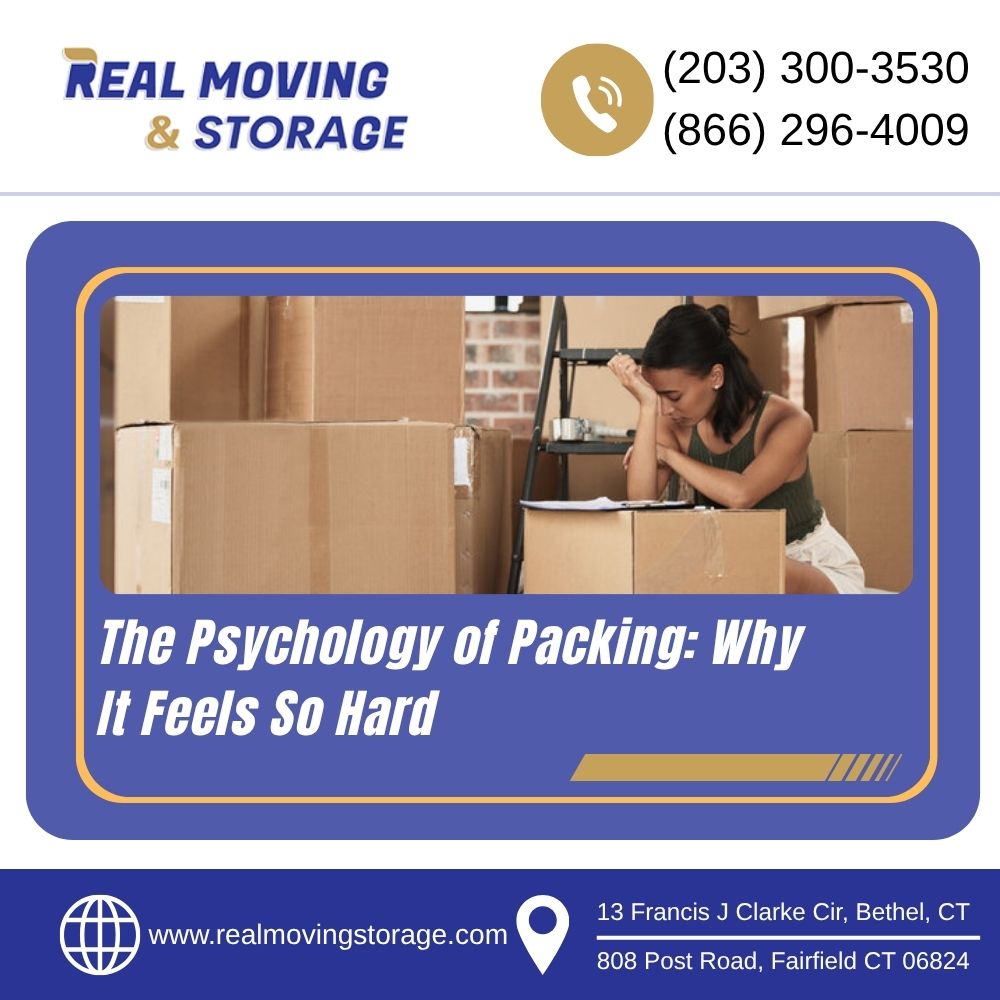
Packing is not just physical work. It is decision work. Your brain does more lifting than your hands.
Decision Fatigue Builds Fast
Every item creates a question. Do I need this? When will I use it? These micro-decisions repeat hundreds of times.
Over time, your brain slows down. You delay choices. You recheck packed boxes. This is decision fatigue. A core part of psychology of packing moving stress.
This is why packing one drawer can take an hour. Not because it is hard. Because it is mentally repetitive.
Loss Aversion Makes Letting Go Hard
People feel loss stronger than gain. Giving away an unused item feels worse than keeping clutter.
You think, “What if I need it later?” That single thought delays action.
This is why decluttering slows packing. Your brain tries to avoid regret.
Emotional Attachment Slows Decisions
Objects carry memory. Old books. Gifts. Clothes. You are not just packing items. You are handling moments.
This creates hesitation. You pause. You revisit memories. Time passes. Energy drops.
During house shifting, this effect becomes stronger. Because the move itself represents change.
Fear of Uncertainty Increases Overpacking
You cannot predict future needs. So your brain prepares for everything.
Extra clothes. Extra tools. Extra “just in case” items. This increases volume and stress.
Many people check tools like weight and volume calculator to understand load size. But the real issue is not space. It is uncertainty.
Perfectionism Adds Hidden Pressure
You want things done right. Proper labeling. Perfect sorting. Clean packing.
This slows progress. You re-pack. You adjust. You spend more time thinking than doing.
Packing does not need perfection. It needs completion.
Why Moving Makes Packing Even Harder?
Packing for travel is temporary. Packing for moving is emotional. That difference matters.
When shifting homes, you deal with:
Change in routine. New environment. New responsibilities. This adds mental pressure before packing even begins.
If you are planning relocation in areas like Fairfield or nearby regions, the workload often includes logistics, timing, and coordination. Packing becomes one part of a larger stress system.
This is where psychology of packing moving stress becomes more visible. You are not just organizing items. You are transitioning life stages.
The Hidden Mental Triggers Most People Ignore
Some stress points are not obvious. But they affect speed and focus.
Unfinished Tasks Stay in Your Mind
Open boxes remind your brain of incomplete work. This creates low-level stress all day.
Even when you take a break, your mind stays occupied. That is why packing feels never-ending.
Visual Clutter Increases Anxiety
Half-packed rooms create confusion. Items scattered across spaces reduce clarity.
Your brain prefers order. Messy environments slow decision-making.
Time Pressure Reduces Decision Quality
Last-minute packing leads to rushed choices. You pack things you do not need. You miss important items.
This creates more stress on moving day.
Many people face this during urgent relocations. Situations where planning is limited. In such cases, structured help like last-minute move handling strategies can reduce chaos.
How Your Brain Processes Packing Stress?
Your brain tries to protect you from overload. When tasks feel too large, it slows you down.
Packing triggers multiple systems at once. Memory recall. Decision-making. Future planning. This creates cognitive load.
High cognitive load reduces clarity. You feel stuck even when the task is simple.
This explains why you walk into a room and do nothing. Not laziness. Mental overload.
The Conflict Between Minimalism and Reality
Many people want fewer things. But during packing, they keep more.
This creates internal conflict. You want space. But you fear loss.
This tension slows decisions. It adds to psychology of packing moving stress.
Packing Feels Worse at Night
Mental energy drops in the evening. Decision quality becomes weak.
You overthink simple choices. Small tasks feel heavy.
That is why late-night packing often feels frustrating. Work done during this time takes longer.
A Practical System to Reduce Packing Stress
You do not need motivation. You need a simple system.
A structured approach reduces mental load. It limits unnecessary thinking.
Start With Fixed Categories
Divide items into clear groups. Keep. Donate. Dispose. Pack later.
This reduces repeated thinking. One decision per item.
Use Time Blocks Instead of Open-Ended Packing
Do not aim to finish everything. Work in short focused sessions.
This keeps your brain fresh. It prevents burnout.
Pack by Zones, Not Random Items
Complete one area at a time. Finish a drawer. Then move ahead.
This gives visible progress. It reduces stress.
Limit Your Choices
Set boundaries before starting. Example: fixed number of boxes for clothes.
Fewer choices speed up action. This directly reduces psychology of packing moving stress.
Handle Fragile Items Separately
Delicate items need focus. Mixing them with general packing increases stress.
Use structured methods like those explained in packing fragile items safely .
Accept “Good Enough” Packing
Not every box needs perfect labeling. Not every item needs ideal placement.
Done is better than perfect. This mindset reduces delay.
Common Mistakes That Increase Packing Stress
Most stress comes from avoidable habits. Small changes can fix them.
Starting Too Late
Delays create pressure. Pressure reduces decision quality.
This leads to rushed packing and missed items.
Mixing Important and Non-Essential Items
Documents, chargers, daily-use items should stay separate. Mixing them creates confusion later.
Ignoring Physical Effort
Packing is physical work. Lifting, bending, moving boxes.
Fatigue affects mental clarity. This increases errors.
For heavy or complex items, guidance like handling large appliances safely helps reduce both physical and mental stress.
Trying to Do Everything Alone
Packing alone increases decision load. You handle every choice without support.
Shared tasks reduce pressure. It also speeds up progress.
Many people choose structured support through packing and unpacking services to reduce this burden.
Packing Anxiety vs Moving Stress
These two feel similar. But they are different.
Packing anxiety comes from decisions. What to take. What to leave.
Moving stress comes from logistics. Timing. Transport. Coordination.
When combined, they create high pressure. This is the full effect of psychology of packing moving stress.
Planning both sides together reduces confusion. Not just packing. The entire move.
How to Stay Mentally Clear During Packing
Clarity matters more than speed. When your mind is calm, packing becomes easier.
Create a Simple Packing Flow
Start with low-value items. Books. Décor. Seasonal clothes.
This builds momentum. Your brain feels progress early.
Keep an Essentials Box
Pack daily-use items separately. Documents. Chargers. Basic clothes.
This removes last-day panic. You know where important things are.
Reset Your Space Daily
End each day with a quick cleanup. Close boxes. Clear surfaces.
A clean space improves focus next day. It reduces visual stress.
Use External Support When Needed
You do not have to manage everything alone. Structured help reduces pressure.
Guides like planning a stress-free move can help you organize the entire process step by step.
When Packing Becomes Emotionally Difficult
Some moments feel heavier than others. Packing childhood items. Old photos. Personal belongings.
These are not simple objects. They carry identity.
In such cases, slow down. Take breaks. Return later.
Emotional fatigue is real. It directly affects decision-making.
This is an important part of psychology of packing moving stress. Ignoring it makes the process harder.
Special Situations That Increase Packing Stress
Moving With Family
More people means more decisions. Different preferences. Different priorities.
Coordinating everything increases mental load. Clear roles help reduce confusion.
Situations like moving with kids require extra planning and patience.
Senior Relocation
Older individuals often have stronger emotional attachments. Letting go becomes harder.
The process needs time and sensitivity. Rushing increases stress.
Approaches like senior relocation support focus on both emotional and practical needs.
Long-Distance Moves
Distance increases uncertainty. Fewer chances to recover forgotten items.
This leads to overpacking and second-guessing. Planning becomes more detailed.
Structured preparation like long-distance moving checklist helps reduce this uncertainty.
FAQs
Why do I feel tired even after packing a small area?
Packing uses mental energy. Continuous decisions reduce focus. Even small areas can feel exhausting.
Why do I keep delaying packing?
Your brain avoids tasks that feel overwhelming. Breaking work into small steps helps you start.
Is overpacking a psychological response?
Yes. It comes from uncertainty and fear of missing something. It is a natural reaction during moving.
How can I reduce packing stress quickly?
Limit decisions. Work in short sessions. Focus on one area at a time.
Conclusion
Packing feels hard because it challenges your mind. Not your ability.
Constant decisions. Emotional attachment. Uncertainty. All combine to create pressure.
Once you understand this, the process changes. You stop forcing speed. You build structure.
The goal is not perfect packing. The goal is steady progress.
When you reduce mental load, packing becomes manageable. That is how you handle psychology of packing moving stress in a practical way.