Get a Free Estimate Today!
Transporting Wine Collections During Relocation
Transporting Wine Collections During Relocation requires more planning than packing everyday household items. Fine wines can lose quality when exposed to heat, freezing temperatures, direct sunlight, excessive vibration, or improper handling. A carefully packed collection can arrive in excellent condition, while a rushed move may affect both the wine’s taste and its long-term value.
If your collection includes vintage bottles, limited editions, or wines stored for aging, every step matters. From creating an inventory to choosing the right packing materials and transportation method, proper planning helps reduce unnecessary risks. This guide explains how to prepare, pack, and move your wine collection safely during a local or long-distance relocation.
Why Transporting Wine Collections During Relocation Requires Extra Care
Wine is a living product that continues to develop inside the bottle. Even a short period of poor handling can affect its condition. Unlike furniture or kitchenware, wine reacts to environmental changes throughout the journey.
The biggest risks include:
- Rapid temperature fluctuations
- Excessive vibration during transport
- Low or high humidity
- Direct sunlight and UV exposure
- Broken cork seals
- Bottle breakage
- Sediment disturbance in aged wines
These issues may not always be visible immediately. In some cases, the wine may only show signs of damage when it is opened months later.
Heat Can Permanently Damage Wine
High temperatures speed up the aging process. Prolonged heat exposure may flatten flavors, alter aromas, and even force the cork outward. Once heat damage occurs, the original quality cannot be restored.
Cold Temperatures Can Be Just as Harmful
Freezing conditions may expand the liquid inside the bottle. This pressure can crack glass or push the cork upward, allowing air to enter. Oxygen exposure increases the risk of spoilage.
Constant Vibration Affects Older Wines
Long-distance transportation naturally creates vibration. Mature wines often contain sediment that should remain undisturbed. Continuous movement keeps the sediment suspended and may temporarily affect the wine’s clarity and texture.
Assess Your Collection Before Packing
Before Transporting Wine Collections During Relocation, understand exactly what you own. Every collection does not require the same moving strategy.
Separate your bottles into practical categories.
- Everyday drinking wines
- Premium wines
- Vintage bottles
- Rare collector wines
- Investment-grade collections
This simple step helps you decide which bottles require extra protection and which transportation option makes the most sense.
Estimate the Overall Value
You do not need a formal appraisal for every collection. However, knowing the approximate value helps when discussing insurance coverage or selecting specialized transportation services.
For high-value collections, keeping purchase receipts or valuation records is also helpful.
Create a Complete Wine Inventory Before Moving
A detailed inventory makes unpacking easier and helps verify that every bottle arrives safely.
Your inventory should include:
- Wine name
- Producer
- Vintage year
- Bottle size
- Quantity
- Estimated value
- Current storage location
Take clear photographs of every bottle and label before packing. These photos provide a useful reference if labels become damaged or if you ever need to verify the collection after delivery.
If your relocation also involves other delicate belongings, planning ahead for specialty packing can make the entire move more organized. You can also review practical guidance on packing fragile household items safely to prepare valuable possessions alongside your wine collection.
Choose the Right Packing Materials
Good packing materials reduce movement inside the box and protect every bottle from impact during loading, transportation, and unloading.
Avoid using regular grocery store boxes or reused cardboard cartons. They are rarely designed to support the weight of multiple glass bottles.
Recommended Packing Supplies
- Wine shipping boxes with bottle dividers
- Molded pulp inserts
- Foam bottle shippers
- Double-wall corrugated cartons
- Bottle sleeves
- Thermal insulation liners
- Packing paper
- High-quality packing tape
- “Fragile” labels
The goal is to keep each bottle secure without unnecessary pressure against the glass.
How to Pack Wine Bottles Safely
Transporting Wine Collections During Relocation becomes much safer when every bottle is packed correctly. Taking a little extra time during packing can prevent expensive damage later.
Step 1: Inspect Every Bottle
Check each bottle for cracks, leaking corks, or damaged capsules. Set aside any bottle that already shows signs of leakage.
Step 2: Wrap Each Bottle Individually
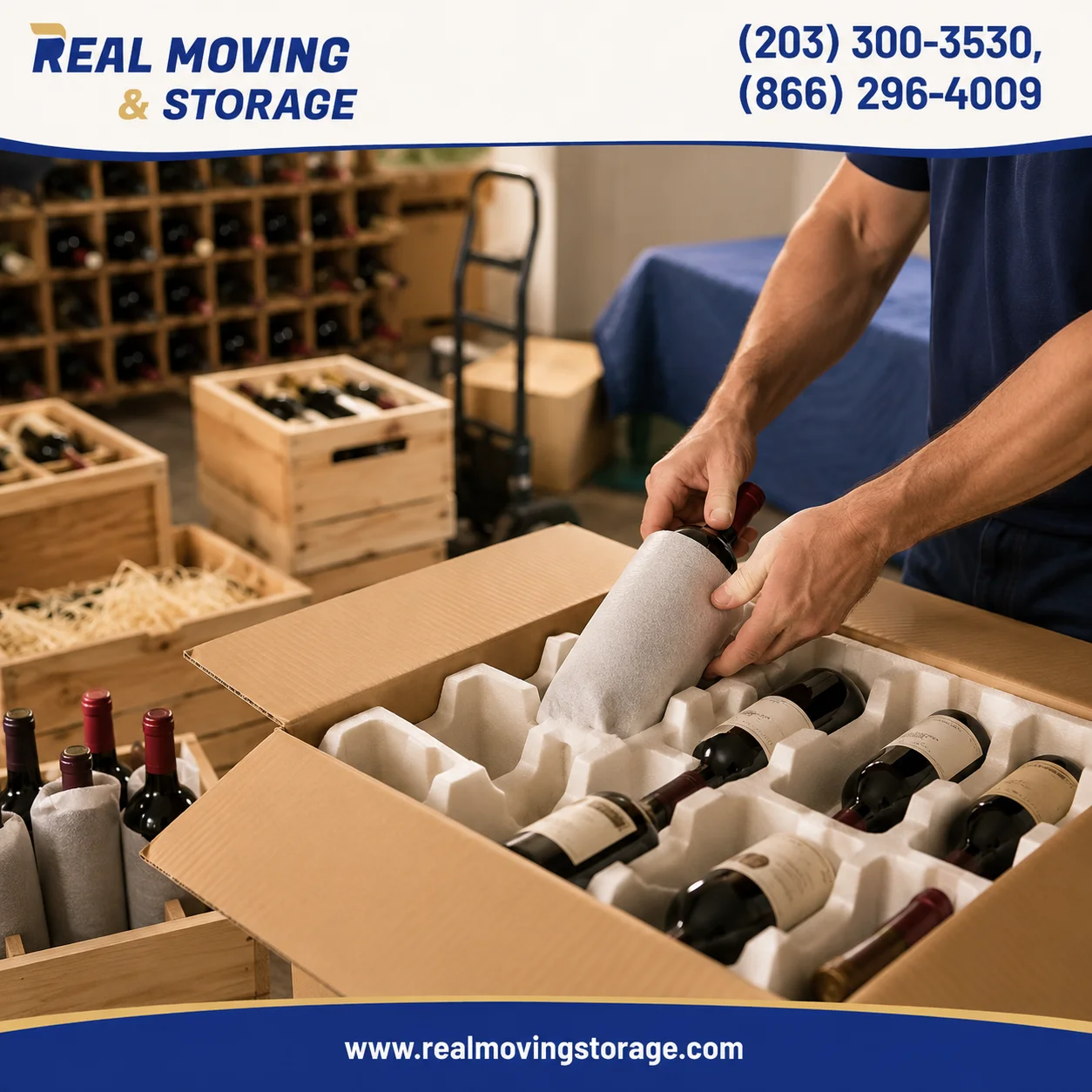
Wrap every bottle using packing paper or protective sleeves. For premium wines, foam sleeves provide additional cushioning around the neck and base.
Step 3: Place Bottles Securely Inside Dividers
Bottle dividers prevent glass-to-glass contact. This greatly reduces the chance of breakage during transportation.
Step 4: Fill Empty Spaces
Any empty space allows movement inside the box. Fill gaps with packing paper or foam inserts until everything remains stable.
Step 5: Label Every Carton Clearly
Each carton should include labels such as:
- Fragile
- Glass
- This Side Up
- Temperature Sensitive
Clear labeling helps moving crews identify cartons that require careful handling.
Maintain the Right Temperature During Transportation
Temperature control is one of the most important parts of Transporting Wine Collections During Relocation.
Sudden changes are often more harmful than a stable environment. A bottle exposed to repeated heating and cooling cycles experiences unnecessary stress throughout the move.
If your relocation covers a long distance or takes several days, avoid leaving wine inside parked vehicles for extended periods. Interior vehicle temperatures can rise much faster than outdoor temperatures during warm weather.
Planning a move during cooler months may also reduce environmental risks. If timing is flexible, choosing the right season can make transportation easier for temperature-sensitive belongings.
Should You Use a Climate-Controlled Moving Truck?
For valuable collections, climate-controlled transportation offers an added layer of protection. It helps maintain a more stable environment throughout the trip and reduces the impact of sudden weather changes.
A standard moving truck may be suitable for many household items, but wine responds differently to prolonged heat or freezing temperatures. This becomes even more important during interstate moves or relocations that take more than one day.
If your move involves long travel distances, read our guide on planning a stress-free long-distance move before scheduling transportation.
DIY Transportation vs. Professional Wine Moving
Many homeowners consider transporting wine themselves. While this may work for a small collection of everyday bottles, valuable collections deserve additional planning.
DIY Transportation May Work When:
- You have only a few bottles.
- The relocation is local.
- The weather is mild.
- You can keep the bottles at a stable temperature.
Professional Handling Is Worth Considering When:
- Your collection includes rare or vintage wines.
- You are moving across states.
- The trip will take several days.
- The collection represents a significant financial investment.
- You want professional packing and careful handling.
Professional movers also help reduce unnecessary handling during loading and unloading, which can lower the risk of accidental damage.
Common Mistakes to Avoid When Transporting Wine Collections During Relocation
Even experienced homeowners sometimes overlook small details that can affect wine quality.
- Leaving wine inside a parked vehicle for several hours.
- Using worn-out cardboard boxes.
- Packing bottles without dividers.
- Ignoring fragile labels.
- Overloading one carton with excessive weight.
- Skipping a complete inventory.
- Moving during extreme heat without planning.
- Opening aged bottles immediately after delivery.
Most of these mistakes are preventable with proper preparation.
Consider Insurance for Valuable Collections
If your wine collection has substantial value, review your moving coverage before relocation.
Ask about available protection options, valuation coverage, and any documentation required for high-value items. Keeping photographs, purchase records, and your inventory together can simplify the process if questions arise later.
You can also learn more about moving protection by reading our article on moving insurance and coverage options.
After the Move: Let Your Wine Settle
Many collectors want to open a favorite bottle immediately after arriving. It is usually better to wait.
Allow the bottles to rest before serving. This gives sediment time to settle naturally after transportation.
After delivery:
- Inspect each bottle.
- Check for leaks or damaged corks.
- Confirm your inventory.
- Return bottles to proper storage conditions.
- Allow older wines adequate resting time before opening.
How Real Moving & Storage Helps Protect Valuable Household Items?
Some moves involve more than furniture and moving boxes. Collections, antiques, artwork, and wine require careful planning from the beginning.
At Real Moving & Storage, we have proudly served homeowners and businesses across Connecticut since 2006. As a family-owned moving company founded by Lucas Pinto, we focus on careful handling, personalized service, and dependable moving solutions for local and long-distance relocations. Our experienced crews use professional packing techniques and private moving trucks to help protect valuable belongings throughout the moving process.
If you have questions about preparing delicate or high-value household items before your move, our team is happy to discuss the best packing approach for your relocation.
Phone: (203) 300-3530
Toll Free: (866) 296-4009
Bethel Office: 13 Francis J Clarke Cir, Bethel, CT
Also Serving From: 808 Post Road, Fairfield, CT
Frequently Asked Questions
Can movers transport wine collections?
Many moving companies can transport personal wine collections, but handling methods may vary. If your collection includes valuable or vintage bottles, discuss packing requirements and transportation conditions before moving day.
Should wine bottles be transported standing up or lying down?
The appropriate position depends on the type of packaging being used. Professionally designed wine shipping cartons keep bottles secure while minimizing movement during transportation.
Can heat ruin wine during a move?
Yes. Extended exposure to high temperatures can affect flavor, aroma, and aging potential. Limiting temperature fluctuations is one of the most important parts of transporting wine safely.
Is it safe to move wine during summer?
It can be done with careful planning. Early morning loading, reduced exposure to direct sunlight, and stable transportation conditions help reduce heat-related risks.
Do I need special boxes for wine?
Specialized wine shipping boxes with dividers or molded inserts provide much better protection than standard cardboard boxes.
How should I prepare my wine collection before moving day?
Create a detailed inventory, photograph each bottle, organize wines by value, and use quality packing materials before transportation begins.
Final Thoughts
Transporting Wine Collections During Relocation is not simply about moving bottles from one address to another. It involves protecting years of collecting, proper storage, and financial investment. Careful packing, temperature awareness, thoughtful transportation planning, and organized inventory management all contribute to a safer move.
With the right preparation, your wine collection can arrive in excellent condition and be ready to enjoy after it has had time to settle in its new home.