Get a Free Estimate Today!
Understanding Inventory Control During Relocation
One missing laptop. One misplaced box of important documents. One pallet that never reaches the destination.
These are not uncommon problems during poorly managed relocations.
Whether you’re moving a home, office, warehouse, or corporate facility, inventory control is one of the most important factors affecting the success of the move. Yet many people don’t realize its importance until something goes missing.
Professional movers understand that relocation is not simply about transportation. It’s about maintaining visibility, accountability, and control over every item throughout the entire process.
This guide explains how inventory control works during relocation, why it matters, and how professional movers use inventory management systems to prevent costly mistakes.
At Real Moving & Storage, inventory control is a critical part of every relocation project because accurate tracking helps protect our customers’ belongings and improves overall moving efficiency.
What Is Inventory Control During Relocation?
Inventory control during relocation refers to the process of documenting, tracking, managing, and verifying all items being moved from one location to another.
The objective is simple:
- Know what is being moved.
- Know where it is located.
- Know when it arrives.
- Verify that nothing is missing.
Inventory control creates accountability throughout every stage of the relocation process.
Without proper inventory management, businesses and homeowners face a higher risk of lost items, delivery delays, damaged assets, and unnecessary disputes.
Why Inventory Control Is Critical During a Move?
Many relocation challenges can be traced back to poor inventory visibility.
When movers and customers lack accurate records, problems become difficult to identify and resolve.
Strong inventory control helps:
- Reduce asset loss
- Improve accountability
- Prevent duplicate shipments
- Speed up unpacking
- Support insurance claims
- Improve operational continuity
- Reduce relocation costs
For commercial relocations, inventory control becomes even more important because lost equipment can disrupt daily operations and impact revenue.
Organizations utilizing Commercial Moving Services in Westport CT often rely on detailed inventory tracking to maintain business continuity during office and facility relocations.
The Biggest Inventory Challenges During Relocation
Inventory management becomes increasingly difficult as relocation projects grow in size and complexity.
Common challenges include:
- Large volumes of assets
- Multiple departments or locations
- Last-minute packing changes
- Unlabeled boxes
- Human error
- Inadequate documentation
- Multiple transportation vehicles
Without a structured inventory process, these challenges can quickly create confusion and delays.
How Professional Movers Create an Inventory System?
Professional movers begin inventory control long before moving day.
The process usually starts with a detailed inventory assessment.
Step 1: Inventory Documentation
Movers create a comprehensive list of all items scheduled for relocation.
This may include:
- Furniture
- Electronics
- Office equipment
- Boxes
- Storage items
- Specialty assets
Each item receives a documented record before transportation begins.
Step 2: Categorization
Items are grouped into categories based on:
- Department
- Room location
- Asset type
- Fragility level
- Priority status
Categorization improves organization and simplifies delivery planning.
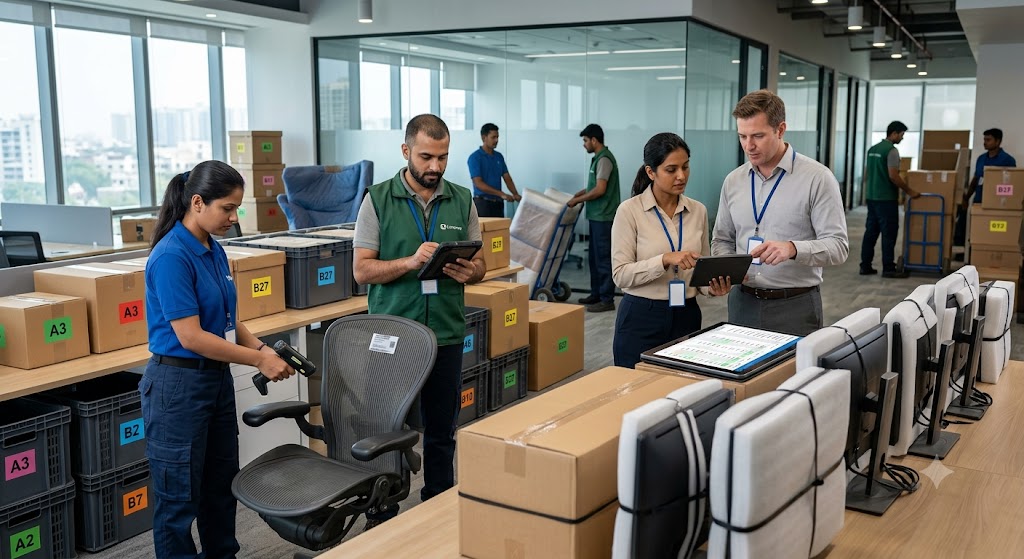
Step 3: Labeling and Identification
Every item should be clearly labeled.
Professional movers often use:
- Barcode systems
- Color-coded labels
- Asset tags
- QR codes
- Digital tracking software
These systems help movers maintain visibility throughout the relocation process.
Inventory Control for Residential Relocations
Homeowners often assume inventory management is only necessary for commercial projects.
In reality, inventory control is equally valuable during residential moves.
Benefits include:
- Faster unpacking
- Reduced risk of missing boxes
- Improved room organization
- Better insurance documentation
- Less moving-day stress
Families working with a Long Distance Moving Company in Fairfield CT frequently benefit from detailed inventory systems because long-distance relocations involve more transportation stages and handling points.
Inventory Control for Commercial Relocations
Commercial relocations involve significantly more inventory complexity.
Businesses may need to track:
- Computers
- Servers
- Office furniture
- Sensitive records
- Department equipment
- Specialized machinery
Inventory accuracy directly impacts operational recovery after the move.
When equipment cannot be located quickly, employee productivity suffers and downtime increases.
This is why inventory control is often integrated into broader business continuity planning.
Digital Inventory Management Systems
Modern relocation projects increasingly rely on digital inventory tools.
These systems provide:
- Real-time tracking
- Asset visibility
- Automated reporting
- Shipment verification
- Digital documentation
Digital systems reduce manual errors and improve overall relocation accuracy.
For large-scale moves involving hundreds or thousands of assets, technology often becomes essential.
The Connection Between Packing and Inventory Control
Inventory management begins during the packing process.
Well-organized packing improves tracking accuracy and reduces confusion during delivery.
Professional movers often create packing lists that include:
- Box numbers
- Contents summaries
- Destination locations
- Priority indicators
Customers using Packing and Unpacking Services in Norwalk CT often experience smoother inventory management because professional packing teams follow standardized labeling and documentation procedures.
Inventory Verification During Loading and Delivery
Inventory control doesn’t stop once items are packed.
Professional movers perform verification at multiple stages:
- Before loading
- During transportation
- At unloading
- During final placement
Verification checkpoints help ensure that every item remains accounted for throughout the relocation process.
This chain-of-custody approach significantly reduces the risk of missing belongings.
How Inventory Control Supports Long-Distance Moves?
Long-distance relocations create additional inventory challenges because shipments often travel farther and may involve multiple transportation stages.
Proper inventory tracking becomes critical when:
- Crossing state lines
- Using multiple trucks
- Coordinating storage solutions
- Managing extended delivery schedules
Customers planning Long Distance Moving from Connecticut to South Carolina frequently rely on detailed inventory records to maintain visibility throughout the relocation journey.
Common Inventory Control Mistakes
Many relocation issues occur because inventory procedures were not followed consistently.
Common mistakes include:
- Failing to label boxes properly
- Creating incomplete inventories
- Skipping verification checks
- Ignoring digital tracking tools
- Combining unrelated assets
- Waiting until moving day to organize inventory
A proactive inventory strategy helps prevent these problems before they occur.
Best Practices for Effective Inventory Control
To improve inventory accuracy during relocation:
- Create an inventory before packing begins.
- Use consistent labeling systems.
- Photograph valuable assets.
- Assign inventory responsibilities.
- Conduct verification checks regularly.
- Utilize digital tracking when possible.
- Keep important documents accessible.
These practices help create a more organized and efficient relocation experience.
How Real Moving & Storage Uses Inventory Control to Improve Relocations?
At Real Moving & Storage, inventory management is a key component of every successful move. We understand that customers want confidence that their belongings are properly documented, protected, and delivered accurately.
As a trusted family-owned moving company serving Connecticut since 2006, we use proven inventory procedures to help homeowners and businesses maintain visibility throughout the relocation process.
Founded by Lucas Pinto, who brings more than 25 years of moving industry experience, our team focuses on organization, accountability, and personalized service to help ensure a smooth moving experience.
Frequently Asked Questions
What is inventory control during relocation?
Inventory control is the process of documenting, tracking, managing, and verifying items throughout a move to prevent loss and improve accountability.
Why is inventory management important during a move?
Inventory management helps reduce missing items, improve organization, support insurance claims, and simplify unpacking.
How do professional movers track inventory?
Professional movers often use inventories, barcode systems, labels, digital tracking software, and verification checkpoints.
Is inventory control necessary for residential moves?
Yes. Inventory control helps homeowners stay organized and reduces the risk of misplaced belongings during relocation.
What are the biggest inventory risks during relocation?
Common risks include poor labeling, incomplete documentation, human error, inadequate tracking systems, and lack of verification procedures.