Get a Free Estimate Today!
Hybrid Workspace Trends and Their Impact on Office Moves
The workplace has changed dramatically over the last few years. Businesses are no longer relying solely on traditional office environments where every employee works from the same location every day. Instead, many organizations have adopted hybrid work models that combine remote work with in-office collaboration. This shift is influencing everything from office design and technology investments to commercial real estate decisions and relocation planning.
As companies adapt to changing employee expectations and business requirements, office relocations are becoming more strategic than ever. Organizations are evaluating how much space they truly need, what type of work environment supports productivity, and how to create offices that encourage collaboration when employees come together in person.
Understanding Hybrid Workspace Trends and Their Impact on Office Moves can help business leaders make informed decisions when planning a relocation, downsizing an office, or redesigning an existing workplace.
Why Hybrid Work Has Become the New Standard?
Hybrid work gained momentum as businesses discovered that many employees could remain productive outside of traditional office settings. What initially started as a necessity has evolved into a preferred working arrangement for many organizations and employees alike.
Companies now recognize several benefits of flexible workplace models, including:
- Improved employee satisfaction and retention
- Reduced office overhead costs
- Greater access to talent beyond local markets
- Enhanced work-life balance
- Better business continuity planning
As a result, businesses are rethinking how their physical office spaces function and whether their current locations continue to meet operational needs.
Changing Space Requirements Are Driving Office Relocations
One of the biggest effects of hybrid work is the reassessment of office space requirements. Many companies no longer need a dedicated desk for every employee because staff members rotate between working remotely and working on-site.
This shift has encouraged organizations to relocate to smaller, more efficient offices that prioritize collaboration over individual workstations. Instead of expanding into larger facilities, businesses are focusing on smarter space utilization.
For organizations preparing for a relocation, proper planning remains essential. Businesses can benefit from reviewing strategies for office relocation planning to ensure a smooth transition while minimizing operational disruptions.
Modern Office Design Priorities
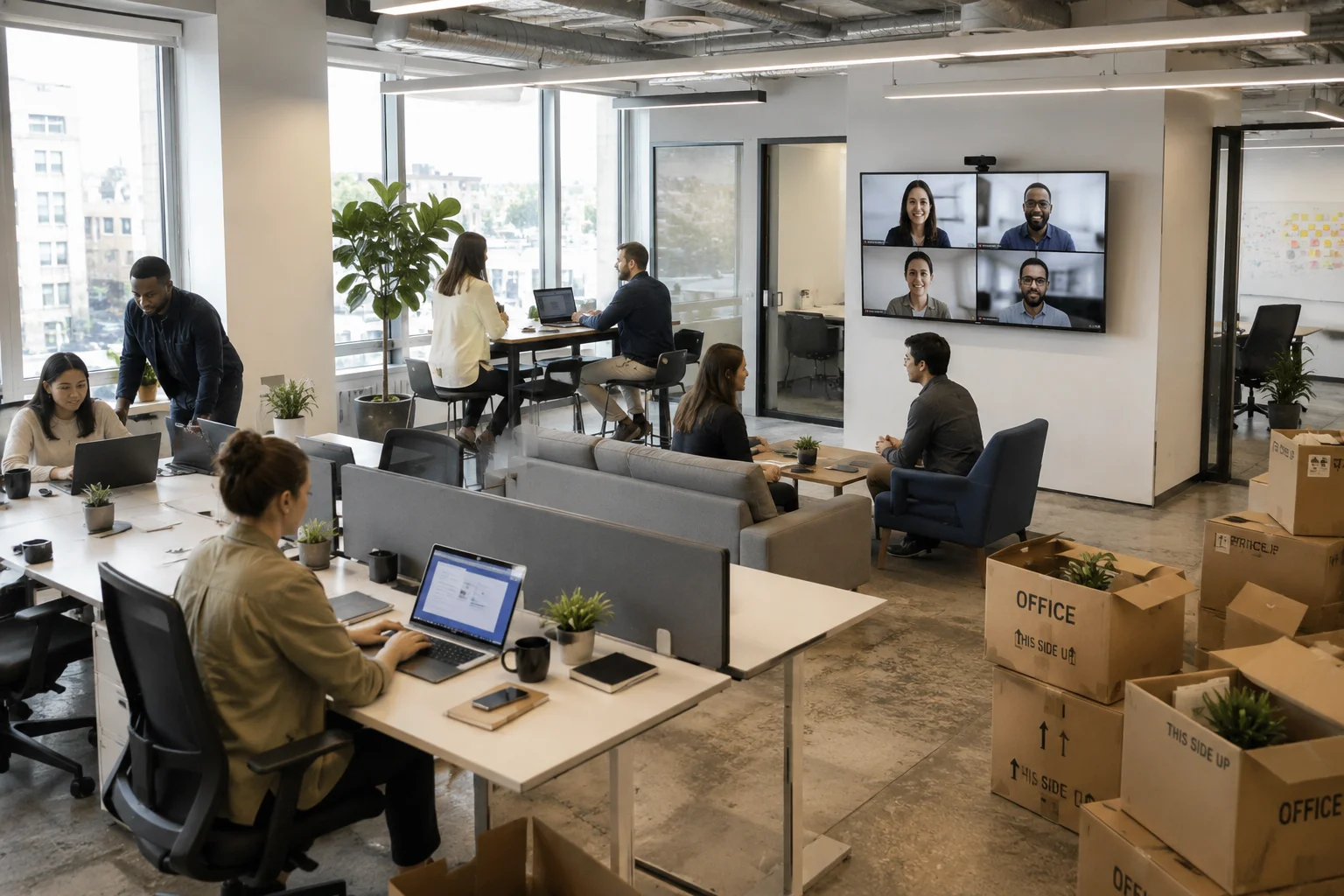
The purpose of the office has evolved significantly. Today’s workplace is increasingly viewed as a destination for teamwork, innovation, and company culture rather than a location where employees simply complete daily tasks.
Modern office designs often include:
- Open collaboration zones
- Video conferencing rooms
- Flexible seating arrangements
- Private focus areas
- Employee wellness spaces
- Technology-enabled meeting rooms
These features support both in-person and remote employees, helping teams stay connected regardless of where they work.
Technology Is at the Center of Every Move
Relocating a hybrid workplace involves more than transporting desks and office furniture. Businesses must ensure uninterrupted access to communication tools, cloud systems, and critical data throughout the moving process.
Technology considerations often include:
- Network infrastructure setup
- Video conferencing capabilities
- Cloud-based collaboration platforms
- Cybersecurity protection
- Server and equipment transportation
- Remote access continuity
Many companies work with experienced commercial movers who understand the complexities of transporting technology assets. Proper planning for IT equipment relocation can help reduce risks and avoid costly downtime.
Employee Expectations Are Influencing Relocation Decisions
Today’s workforce expects more flexibility than ever before. Employees want workplaces that support collaboration while also providing convenience, comfort, and modern amenities. Because of this, businesses are carefully evaluating office locations before committing to a move.
When selecting a new office, organizations often consider factors such as:
- Accessibility for employees
- Parking availability
- Public transportation options
- Nearby restaurants and services
- Flexible workspace configurations
- Future growth opportunities
A well-chosen location can improve employee engagement while helping businesses attract and retain top talent in competitive markets.
The Rise of Collaborative Workspaces
As fewer employees spend every day in the office, companies are redesigning their environments to maximize the value of in-person interactions. Rather than dedicating large portions of office space to assigned desks, organizations are investing in collaborative areas where teams can work together effectively.
Conference rooms, brainstorming spaces, project hubs, and informal meeting areas are becoming increasingly common. These environments encourage creativity, improve communication, and strengthen workplace culture.
This trend is one of the key reasons businesses are relocating to offices that better align with modern workforce requirements.
Hybrid Work Is Encouraging Office Downsizing
Many organizations have discovered that their existing office spaces are larger than necessary. Since employees rotate between remote and in-office work schedules, occupancy levels are often significantly lower than they were in traditional workplace models.
As leases expire, businesses frequently choose to relocate to smaller facilities that offer lower operating costs without sacrificing functionality.
The benefits of downsizing may include:
- Reduced lease expenses
- Lower utility costs
- Less maintenance responsibility
- Improved space efficiency
- Better return on workplace investments
However, downsizing requires careful planning to ensure that essential furniture, equipment, and records are managed effectively during the transition.
Storage Solutions Support Workplace Flexibility
Hybrid office relocations often leave businesses with excess furniture, archived files, and equipment that may not fit within a smaller workspace. Rather than disposing of these assets immediately, many organizations choose secure storage solutions.
Short-term and long-term storage options provide flexibility while companies determine their future workplace needs. This approach can help businesses avoid unnecessary replacement costs while preserving valuable assets.
Companies evaluating their relocation strategy may find it useful to explore options for storing office furniture during moves and renovations.
Technology Infrastructure Must Move Seamlessly
Unlike traditional office relocations, hybrid workplace moves place greater emphasis on maintaining uninterrupted connectivity. Employees working remotely rely heavily on digital tools to communicate, collaborate, and complete daily tasks.
Any disruption to these systems can affect productivity and customer service.
Before moving day, businesses should create a detailed technology transition plan that addresses:
- Internet service activation
- Network infrastructure installation
- Cloud platform accessibility
- Data protection measures
- Equipment transportation procedures
- Communication system testing
Early coordination between IT teams and commercial movers helps minimize operational interruptions and ensures a smoother relocation process.
Managing Business Continuity During an Office Move
Maintaining productivity during a relocation remains one of the biggest concerns for business leaders. Hybrid work models can actually provide an advantage during office moves because employees can continue working remotely while physical relocation activities take place.
Organizations that plan effectively can reduce downtime by:
- Scheduling moves during off-peak hours
- Relocating departments in phases
- Utilizing temporary remote work arrangements
- Creating detailed communication plans
- Assigning dedicated relocation coordinators
Businesses looking to improve operational efficiency during relocation can review practical strategies for minimizing downtime during an office move.
The Growth of Hub-and-Spoke Office Models
Many companies are moving away from a single centralized headquarters and adopting hub-and-spoke workplace strategies. Under this model, businesses maintain a primary office while creating smaller satellite offices closer to where employees live.
This approach offers several advantages:
- Reduced commuting times
- Greater workforce flexibility
- Improved employee satisfaction
- Enhanced regional coverage
- Lower real estate costs
As a result, commercial relocation projects are becoming more complex, often involving multiple locations instead of a single office move.
Sustainability Is Influencing Workplace Decisions
Environmental responsibility has become an important consideration for many organizations. Hybrid work naturally reduces commuting emissions, but businesses are also looking for ways to make office relocations more sustainable.
Popular sustainability initiatives include:
- Reducing paper-based operations
- Repurposing existing furniture
- Implementing energy-efficient office designs
- Using reusable packing materials
- Minimizing unnecessary transportation
Sustainable relocation practices not only support environmental goals but can also reduce overall project costs.
Common Challenges Businesses Face When Relocating Hybrid Offices
Although hybrid work provides flexibility, it can also introduce unique relocation challenges. Business leaders must balance employee expectations, operational requirements, and budget constraints while preparing for the move.
Some common challenges include:
- Determining future space requirements
- Coordinating employees across multiple locations
- Protecting sensitive business information
- Relocating technology infrastructure safely
- Maintaining communication throughout the project
- Avoiding disruptions to customer service
Successful organizations address these challenges through detailed planning and by partnering with experienced commercial relocation specialists.
Preparing for the Future of Work
The workplace will continue evolving as businesses refine their hybrid work strategies. Flexibility, adaptability, and employee experience are likely to remain key priorities for organizations across industries.
Future office relocations may focus less on square footage and more on creating environments that support collaboration, innovation, and workforce engagement. Companies that design workplaces around these principles will be better positioned to adapt to changing business conditions and employee expectations.
Why Businesses Trust Real Moving & Storage for Commercial Relocations?
Relocating an office requires more than simply moving furniture from one location to another. Businesses need a relocation partner that understands logistics, scheduling, equipment handling, and business continuity requirements.
At Real Moving & Storage, we have been helping businesses throughout Connecticut relocate with confidence since 2006. As a family-owned company founded by Lucas Pinto, we bring more than 25 years of industry experience to every commercial move. Our team provides professional packing, transportation, storage, and relocation services designed to minimize disruption and keep operations running smoothly.
Whether your company is transitioning to a smaller hybrid workspace, expanding into a new facility, or redesigning an existing office, our experienced professionals can help support every stage of the process. Learn more about our moving services or discover how we help businesses overcome common commercial moving challenges.
Conclusion
Hybrid work has fundamentally changed how businesses think about office space, workplace design, and relocation planning. Organizations are increasingly prioritizing flexibility, collaboration, technology integration, and employee experience when making office relocation decisions.
As workplace expectations continue to evolve, businesses that proactively adapt their relocation strategies will be better equipped to control costs, improve productivity, and create environments that support both remote and in-office teams.
Understanding Hybrid Workspace Trends and Their Impact on Office Moves allows organizations to make smarter real estate decisions while preparing for the future of work. Whether downsizing, expanding, or redesigning an office, a thoughtful relocation strategy can help businesses maximize the benefits of today’s evolving workplace landscape.
Contact Real Moving & Storage
Real Moving & Storage
13 Francis J Clarke Cir, Bethel, CT
808 Post Road, Fairfield, CT
Phone: (203) 300-3530
Toll-Free: (866) 296-4009