Get a Free Estimate Today!
Fleet Management in Commercial Relocation Projects
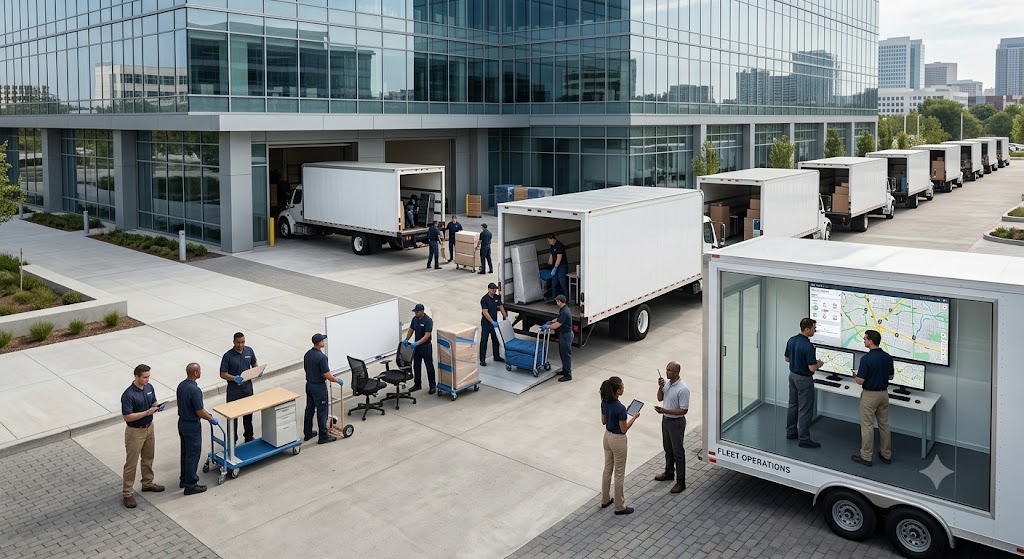
Commercial relocation projects involve much more than moving desks and office furniture. Businesses often need to relocate equipment, inventory, technology, vehicles, and critical assets while keeping operations running. One of the most important factors behind a successful commercial move is effective fleet management.
Fleet management helps businesses coordinate transportation resources, track assets in transit, optimize routes, reduce downtime, and maintain visibility throughout the relocation process. Without a structured fleet strategy, commercial moves can quickly become expensive, delayed, and difficult to manage.
At Real Moving & Storage, we understand that transportation logistics play a critical role in commercial relocations. Proper fleet planning helps businesses minimize disruptions and achieve a smooth transition to their new location.
What Is Fleet Management in Commercial Relocation?
Fleet management refers to the planning, coordination, monitoring, and optimization of vehicles used during a commercial relocation project.
Depending on the size of the move, fleets may include:
- Moving trucks
- Box trucks
- Cargo vans
- Flatbed trailers
- Specialized transport vehicles
- Equipment transportation units
The primary goal is to ensure assets arrive safely, on schedule, and with minimal operational disruption.
Why Fleet Management Important During Commercial Relocations?
Large-scale business relocations often involve multiple vehicles, crews, delivery schedules, and destinations. Without centralized coordination, businesses can experience:
- Transportation delays
- Increased moving costs
- Asset misplacement
- Communication breakdowns
- Operational downtime
- Reduced productivity
Effective fleet management creates structure and visibility throughout the move, helping organizations maintain control from start to finish.
Businesses planning complex relocations should also review our guide on commercial moving challenges and solutions to better understand common obstacles and how to overcome them.
Key Components of Fleet Management During Relocation
Transportation Planning
Transportation planning serves as the foundation of fleet management.
Before moving day, relocation managers evaluate:
- Asset volume
- Vehicle requirements
- Distance between locations
- Access restrictions
- Loading and unloading requirements
- Project timelines
Proper planning helps determine how many vehicles are needed and how resources should be allocated throughout the move.
Vehicle Allocation
Different assets require different transportation solutions.
For example:
- Office furniture may require large box trucks.
- IT equipment may need climate-controlled transportation.
- Heavy machinery may require flatbed trailers.
- Sensitive assets may require dedicated vehicles.
Assigning the right vehicle to each asset category improves safety and efficiency.
Route Optimization and Scheduling
One area often overlooked in commercial relocations is route planning.
Fleet managers analyze factors such as:
- Traffic patterns
- Road restrictions
- Construction zones
- Delivery windows
- Building access requirements
Optimized routes help reduce fuel costs, improve delivery times, and minimize transportation delays.
Scheduling is equally important. Many businesses coordinate relocations during evenings, weekends, or off-peak hours to reduce disruption to daily operations.
Organizations looking to reduce downtime should also explore our guide on how to minimize downtime during an office move.
Real-Time Tracking and Visibility
Modern fleet management relies heavily on technology.
GPS tracking systems provide real-time visibility into vehicle locations and shipment status throughout the move.
Benefits of real-time tracking include:
- Improved asset visibility
- Accurate delivery estimates
- Enhanced communication
- Faster problem resolution
- Greater accountability
For businesses moving valuable assets, tracking capabilities provide peace of mind and operational transparency.
Fleet Management Supports Inventory Control
Transportation and inventory management work together during commercial relocation projects.
Fleet managers coordinate closely with inventory teams to ensure:
- Assets are properly labeled
- Items are loaded correctly
- Shipments are tracked throughout transit
- Deliveries are verified upon arrival
Accurate inventory management reduces the risk of lost equipment, misplaced assets, and costly delays.
Companies relocating office equipment can also benefit from the strategies discussed in our article on the importance of inventory tracking before a move.
Managing Specialized Equipment and High-Value Assets
Not all commercial relocation projects involve standard office furniture.
Many organizations must transport:
- Servers and networking equipment
- Medical devices
- Laboratory equipment
- Manufacturing machinery
- Retail inventory
- Sensitive electronics
Fleet management helps determine the appropriate transportation methods, loading procedures, and protection measures required for these assets.
Businesses moving technology infrastructure should review our guide on moving IT equipment safely.
How Fleet Management Reduces Relocation Costs?
Cost control is a major objective in every commercial move.
Fleet management helps reduce expenses through:
- Efficient route planning
- Vehicle utilization optimization
- Reduced fuel consumption
- Lower labor costs
- Minimized downtime
- Fewer transportation delays
Organizations that carefully manage transportation resources often complete relocations more efficiently and within budget.
Communication Between Fleet Teams and Relocation Managers
Strong communication is essential for successful fleet operations.
Fleet managers must coordinate with:
- Project managers
- Moving crews
- Building managers
- Department leaders
- IT teams
- External vendors
Regular updates help identify potential issues before they become major disruptions.
Communication strategies also play a critical role in broader relocation planning. Businesses can learn more from our article on preparing employees for corporate relocation.
Risk Management in Fleet Operations
Commercial relocations involve numerous transportation-related risks.
Common challenges include:
- Vehicle breakdowns
- Weather delays
- Traffic disruptions
- Equipment damage
- Scheduling conflicts
- Loading errors
Professional fleet management includes contingency planning to address these situations quickly and effectively.
Backup vehicles, alternate routes, and emergency response procedures help maintain project momentum when unexpected issues arise.
The Role of Technology in Modern Fleet Management
Technology has transformed how commercial relocation fleets are managed.
Modern fleet systems often include:
- GPS tracking
- Route optimization software
- Digital inventory systems
- Electronic documentation
- Maintenance monitoring tools
- Mobile communication platforms
These technologies improve accuracy, increase visibility, and enhance decision-making throughout the relocation process.
Choosing a Commercial Moving Partner With Fleet Expertise
Not all moving companies have the fleet resources necessary for large commercial projects.
When evaluating commercial movers, consider:
- Fleet size and capacity
- Vehicle types available
- Tracking technology
- Commercial relocation experience
- Safety procedures
- Project management capabilities
Businesses should also review a mover’s experience handling complex office relocations. Our guide on choosing the right moving company for office relocations provides additional insights.
How Real Moving & Storage Supports Commercial Relocation Projects?
At Real Moving & Storage, we recognize that transportation logistics are central to successful commercial relocations. Our experienced team works closely with businesses to coordinate vehicle resources, protect valuable assets, and execute moves efficiently.
Founded by Lucas Pinto and backed by more than 25 years of industry experience, Real Moving & Storage has helped businesses relocate with confidence since 2006. As a family-owned company, we focus on personalized service, careful planning, and dependable execution for every commercial relocation project.
Frequently Asked Questions
What is fleet management in commercial relocation?
Fleet management involves coordinating vehicles, drivers, routes, and transportation resources used during a commercial relocation project.
Why is fleet management important during office moves?
Fleet management improves transportation efficiency, reduces costs, minimizes delays, and helps maintain visibility throughout the relocation process.
How does GPS tracking help during commercial relocations?
GPS tracking provides real-time visibility into vehicle locations, improves communication, and helps businesses monitor shipment progress.
Can fleet management reduce moving costs?
Yes. Efficient route planning, vehicle utilization, and scheduling help lower fuel expenses, labor costs, and operational disruptions.
What types of vehicles are used in commercial relocations?
Commercial relocation fleets may include moving trucks, cargo vans, flatbed trailers, specialized equipment transport vehicles, and climate-controlled trucks depending on project requirements.