Get a Free Estimate Today!
How Manufacturers Plan Equipment Relocation?
Relocating industrial equipment is one of the most challenging projects a manufacturing company can undertake. Whether a business is expanding, consolidating facilities, upgrading production capabilities, or moving to a more strategic location, successful equipment relocation requires careful planning, risk management, and coordination. Understanding How Manufacturers Plan Equipment Relocation can help companies minimize downtime, protect valuable assets, and maintain productivity throughout the transition.
Manufacturing facilities depend on complex machinery, production lines, automation systems, and specialized equipment. Moving these assets is far more involved than transporting standard office furniture. Every phase requires technical expertise, detailed scheduling, and strategic execution.
In this guide, we’ll explore How Manufacturers Plan Equipment Relocation, the key steps involved, common challenges, and best practices that help manufacturers achieve a successful move.
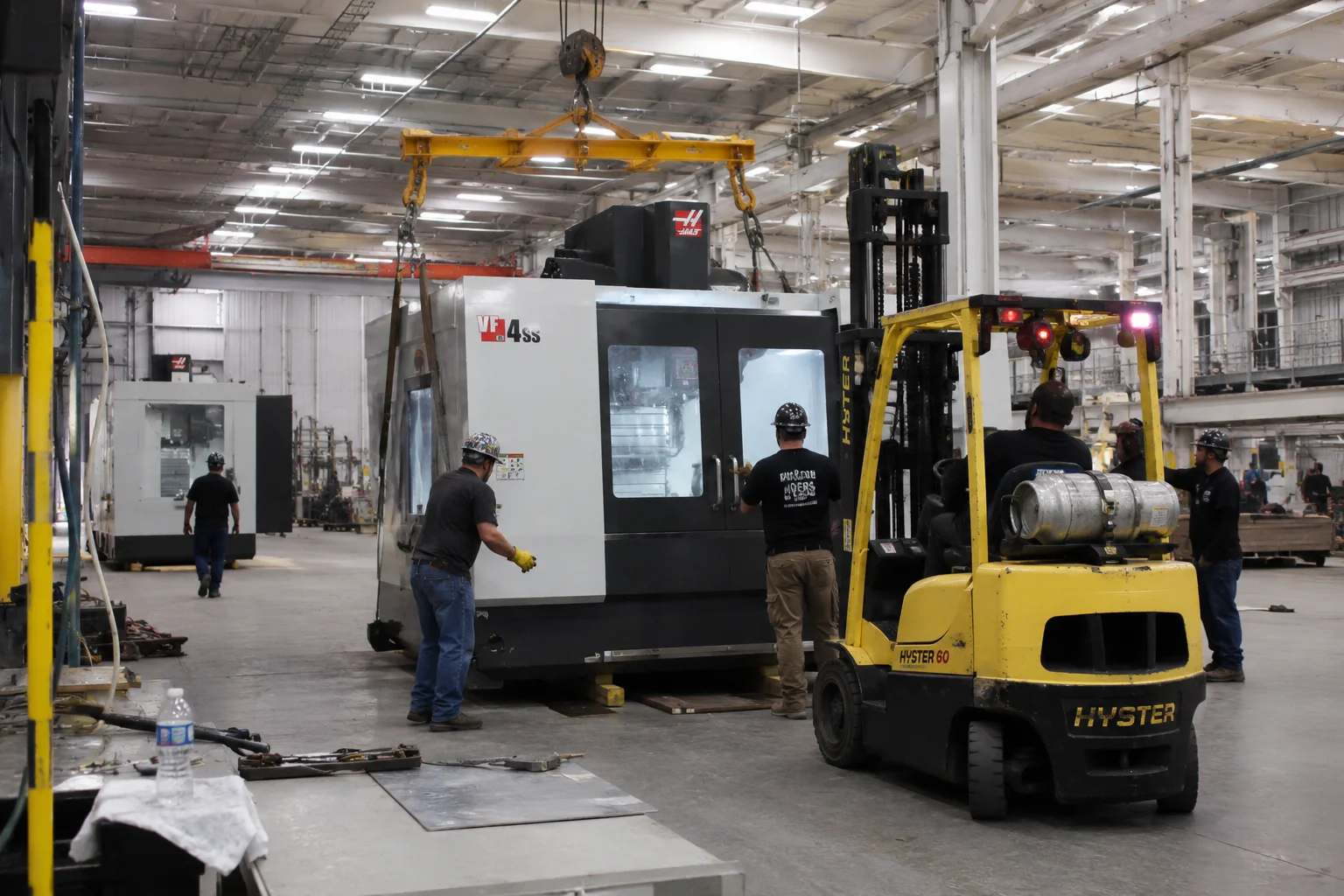
Why Equipment Relocation Requires Specialized Planning?
Unlike traditional business relocations, manufacturing equipment relocation involves large, heavy, and often highly sensitive machinery. Even minor mistakes during transportation or installation can result in costly repairs, production delays, or safety concerns.
Manufacturers that understand How Manufacturers Plan Equipment Relocation begin planning months before the actual move date. The objective is not simply moving equipment from one location to another—it is ensuring that operations resume as quickly and efficiently as possible.
Key considerations include:
- Production downtime costs
- Equipment disassembly and reassembly
- Transportation logistics
- Utility disconnections and reconnections
- Employee coordination
- Safety compliance requirements
- Inventory management
- Facility readiness
Step 1: Conduct a Comprehensive Equipment Assessment
The first stage in How Manufacturers Plan Equipment Relocation is conducting a detailed inventory assessment.
Every machine, production system, tool, and support asset should be documented. Manufacturers create equipment inventories that include:
- Equipment dimensions and weight
- Electrical requirements
- Mechanical specifications
- Maintenance history
- Current condition reports
- Photographic documentation
- Serial numbers and identification tags
This information helps relocation teams determine transportation requirements and identify equipment that may need specialized rigging services.
Many manufacturers also use digital asset tracking systems during this phase to ensure complete visibility throughout the relocation process.
Step 2: Establish Clear Relocation Objectives
A critical part of How Manufacturers Plan Equipment Relocation is defining project goals early.
Questions that manufacturers commonly address include:
- What is the acceptable downtime window?
- Which production lines are highest priority?
- Will equipment layouts change?
- Are process improvements being implemented during relocation?
- Will new machinery be integrated?
- What are the budget constraints?
Clear objectives allow project managers to create realistic timelines and allocate resources effectively.
Step 3: Develop a Detailed Relocation Timeline
One of the most important aspects of How Manufacturers Plan Equipment Relocation is creating a detailed project timeline.
Successful relocation schedules often include:
- Pre-move planning milestones
- Equipment shutdown dates
- Disassembly schedules
- Transportation windows
- Facility preparation deadlines
- Installation sequences
- Testing and commissioning phases
- Production restart dates
Many manufacturers use phased relocation strategies to keep portions of their operations running while equipment is being transferred.
Organizations looking to reduce disruption during large moves often implement strategies similar to those discussed in minimizing downtime during relocation projects.
Step 4: Prepare the New Facility Before Moving Equipment
Understanding How Manufacturers Plan Equipment Relocation requires recognizing the importance of facility readiness.
Before equipment arrives, manufacturers must ensure that the new location can support operational requirements.
This preparation typically includes:
- Electrical infrastructure installation
- Compressed air systems
- Ventilation systems
- Floor load capacity verification
- Internet and network connectivity
- Safety systems installation
- Utility inspections
Failure to prepare the new facility can significantly delay equipment installation and production startup.
Step 5: Create an Equipment Labeling and Tracking System
Proper labeling is another major factor in How Manufacturers Plan Equipment Relocation.
Manufacturers often move hundreds or thousands of components during a relocation. Every cable, connection point, control panel, and machine component should be clearly identified.
Effective labeling systems provide:
- Faster reinstallation
- Reduced setup errors
- Improved inventory control
- Better project visibility
- Simplified troubleshooting
Documentation should be stored digitally and shared with all stakeholders involved in the project.
Step 6: Manage Transportation Risks
A key component of How Manufacturers Plan Equipment Relocation involves transportation planning.
Heavy machinery often requires:
- Specialized trailers
- Rigging equipment
- Crane services
- Route surveys
- Permits for oversized loads
- Escort vehicles
- Protective packaging systems
Manufacturers evaluate potential transportation risks and establish contingency plans to address unexpected delays or equipment damage.
Businesses moving high-value assets often review transportation protection strategies similar to those outlined in safe equipment transportation best practices.
Step 7: Coordinate Internal Teams and Vendors
Effective communication is essential in How Manufacturers Plan Equipment Relocation.
Successful projects involve coordination between:
- Operations teams
- Maintenance personnel
- Production managers
- IT departments
- Safety officers
- Equipment manufacturers
- Relocation specialists
- Facility managers
Regular planning meetings help identify potential issues before they affect project timelines.
Step 8: Prioritize Safety Throughout the Move
Safety remains one of the highest priorities in How Manufacturers Plan Equipment Relocation.
Heavy machinery relocation presents numerous hazards, including:
- Forklift accidents
- Rigging failures
- Electrical hazards
- Crushing injuries
- Falls and slips
- Transportation incidents
Manufacturers implement strict safety procedures and ensure all personnel receive appropriate training before relocation activities begin.
Step 9: Perform Equipment Testing and Validation
Once equipment arrives at the new location, the next phase of How Manufacturers Plan Equipment Relocation involves testing and validation.
Manufacturers conduct:
- Mechanical inspections
- Electrical testing
- Calibration procedures
- Operational verification
- Quality control testing
- Production trial runs
Testing confirms that equipment performs according to original specifications before full production resumes.
Common Challenges During Manufacturing Equipment Relocation
Even well-planned projects can encounter obstacles. Understanding these challenges is part of learning How Manufacturers Plan Equipment Relocation.
Unexpected Downtime
Delays in transportation, facility preparation, or installation can extend downtime and impact revenue.
Equipment Damage
Improper handling during disassembly or transport can lead to costly repairs.
Communication Gaps
Miscommunication between teams often causes scheduling conflicts and operational disruptions.
Budget Overruns
Unexpected rigging requirements, permit fees, or installation issues can increase project costs.
Regulatory Compliance
Manufacturers must comply with safety, environmental, and transportation regulations throughout the relocation process.
How Professional Relocation Specialists Help Manufacturers?
Many companies partner with experienced commercial relocation providers because they understand How Manufacturers Plan Equipment Relocation at every stage.
Professional relocation specialists can assist with:
- Project management
- Equipment inventory creation
- Packing and protection
- Transportation logistics
- Storage solutions
- Installation coordination
- Risk management
Businesses planning major relocations often benefit from reviewing commercial relocation strategies discussed in commercial moving challenges and solutions and office relocation planning and business continuity.
Why Manufacturers Trust Real Moving & Storage?
While every manufacturing relocation project is unique, partnering with an experienced moving company can simplify the process significantly.
At Real Moving & Storage, we are a trusted family-owned moving company proudly serving Connecticut since 2006. Founded by Lucas Pinto, who brings more than 25 years of moving industry experience, we provide professional commercial moving, storage, packing, and relocation services designed to minimize disruption and maximize efficiency.
Our commitment to personalized service, private trucks, professional crews, and long-term customer relationships has made us a trusted relocation partner for businesses throughout the region.
Learn more about our company, explore our services, meet our team, or read customer reviews.
Conclusion
Understanding How Manufacturers Plan Equipment Relocation is essential for minimizing downtime, protecting assets, and ensuring operational continuity. Successful relocations require detailed planning, comprehensive inventories, facility preparation, transportation coordination, safety management, and extensive testing.
Manufacturers that invest time and resources into planning are significantly more likely to complete relocations on schedule and within budget. Whether relocating a single production line or an entire facility, a structured approach remains the foundation of success.
Frequently Asked Questions
How long does manufacturing equipment relocation take?
The timeline depends on equipment complexity, facility size, transportation requirements, and installation needs. Large manufacturing relocations can take several weeks or even months to complete.
What is the biggest challenge during equipment relocation?
Minimizing operational downtime is often the most significant challenge manufacturers face during relocation projects.
Why is equipment labeling important?
Proper labeling simplifies reinstallation, reduces errors, improves tracking, and speeds up production restart activities.
Should manufacturers hire professional relocation specialists?
Yes. Professional relocation specialists provide expertise in logistics, equipment handling, project management, and risk reduction.
How can manufacturers reduce relocation risks?
Manufacturers can reduce risks through detailed planning, proper documentation, experienced relocation partners, equipment testing, and proactive communication.
Contact Real Moving & Storage
Phone: (203) 300-3530
Toll Free: (866) 296-4009
Bethel Office: 13 Francis J Clarke Cir, Bethel, CT
Fairfield Location: 808 Post Road, Fairfield, CT
For commercial relocation assistance, equipment transportation planning, storage solutions, or moving estimates, visit our contact page.