Get a Free Estimate Today!
Relocating Distribution Centers Efficiently
Relocating a distribution center is one of the most complex logistics projects a business can undertake. Unlike a standard office move, a distribution center relocation involves inventory, warehouse equipment, racking systems, technology infrastructure, transportation networks, employees, suppliers, and customer fulfillment operations.
Without proper planning, even a short disruption can lead to shipping delays, inventory inaccuracies, lost revenue, and dissatisfied customers.
Fortunately, businesses can relocate distribution centers efficiently by following a structured relocation strategy that prioritizes operational continuity, inventory visibility, and supply chain performance.
At Real Moving & Storage, we understand that commercial relocations require more than transportation. Successful projects depend on careful planning, coordination, and execution to minimize downtime and keep business operations moving.
Why Distribution Center Relocations Are Different?
A distribution center serves as the heart of many supply chains. Products arrive, are stored, processed, picked, packed, and shipped daily.
When a distribution center moves, businesses must protect:
- Inventory accuracy
- Order fulfillment operations
- Supplier relationships
- Customer service levels
- Transportation schedules
- Warehouse technology systems
Unlike office relocations, warehouse and distribution center moves directly impact revenue-generating operations. Every hour of downtime can affect customer deliveries and business performance.
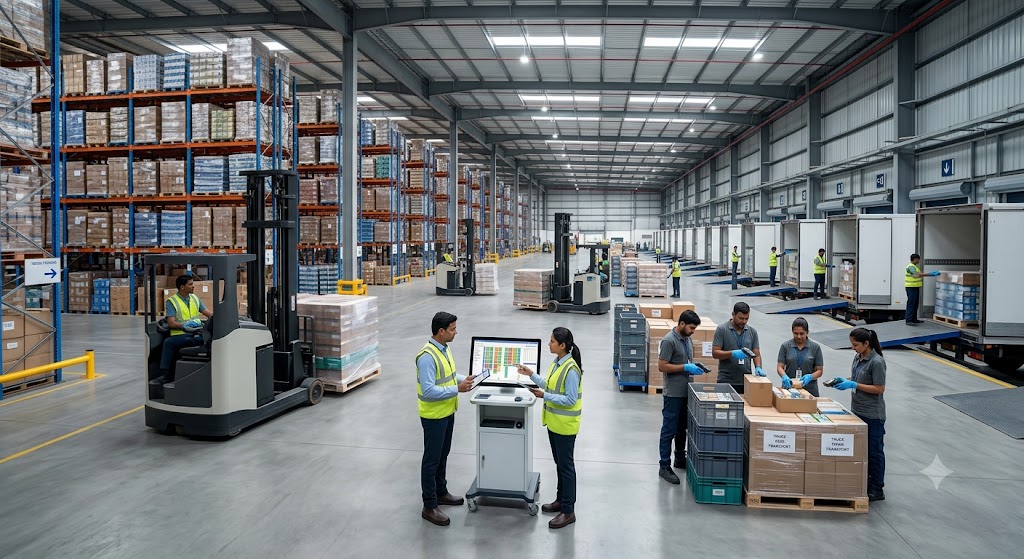
Start Planning Early
The most successful distribution center relocations begin months before moving day.
Early planning allows businesses to:
- Identify operational risks
- Create realistic timelines
- Coordinate suppliers
- Prepare employees
- Optimize inventory levels
- Schedule transportation resources
Businesses should establish a dedicated relocation team responsible for managing logistics, communication, inventory, technology, and vendor coordination throughout the project.
Many organizations use similar planning principles outlined in our guide on office relocation planning and avoiding business disruptions.
Conduct a Complete Inventory Audit
One of the biggest challenges during distribution center relocation is maintaining inventory accuracy.
Before any items are moved, businesses should perform a comprehensive inventory audit.
This process helps:
- Identify obsolete inventory
- Reduce unnecessary transportation costs
- Improve warehouse organization
- Prevent inventory discrepancies
- Create accurate relocation plans
An inventory audit also provides an opportunity to clean up warehouse operations before entering the new facility.
Create a Distribution Center Relocation Strategy
Every distribution center has unique operational requirements.
A relocation strategy should address:
- Inventory movement schedules
- Equipment relocation plans
- Technology migration timelines
- Transportation logistics
- Warehouse setup requirements
- Contingency plans
Businesses that rely on detailed relocation roadmaps typically experience fewer delays and faster operational recovery.
Use a Phased Relocation Approach
One of the most effective ways to relocate a distribution center efficiently is through phased moving.
Instead of shutting down operations completely, businesses move inventory and equipment in stages.
Benefits include:
- Reduced downtime
- Continued order fulfillment
- Lower operational risk
- Better inventory visibility
- Easier troubleshooting
Many companies maintain partial operations at the original facility while gradually activating the new distribution center.
Prioritize Inventory Control Throughout the Move
Inventory visibility should never be lost during relocation.
Businesses should implement:
- Barcode tracking systems
- Digital inventory management software
- Location labeling procedures
- Shipment verification processes
- Real-time inventory monitoring
Every pallet, carton, and SKU should be traceable from departure to final placement.
Proper inventory control prevents stock shortages, misplaced products, and order fulfillment delays.
For businesses handling large inventories, our article on the importance of inventory management during relocation offers additional insights.
Optimize Warehouse Staging Before Moving
Warehouse staging is often overlooked but plays a critical role in relocation efficiency.
Before transportation begins:
- Group products by category
- Label staging zones clearly
- Separate fast-moving inventory
- Prepare high-priority shipments
- Create loading schedules
A well-organized staging process reduces confusion, speeds up loading, and improves inventory accuracy.
Coordinate Transportation Logistics Carefully
Transportation planning directly impacts relocation success.
Businesses should evaluate:
- Vehicle requirements
- Transportation routes
- Loading schedules
- Delivery windows
- Building access restrictions
- Traffic patterns
Fleet coordination becomes especially important when moving inventory across multiple shipments.
Companies managing large-scale logistics can also benefit from the strategies discussed in our guide on commercial moving challenges and solutions.
Relocate Warehouse Equipment Strategically
Distribution centers contain more than inventory.
Businesses must also move:
- Pallet racking systems
- Conveyor equipment
- Forklifts
- Packing stations
- Shipping equipment
- Safety systems
Equipment relocation should follow a sequence that supports rapid operational startup at the new facility.
Many companies choose to install racking systems and infrastructure before inventory arrives.
Protect Technology and Warehouse Management Systems
Modern distribution centers depend heavily on technology.
Relocation plans should include:
- Warehouse Management Systems (WMS)
- Inventory tracking platforms
- Barcode scanners
- Networking equipment
- Servers and data systems
- Shipping software
Technology failures can bring fulfillment operations to a complete stop.
Organizations moving critical systems should review our guide on moving IT equipment safely.
Maintain Customer Service During the Transition
Customers should experience as little disruption as possible during a distribution center relocation.
Businesses should:
- Notify customers early
- Communicate potential delays
- Increase safety stock levels
- Coordinate with suppliers
- Monitor fulfillment performance closely
Transparent communication helps maintain trust and reduces customer frustration.
Train Employees Before the Move
Employees play a major role in relocation success.
Training should cover:
- New warehouse layouts
- Updated workflows
- Safety procedures
- Technology changes
- Inventory handling requirements
Employee readiness accelerates operational recovery after the move.
Organizations can improve workforce preparedness by following recommendations from our guide on preparing employees for corporate relocation.
Perform Post-Move Validation
Once the relocation is complete, businesses should verify:
- Inventory accuracy
- Equipment functionality
- Technology performance
- Warehouse workflows
- Safety compliance
- Order fulfillment capabilities
Post-move audits help identify issues quickly and prevent long-term operational disruptions.
Common Distribution Center Relocation Mistakes
Many relocation problems occur because businesses:
- Underestimate project complexity
- Fail to audit inventory
- Move everything simultaneously
- Ignore employee training
- Delay technology planning
- Choose inexperienced relocation partners
Avoiding these mistakes can significantly improve relocation outcomes.
How Real Moving & Storage Supports Distribution Center Relocations?
At Real Moving & Storage, we help businesses execute complex commercial relocations with confidence. Our experienced team understands the importance of inventory protection, operational continuity, transportation coordination, and careful planning.
Founded by Lucas Pinto and backed by more than 25 years of moving industry experience, Real Moving & Storage has been helping businesses relocate efficiently since 2006. As a trusted family-owned moving company, we focus on personalized service, reliable execution, and minimizing business disruptions throughout every relocation project.
Frequently Asked Questions
How long does it take to relocate a distribution center?
The timeline depends on inventory volume, facility size, equipment requirements, and operational complexity. Many projects require several months of planning and phased execution.
How can businesses reduce downtime during a distribution center relocation?
Phased moving, inventory tracking, transportation planning, technology preparation, and employee training can significantly reduce downtime.
What is the biggest challenge when relocating a distribution center?
Maintaining inventory accuracy and fulfillment operations while moving assets is often the biggest challenge.
Should businesses move inventory or equipment first?
In most cases, warehouse infrastructure and equipment should be installed before inventory arrives to support efficient operations.
Why is inventory management important during distribution center relocation?
Inventory management helps prevent stock discrepancies, lost products, shipping delays, and customer service issues throughout the relocation process.