Get a Free Estimate Today!
How Movers Handle Fine Art Transportation
Fine art is more than a decoration. Whether it’s a valuable painting, family heirloom, sculpture, antique, or collectible, each piece deserves specialized care during relocation. Unlike standard household goods, artwork can be damaged by vibration, temperature changes, improper handling, and poor packing methods.
This is why professional movers follow strict procedures when handling fine art transportation. From custom crating to climate-controlled transportation, every step is designed to protect the condition and value of the artwork.
At Real Moving & Storage, we have helped homeowners, collectors, and businesses relocate valuable possessions safely since 2006. Our team understands that moving artwork requires planning, precision, and attention to detail.
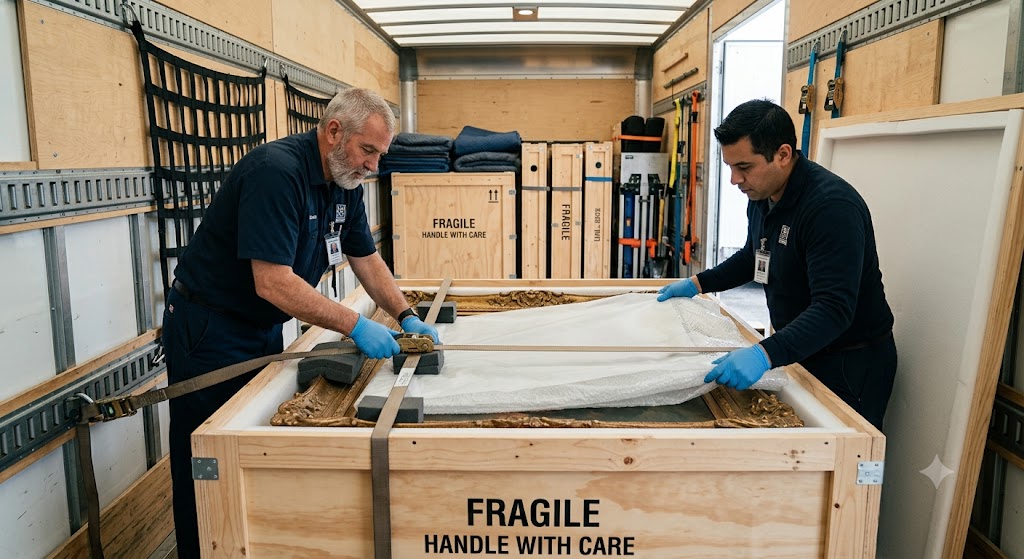
What Is Fine Art Transportation?
Fine art transportation is a specialized moving service focused on safely relocating valuable and delicate items such as:
- Paintings
- Sculptures
- Antiques
- Collectibles
- Rare artifacts
- Framed artwork
- Museum-quality pieces
Unlike traditional moving services, fine art transportation involves customized packing, detailed inventory management, specialized handling, and controlled transportation environments.
Why Artwork Requires Specialized Moving Services?
Artwork can be extremely sensitive to environmental and physical conditions during a move.
Common risks include:
- Frame damage
- Cracked glass
- Canvas tears
- Paint deterioration
- Humidity damage
- Temperature fluctuations
- Surface scratches
- Vibration during transport
Professional movers use specialized techniques similar to those found in white glove moving services, where delicate and high-value items receive extra protection throughout the moving process.
Pre-Move Assessment and Condition Reporting
Before moving any artwork, professional movers conduct a detailed assessment of every piece.
This process typically includes:
- Measuring dimensions
- Evaluating weight
- Identifying fragile components
- Documenting existing condition
- Photographing the artwork
- Determining packing requirements
Condition reports create a documented record of the artwork before transportation. This documentation is especially important for insurance claims and asset verification.
Maintaining accurate records follows many of the same principles discussed in our article about the importance of taking an inventory before your move.
How Professional Movers Pack Fine Art?
Proper packing is one of the most important factors in successful fine art transportation.
Professional movers never use a one-size-fits-all approach. Instead, each item receives customized protection based on its size, material, and fragility.
Protecting Paintings and Framed Artwork
For paintings and framed artwork, movers often use:
- Acid-free paper
- Glassine protective sheets
- Corner protectors
- Foam padding
- Custom crates
- Shock-resistant packaging materials
Packing Sculptures and Antiques
Sculptures and antiques typically require:
- Custom-built supports
- Heavy-duty crating
- Protective cushioning
- Stabilization systems
Many of these techniques are also used when packing valuables such as collectibles and heirlooms.
The Importance of Custom Crating
Custom crating provides the highest level of protection for valuable artwork.
Unlike standard moving boxes, custom crates are designed specifically for the dimensions and protection needs of each item.
Benefits of custom crating include:
- Reduced movement during transport
- Protection against vibration
- Enhanced structural support
- Improved impact resistance
- Environmental protection
High-value artwork traveling long distances often requires museum-grade crating to ensure maximum protection.
Climate-Controlled Transportation for Fine Art
Temperature and humidity fluctuations can cause significant damage to artwork.
Wood can expand and contract. Paint may crack. Canvas can warp. Metal components may corrode.
To prevent these issues, professional movers often use climate-controlled vehicles that maintain stable environmental conditions throughout the journey.
Climate-controlled transportation is particularly important for:
- Oil paintings
- Wooden artwork
- Antiques
- Rare documents
- Historical collections
The same principles that protect artwork during transportation also apply to storage. That’s why many collectors choose climate-controlled storage solutions before or after a move.
Safe Loading and Transportation Procedures
Moving artwork safely requires much more than proper packing.
Professional movers follow strict loading procedures designed to minimize risk.
Best practices include:
- Using specialized lifting techniques
- Keeping artwork upright when necessary
- Avoiding stacking pressure
- Securing crates properly inside trucks
- Using air-ride suspension vehicles when available
These precautions help reduce vibration and movement during transportation.
Inventory Tracking and Chain of Custody
One area often overlooked by competitors is inventory control.
Professional art movers maintain detailed tracking systems throughout the relocation process.
This typically includes:
- Unique item identification
- Digital inventories
- Condition reports
- Photographic records
- Delivery verification
For businesses relocating valuable assets, inventory management becomes even more important. Similar tracking procedures are often used during IT equipment relocations and commercial moves.
Insurance Coverage for Fine Art Transportation
Standard moving coverage is rarely enough for valuable artwork.
Before moving any collection, owners should discuss:
- Declared value coverage
- Full-value protection options
- Third-party fine art insurance
- Appraisal requirements
- Claims procedures
Understanding your coverage options is critical. Our guide explaining the different types of moving coverage can help you better understand available protection.
Secure Storage for Fine Art Collections
Not every move follows a direct timeline.
Sometimes artwork must be stored temporarily due to renovations, delayed closings, office relocations, or estate transitions.
Professional fine art storage facilities often include:
- Climate control
- Humidity monitoring
- 24/7 security
- Restricted access
- Digital inventory systems
If your relocation involves multiple phases, temporary storage can provide additional protection until the final destination is ready.
How to Choose a Fine Art Moving Company?
Not all moving companies have experience handling artwork.
Before hiring a mover, ask about:
- Fine art moving experience
- Custom crating services
- Insurance options
- Climate-controlled transportation
- Inventory tracking systems
- Storage capabilities
- Customer reviews
You can also review customer experiences and service quality through our customer reviews and learn more about our experienced team on the Our Team page.
Expert Tips to Protect Artwork During a Move
- Photograph every piece before packing.
- Keep appraisal documents accessible.
- Avoid DIY packing for valuable artwork.
- Use custom crating whenever possible.
- Verify insurance coverage before moving day.
- Allow artwork to acclimate before uncrating after delivery.
- Choose movers with proven fine art transportation experience.
Why Trust Real Moving & Storage With Valuable Items?
Founded by Lucas Pinto and backed by more than 25 years of industry experience, Real Moving & Storage has built a reputation for providing careful, reliable moving services throughout Connecticut and surrounding areas.
As a family-owned company serving customers since 2006, we understand that valuable artwork represents much more than financial value. It often carries personal history, family significance, and irreplaceable memories.
Our professional crews use proven handling methods, specialized equipment, and detailed planning to help ensure every valuable item arrives safely at its destination.
Frequently Asked Questions
How do movers transport expensive artwork safely?
Professional movers use custom crating, protective packing materials, climate-controlled transportation, inventory tracking, and specialized handling procedures to protect artwork throughout the move.
Do fine art movers offer insurance coverage?
Yes. Most professional movers offer valuation coverage options, and many clients choose additional fine art insurance for high-value collections.
Is climate-controlled transportation necessary for artwork?
Climate-controlled transportation is strongly recommended for paintings, antiques, wooden artwork, and other items sensitive to temperature and humidity changes.
What is custom crating in fine art transportation?
Custom crating involves building a crate specifically designed for a particular artwork to provide maximum protection during handling and transportation.
Can artwork be stored before delivery?
Yes. Many professional moving companies offer climate-controlled storage facilities designed to protect valuable artwork until final delivery can be completed.